Create a clearer, more inviting route to the basement with stained-glass fixtures chosen for ceiling height,...
- There are no more items in your cart
- Shipping Free
- Total CA$0.00
A Furniture-First Guide to Rustic Tiffany-Style Lamp Sizes
Rustic stained-glass lighting has more visual weight than its measurements may suggest. Dark outlines, warm colours and broad patterned shades can make a lamp feel larger than a plain fixture with the same listed width. That presence is part of the appeal, but it can overwhelm a narrow nightstand or disappear above a long harvest table if the proportions are wrong.
This rustic country tiffany lamps size guide begins with the furniture and the space people use around it. Product dimensions matter, but so do the mug beside a table lamp, the chair pulled out from an island and the sightline across a living room.
Define the usable space around the furniture
Measure the object the lamp will serve before measuring the room. Record the usable width and depth of a nightstand, console, desk or end table. For a floor lamp, mark the open area beside the chair or sofa. For a ceiling light, measure the table, island or seating group below it.

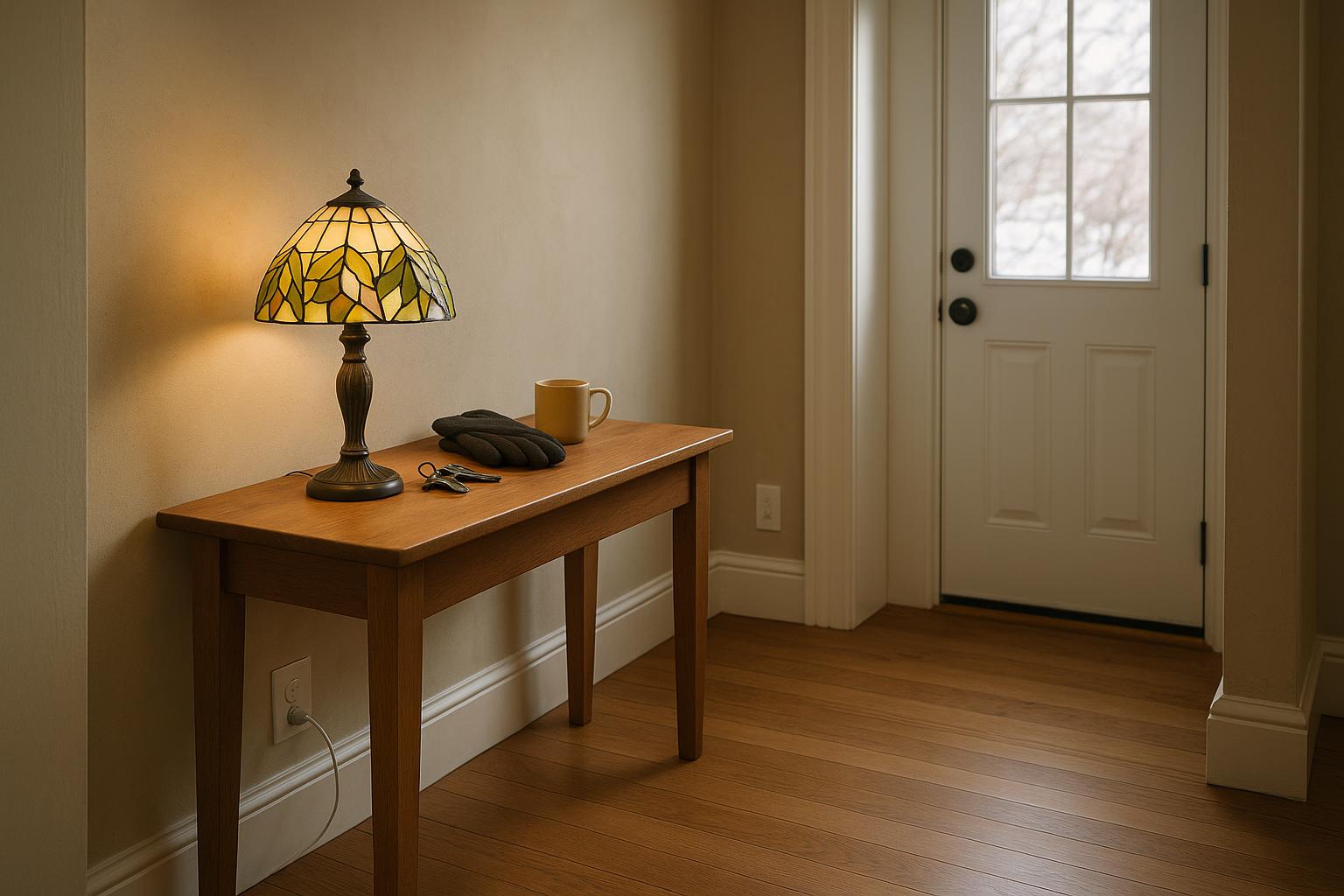
Next, note anything that reduces that space: a raised tabletop edge, wall trim, shelves, cabinet doors, heating registers, sloped ceilings and the normal swing of a chair. A mudroom console may look generous until keys, gloves and a charging cable occupy half of it.
- Maximum shade width: the broadest shade that will not overhang awkwardly or intrude into a walkway.
- Base footprint: the width and depth required for stable placement.
- Overall height: the full lamp or fixture height, including the base, shade, canopy and suspension hardware as applicable.
- Clearance: the space needed for cords, switches, doors, chairs and everyday movement.
Mock up the complete lamp silhouette
A listed width normally refers to the fixture's broadest point, often the lampshade. It does not show how a scalloped dome, square Mission-inspired shade or flared cone will occupy the room. A figurative or illuminated base can also add substantial visual mass below the shade.
Cut a piece of cardboard to the shade dimensions or outline the width with painter's tape. Hold it at the proposed height and inspect it from the doorway and the main seating position. For a floor lamp, mark the base on the floor as well. For a pendant, suspend a lightweight cardboard outline from removable tape rather than judging the drop from a tape measure alone.
Leave some plain wall or open air around detailed country-style lighting. Leaf, landscape and geometric patterns are easier to appreciate when they are not competing with busy artwork, open shelving or strongly grained panelling.
Size table lamps for the surface and sightline
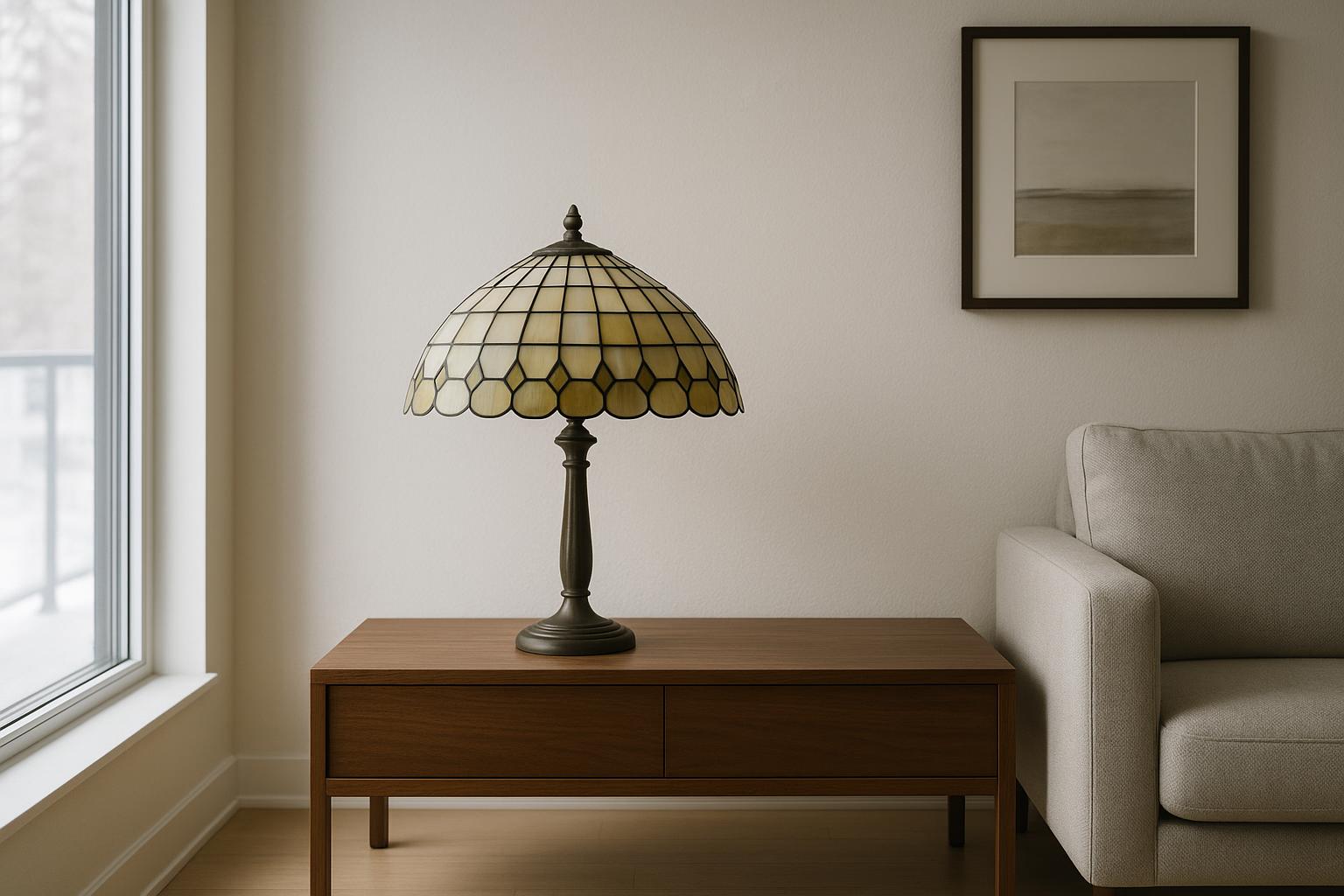
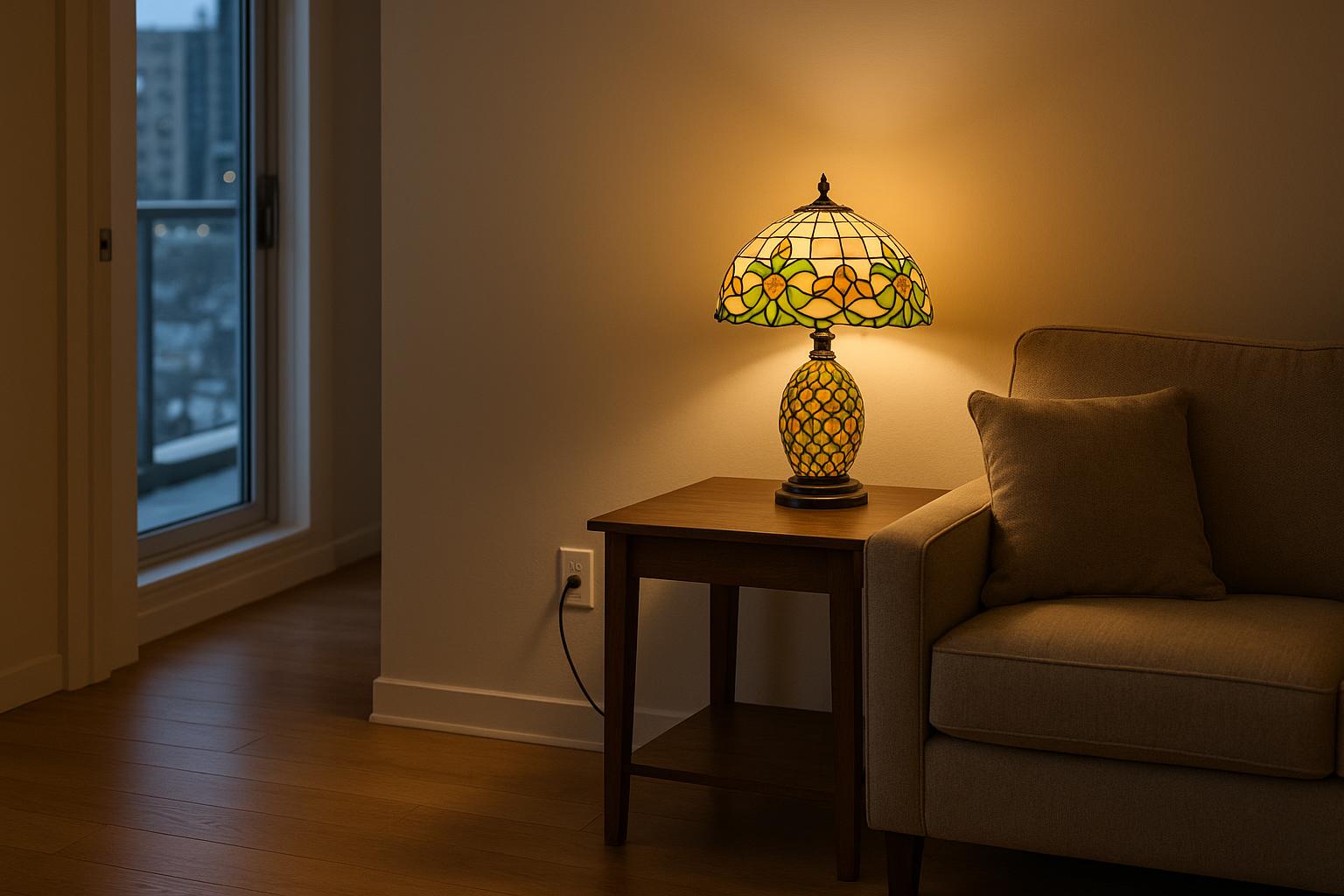
On an end table, a shade no wider than about two-thirds of the tabletop is a useful first check, not a fixed rule. The base and shade should leave room for whatever the table normally holds. A generous lamp can suit a solid wood table, while a frequently used or lightweight surface usually benefits from more clearance.
Depth is especially important on a bedside table. Compact cottage lamps with rounded or modestly tapered shades tend to preserve space for a phone, book and water glass. Check the complete height from the floor as well as from the tabletop. When someone is resting against the pillow, the lower shade edge should conceal the bulb opening and keep direct glare out of the natural sightline.
To complement this topic, you can also read Room to Glow: Scaling a Large Tiffany-Style Floor Lamp.
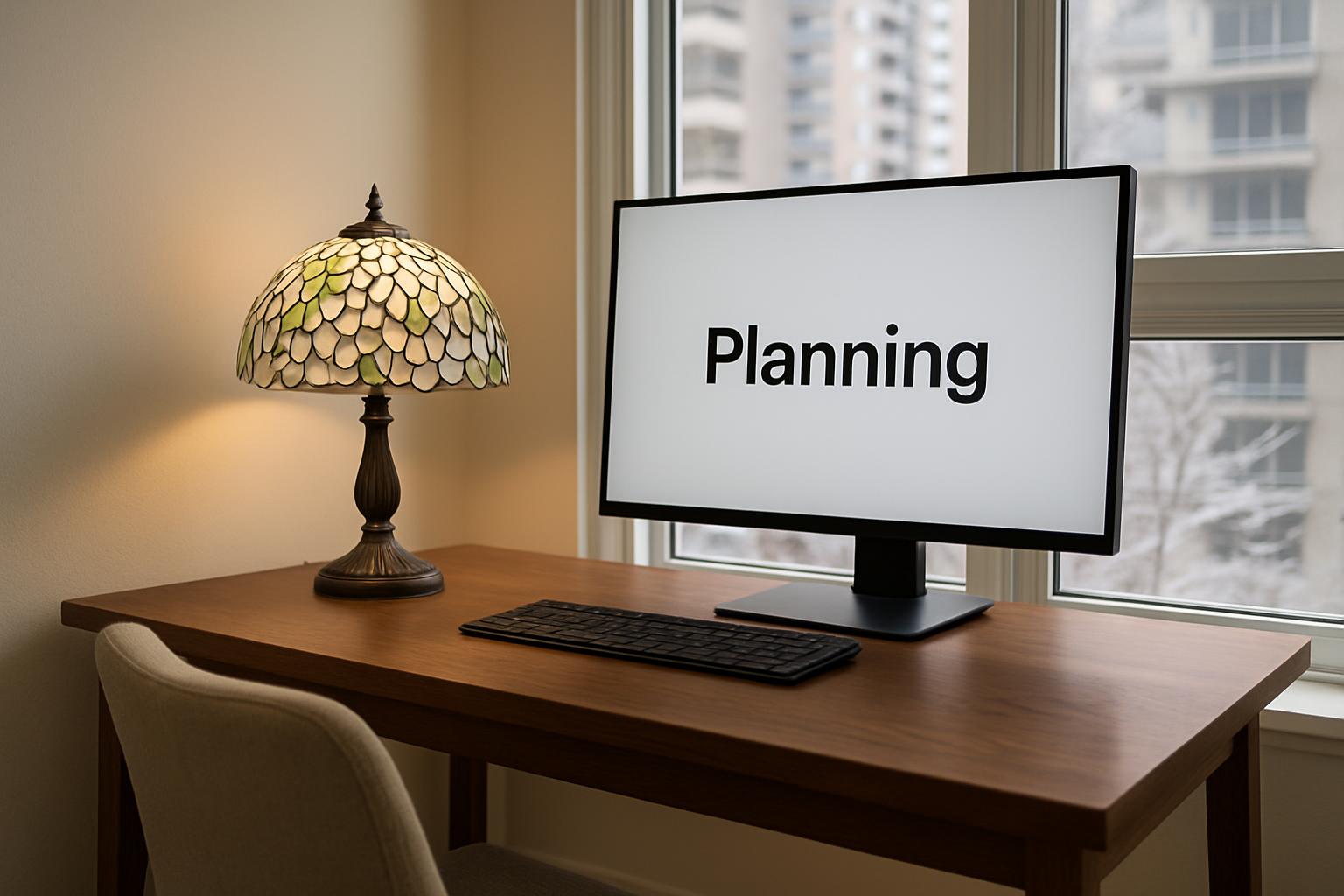
A desk requires a different compromise. Coloured glass can provide warm decorative lighting, but it may not cast neutral, even light across papers or a keyboard. Keep the decorative lamp small enough to preserve working space and use a separate task light when concentrated reading or accurate colour perception matters.
Plan floor lamps around seating and movement
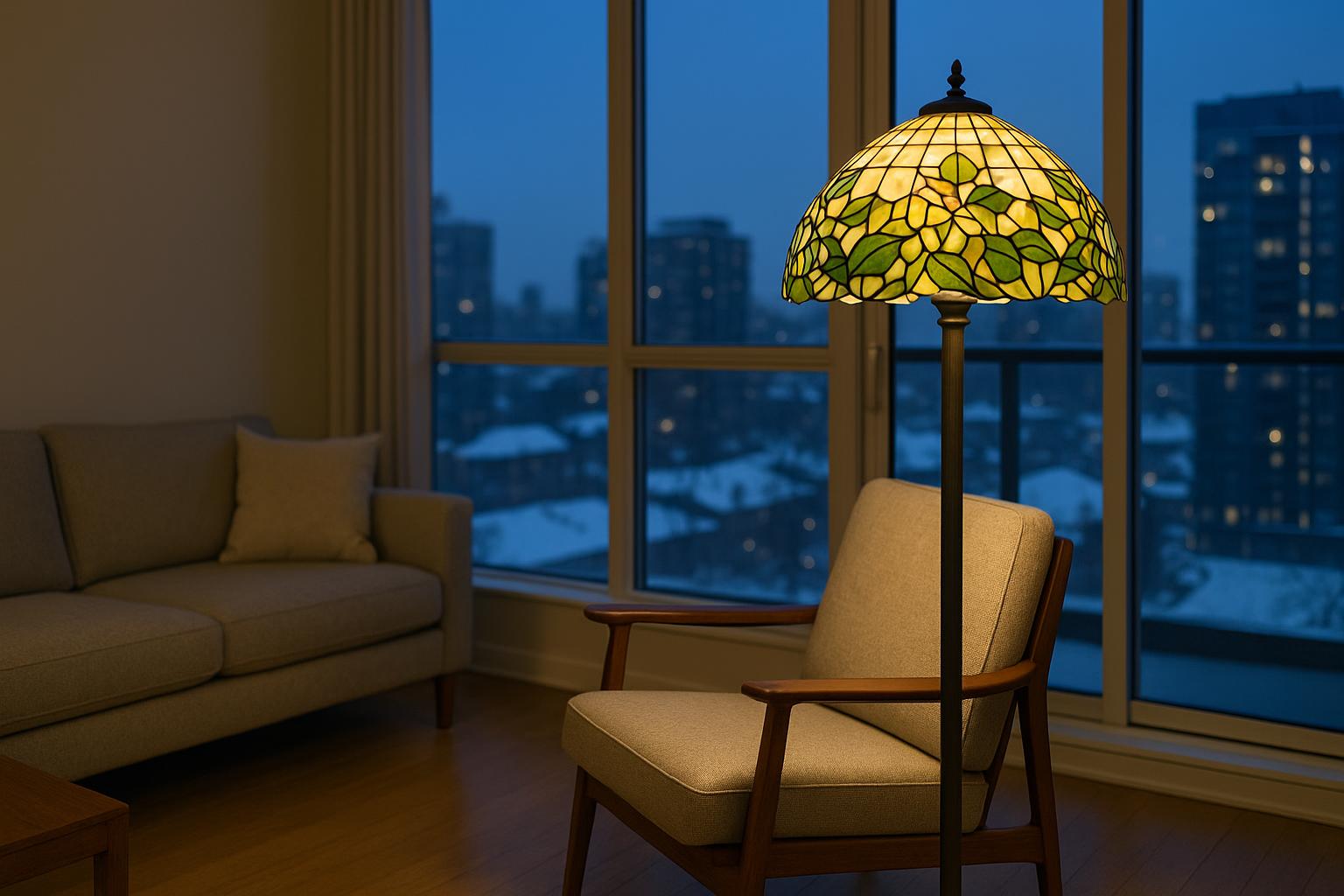
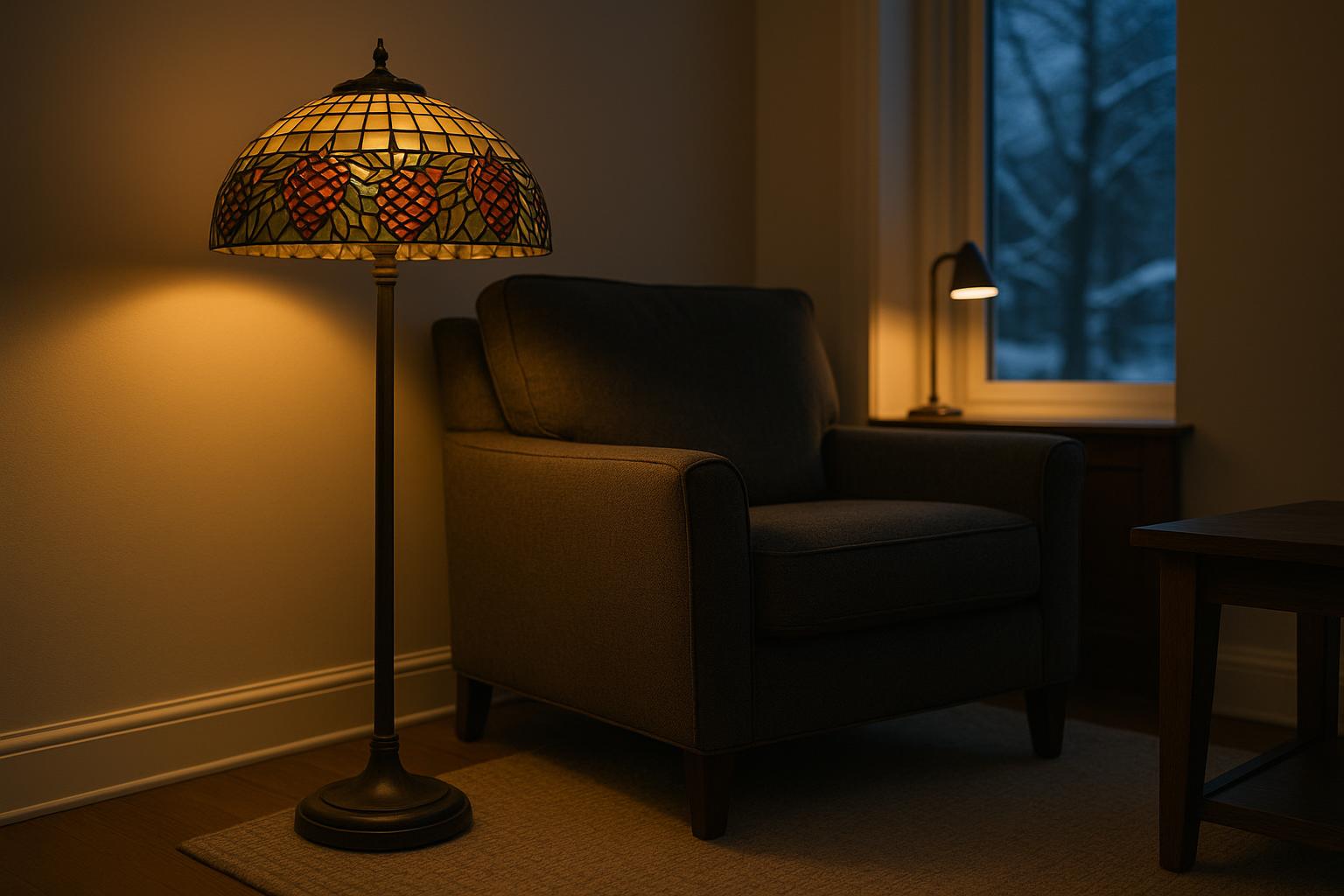
Begin with the base rather than the shade. It should sit entirely on one level surface, not partly on a rug and partly on bare flooring. Mark the footprint beside the intended chair and check for chair legs, floor vents and nearby outlets before considering the lamp's height.
Then compare the full silhouette with the seating. A broad rustic shade generally feels more balanced beside a deep armchair, full sofa or substantial cabinet than beside a slender occasional chair. Its lower edge should avoid blocking conversation across the room while keeping the bulb opening outside a seated reader's direct view.
Protect the natural walking route. In a compact condo den or cottage living room, a few centimetres can determine whether a lamp feels settled or vulnerable to passing feet. If it must be wedged tightly behind a chair, a narrower reading floor lamp or table lamp may be the safer fit.
Scale pendants to tables and kitchen islands
A dining fixture should remain visibly narrower than the tabletop beneath it. When mocking up a broad bowl or rectangular fixture, leaving roughly 15 to 30 cm between the fixture's outer edge and the table edge can be a practical starting range. The final proportion depends on the fixture shape, table width and amount of open space around the dining area.

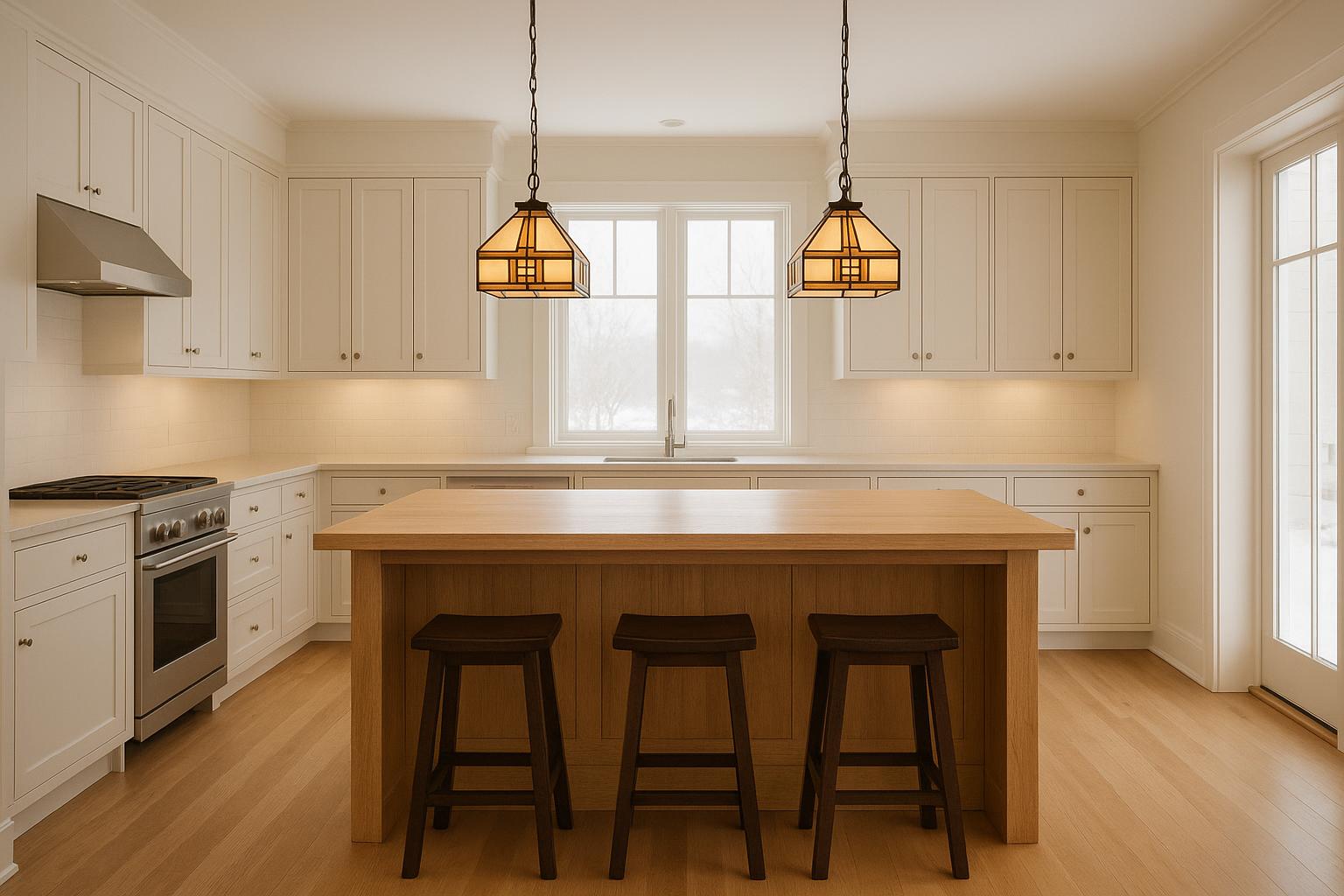
For an island, measure the counter area that needs light rather than automatically including a seating overhang. With two or more pendants, assess the whole row: shade width, gaps between fixtures and clear counter at both ends. Balanced spacing from the kitchen entrance often matters more visually than dividing every measurement into identical segments.
A bottom edge about 75 to 90 cm above a dining table or island is a useful planning range in many homes. Adjust it for taller household members, seated sightlines and the specific ceiling. Consult the fixture instructions before finalizing the drop, and have hardwired fixtures installed by a qualified electrician in accordance with applicable local requirements.
Adapt to low and vaulted ceilings
A small room does not automatically need the smallest available fixture. One moderately sized stained-glass light can appear calmer than several undersized accents, provided it leaves the furniture usable and the route through the room clear. In a Toronto condo or Montreal flat, a compact base paired with an expressive but controlled shade can add colour without taking over the surface.
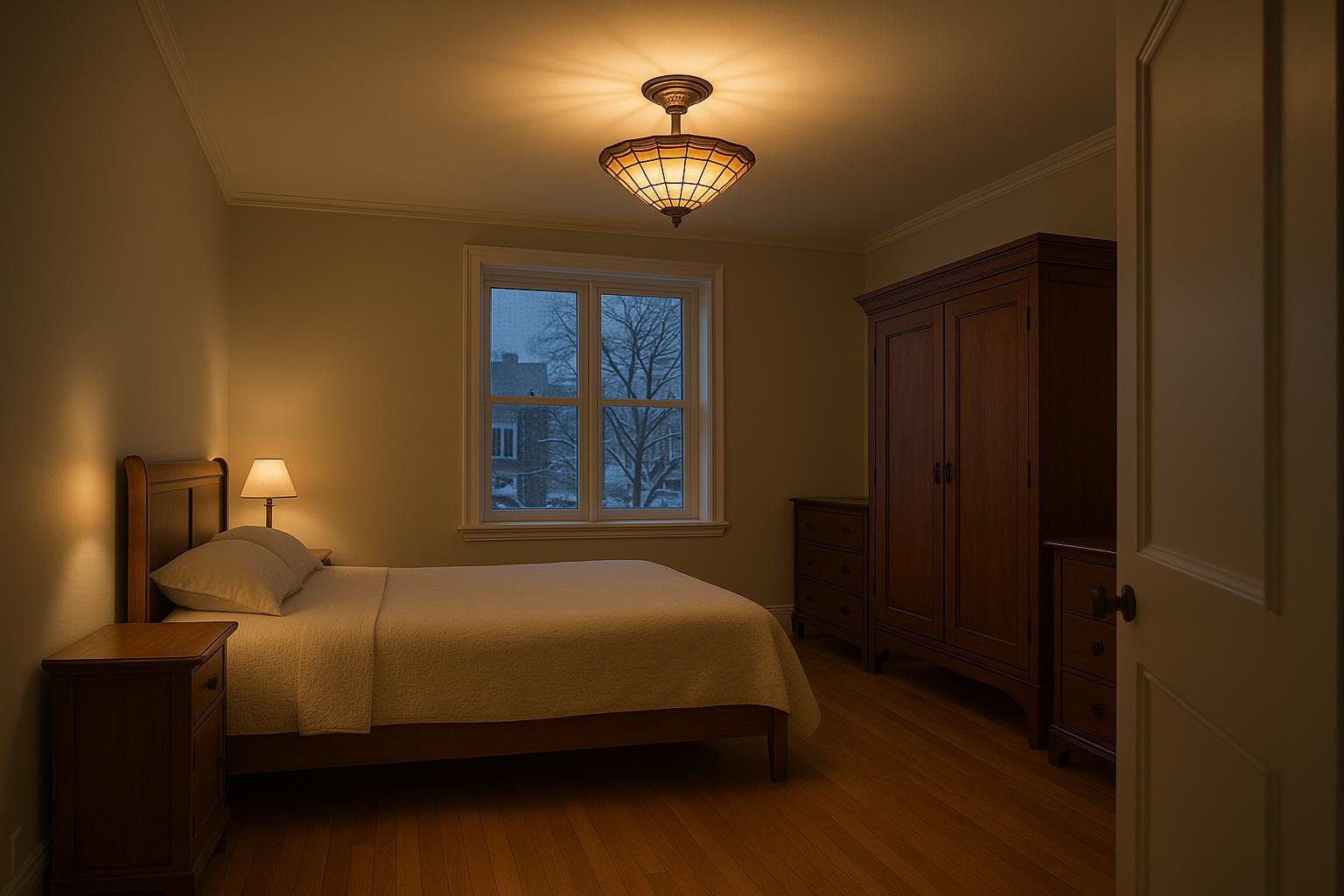
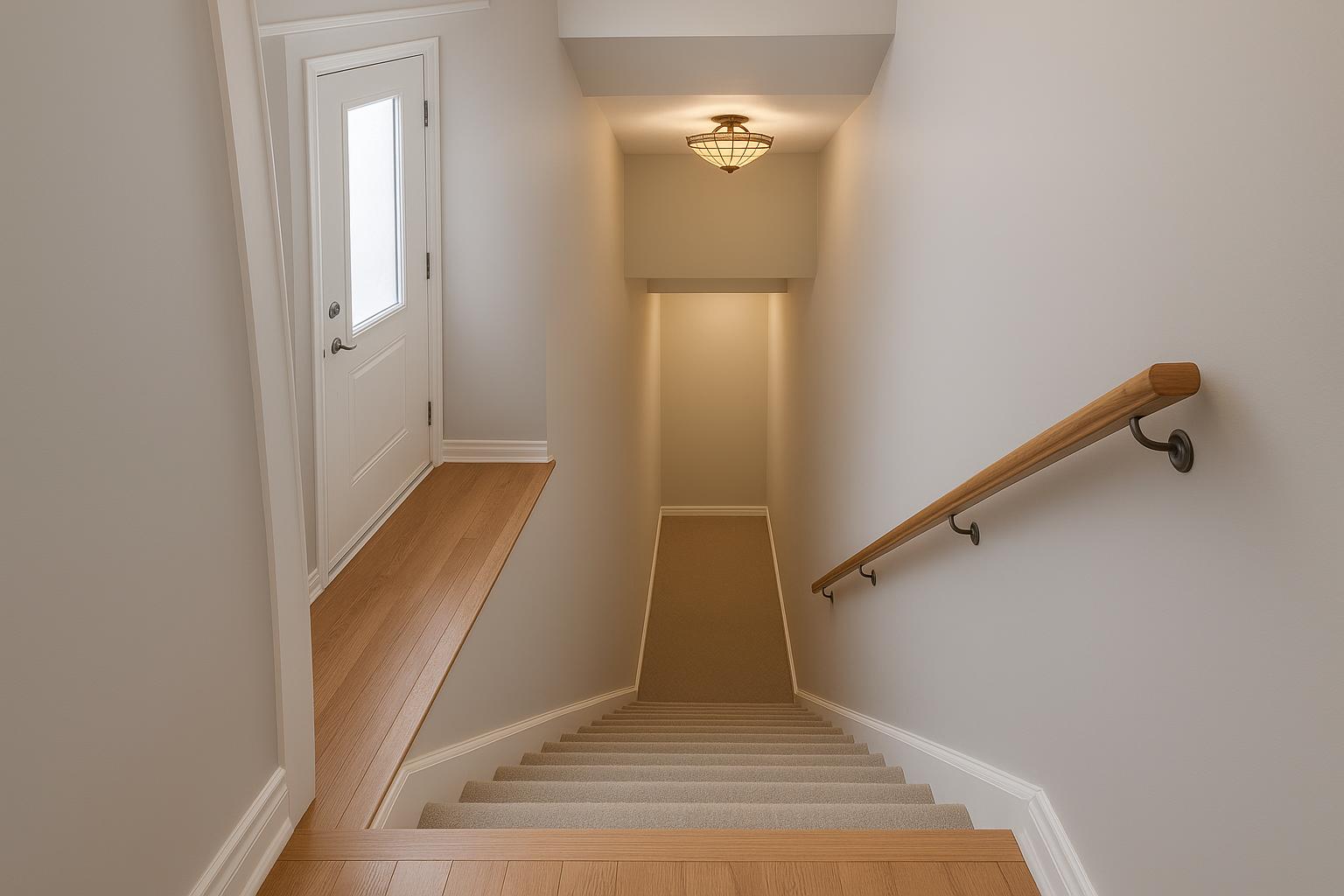
For a basement or other low-ceiling space, check the fixture's complete installed depth. A shallow flush mount or semi-flush light preserves headroom more effectively than a pendant with a short chain that still hangs into the room.
Vaulted cottage ceilings create the opposite problem. A small shade can appear remote in the extra volume. A larger fixture or grouped arrangement may suit the height, but it must remain connected to the table, entryway or seating zone below. Confirm that the canopy and suspension method are suitable for the actual ceiling, particularly on a slope.
Match shade colour to the lighting task
Fixture size and useful brightness are not interchangeable. A large shade made with deep amber, red or green glass may produce softer room light than a smaller shade with cream or pale panels. The result also depends on the permitted bulb, shade construction and surrounding wall colours.

Decide whether the fixture's main role is ambient, task or decorative light. A living room lamp can serve as a warm evening focal point with quieter light sources elsewhere. A bedside lamp needs comfortable local illumination, while an entryway should light faces, footwear and the path through the door rather than only the shade.
Consider both daytime and evening conditions. Low winter sun and reflected glare can change how a lamp feels near a window, while long evenings make dark leading and coloured glass more prominent. Always follow the stated bulb requirements and maximum limits for the individual fixture.
Record measurements before shopping
Write down a maximum shade width, maximum overall height and acceptable base footprint. For ceiling lights, add the desired installed drop and the dimensions of the furniture below. A straight-on photograph and a second view from the doorway will help you compare proportions consistently.
Use those figures as firm filters rather than trying to make a favourite design fit after purchase. You can then browse rustic and country Tiffany-style lamps with a clearer idea of which table, floor and ceiling forms suit the available space.
A well-scaled lamp leaves room for daily life. Furniture remains useful, walking routes stay comfortable and the stained-glass pattern has enough visual space to be enjoyed.