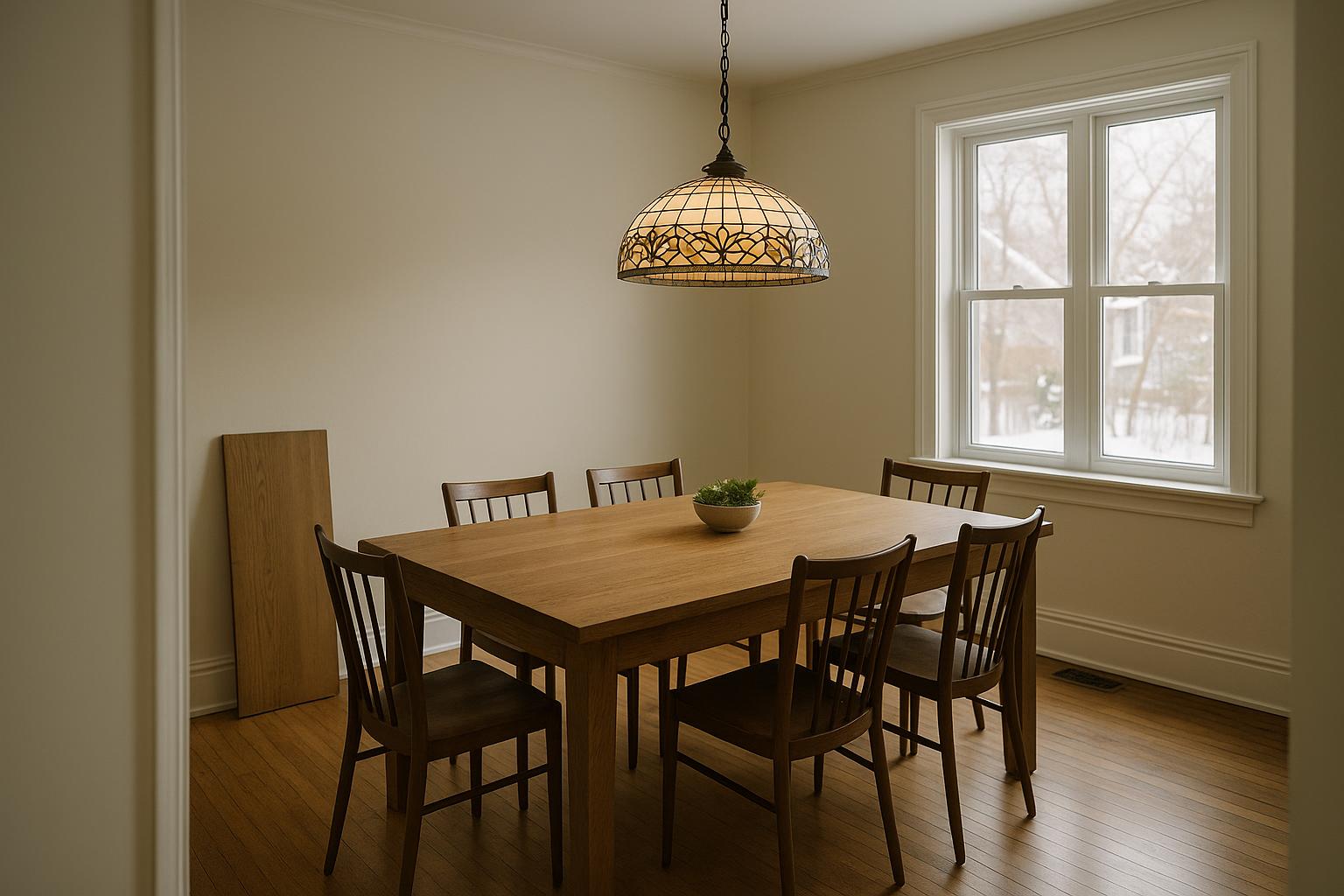
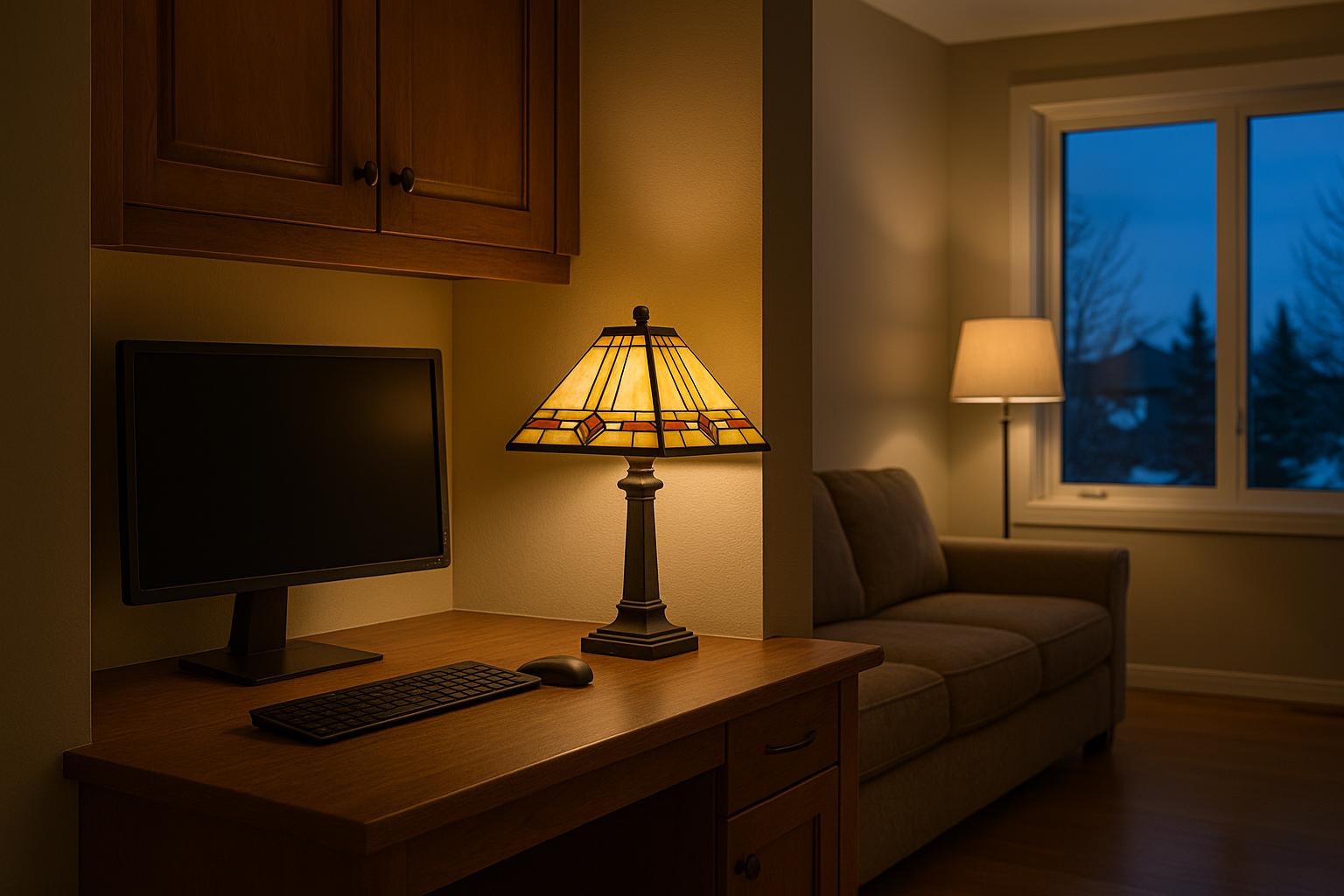
A practical guide to fitting a stained-glass desk lamp around monitors, paperwork, video calls and limited workspace...
- There are no more items in your cart
- Shipping Free
- Total CA$0.00
Where a Tiffany-Style Desk Lamp Fits in Your Workday
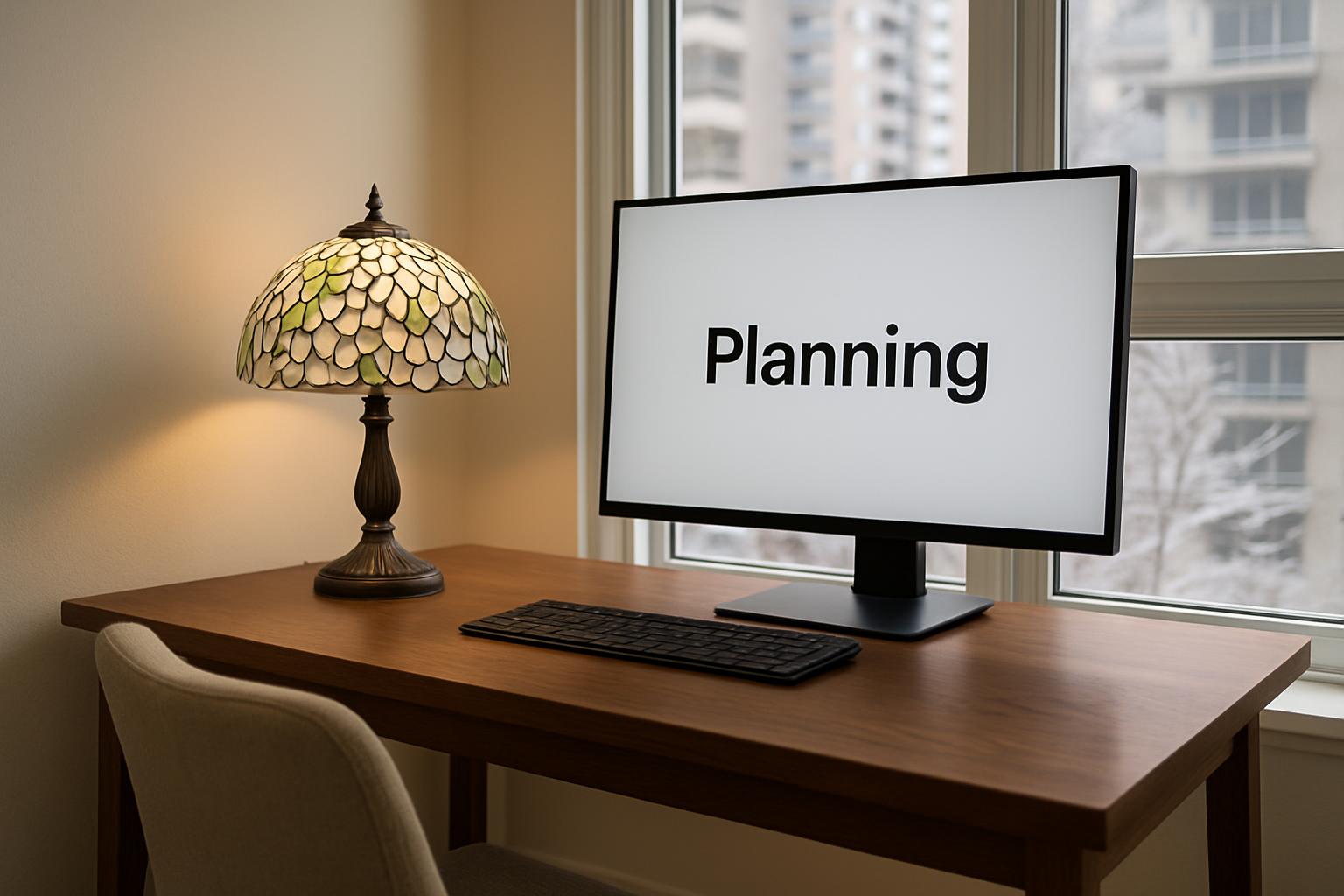
A stained-glass desk lamp can make a home office feel less temporary, but visual appeal is only part of its job. On a working desk, the lamp must coexist with a monitor, keyboard, paperwork and all the small movements that fill a typical day. It also needs to remain comfortable when daylight fades early and the screen becomes the brightest object in the room.
The most useful approach is to plan from the seated position rather than choosing a favourite pattern first. Lamp height, shade width, light direction and switch access will affect daily use more than whether the glass matches a bookcase perfectly. Once those limits are understood, colour and motif become much easier to assess.
Start with the view from your chair
Sit at the desk with the monitor, laptop stand and other permanent equipment in place. Look toward the proposed lamp location and note where the shade would meet your sightline. A low shade may hide the bulb well but block part of a second monitor. A taller model may clear the screen while exposing a bright opening beneath the glass.

Check the view from normal working posture, not only while standing beside the furniture. If the lamp will sit near eye level, its lower edge should not direct concentrated light toward you. Moving it 10 to 20 cm farther back or to the side can make a significant difference without changing the room layout.
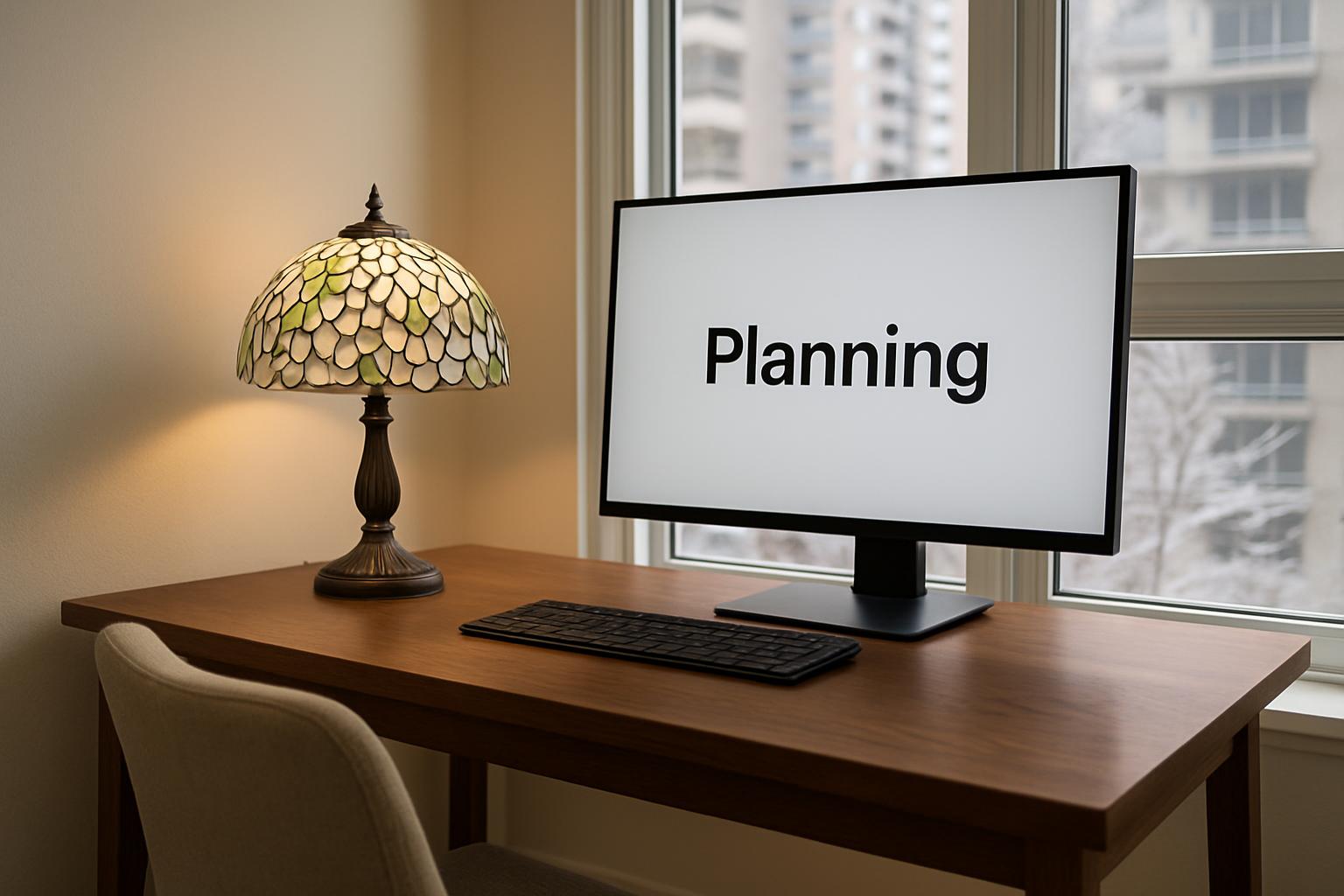
Window position matters as well. In a compact Toronto condo, a screen placed roughly perpendicular to a large window will usually be easier to manage than one facing the glass directly. The desk lamp can then sit to one side of the monitor, where it supports the surrounding workspace without appearing as a bright reflection in the display.
Give screen work and paperwork different support
A lamp does not need to perform every office-lighting job. Screen work benefits from moderate illumination around the monitor so that the display is not floating in an otherwise dark room. Printed documents need light on a specific horizontal surface. Video calls generally require soft, neutral light near the camera rather than a coloured shade at the side of the desk.
Decide which of these tasks matters most. If the day is spent mainly in spreadsheets or online meetings, the stained-glass lamp may work best as controlled supporting light. If the desk is used for marking papers, sketching or handwritten notes, look for a shade that sends useful light downward. Decorative office table lamps can contribute to task lighting, but their performance varies with shade shape, glass density and bulb position.
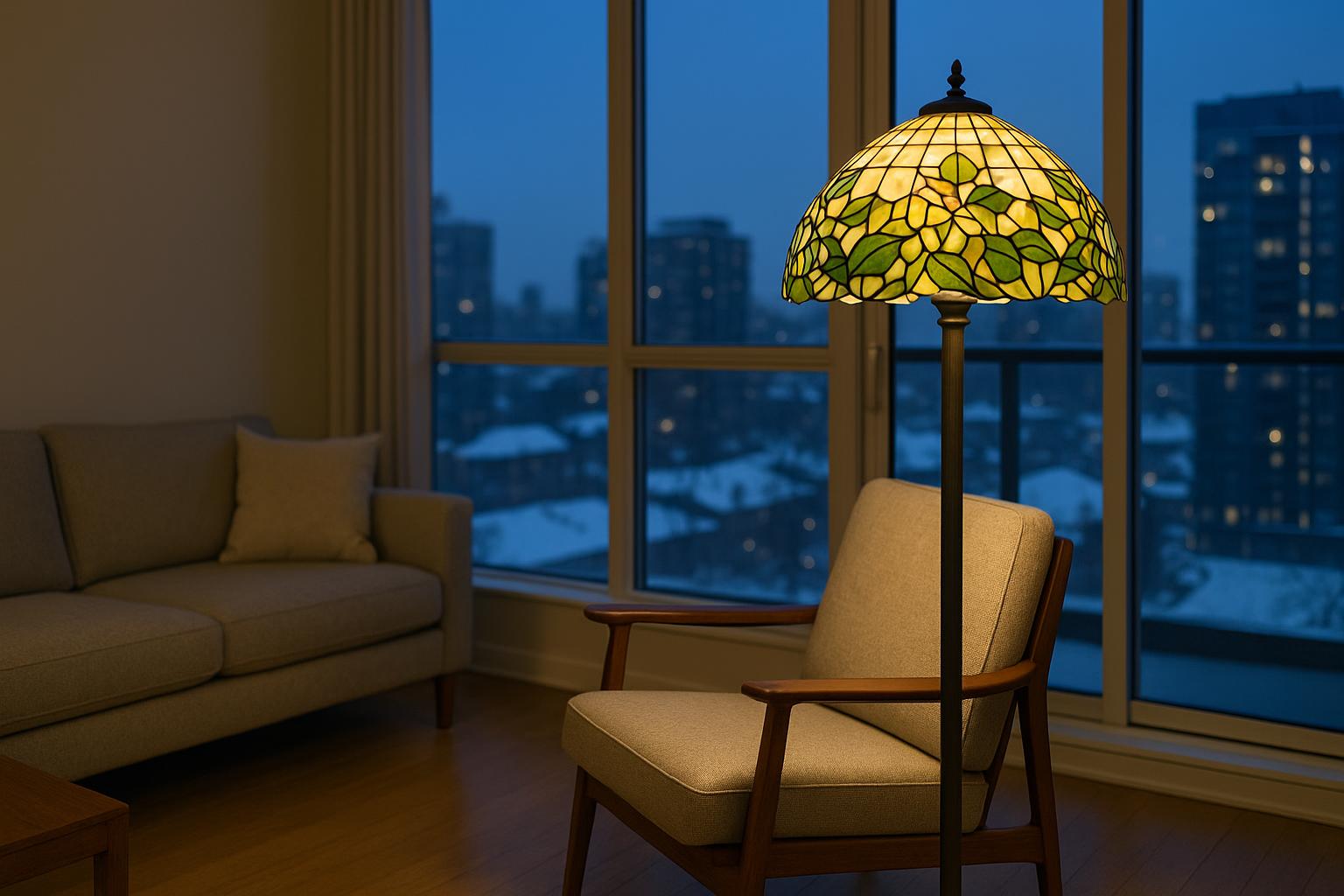
General room lighting remains important. A ceiling fixture, wall sconce or floor lamp at a comfortable level can reduce the contrast between the screen and the rest of the office. This is especially helpful during long winter evenings, when a desk lamp alone can leave the corners of a den unusually dark.
Position the lamp for your writing hand
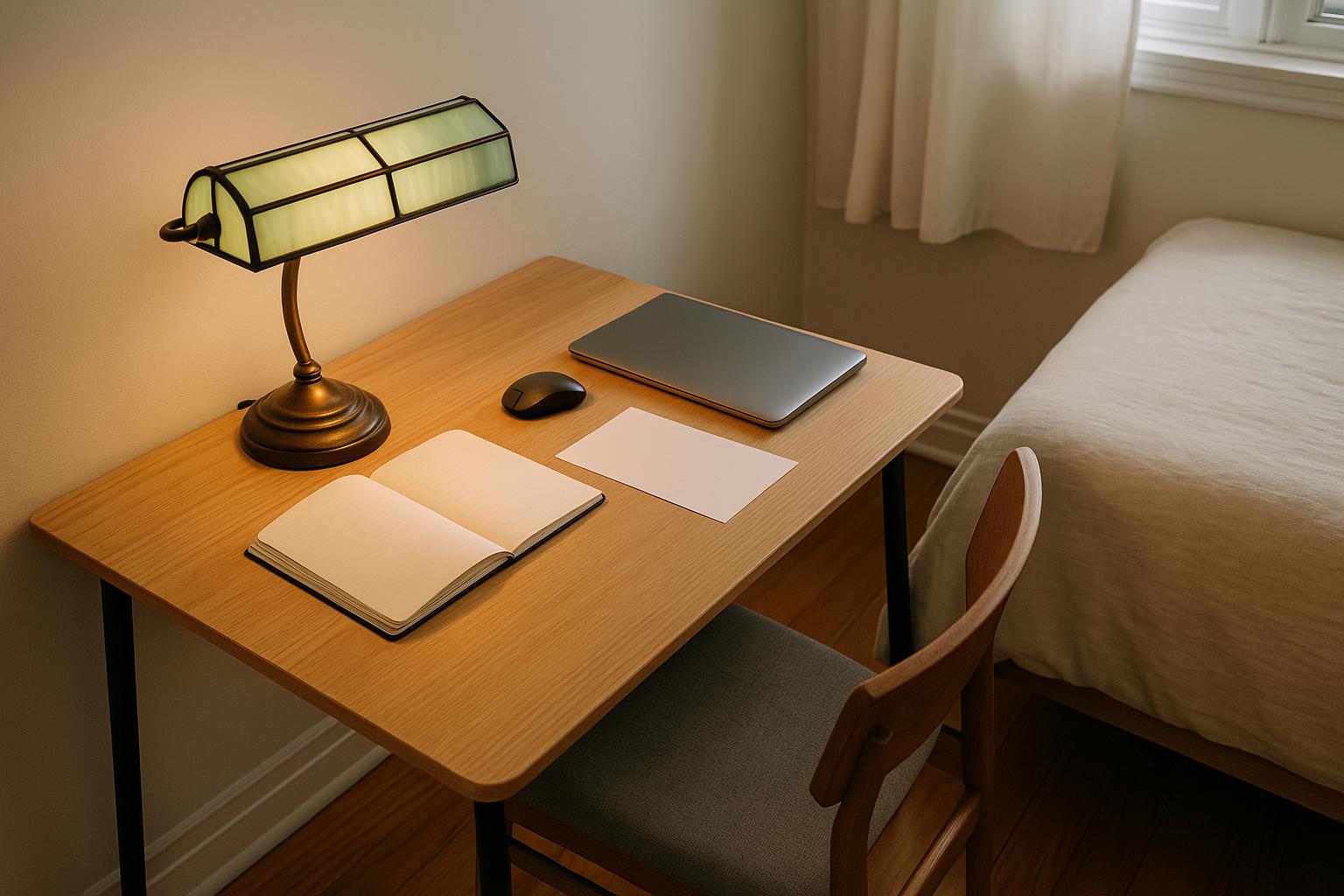
For paper-based work, begin by placing the lamp opposite your dominant hand. A right-handed person will generally cast fewer hand shadows with the lamp on the left, while a left-handed person can start with it on the right. The final position will depend on the shade height and direction of the light, so test it rather than treating the rule as fixed.
To complement this topic, you can also read How Tiffany-Style Lamp Colours Change After Sunset.
Open a notebook and place a printed page where it would normally be read. Write several lines, reach for the mouse and move a document between the tray and the centre of the desk. This quick trial often reveals problems that measurements miss. The light may reach the paper well while the base interferes with the forearm, or the shade may cast a shadow from the monitor stand.
A banker lamp can suit a shallow writing desk because its horizontal shade follows the shape of the work area. A compact dome-shaped lamp often works better in a rear corner, where it can create a broader pool of light without dividing the desktop visually.
Judge the shade from its lower edge
Product photographs naturally draw attention to the pattern across the top and sides of a shade. At a desk, however, the lower panels and openings have the greatest effect on useful light and glare. Pale cream, amber and light green glass may appear brighter than dense blue, red or heavily textured pieces. A shade with dark glass around its lower rim can produce a rich evening glow while delivering less perceived light to a page.

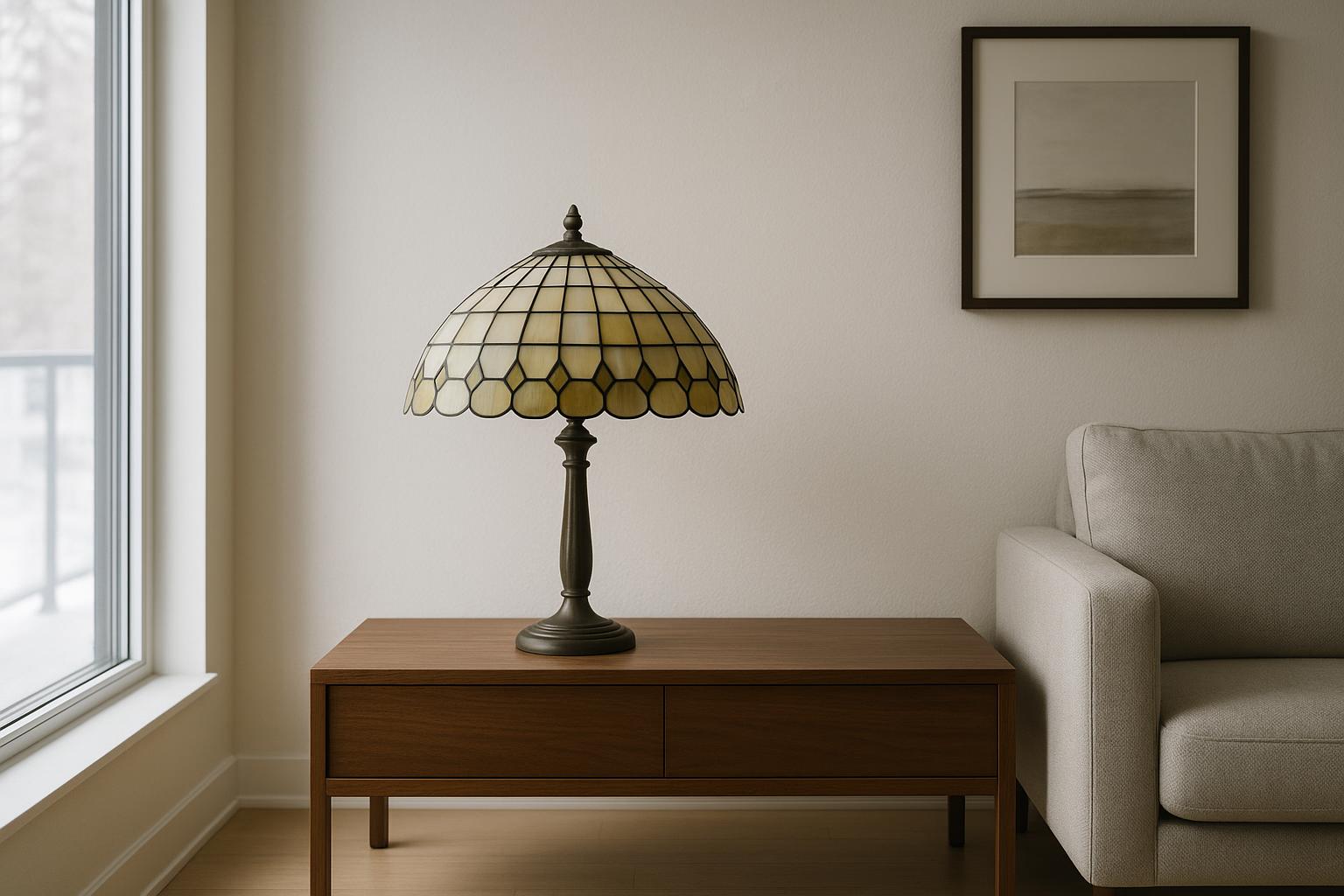
That does not make colourful stained-glass desk lamps impractical. It simply means they should be selected for the right role. A multicolour floral shade may be excellent for softening the wall beside a monitor. A restrained geometric pattern with lighter lower panels may be more suitable for paperwork. For colour-sensitive illustration, fabric matching or photo editing, use a separate neutral work light and treat the stained-glass lamp as background illumination.
When photographs are available, compare the shade switched on and off. The unlit image shows how the glass will sit in the office during the day; the illuminated image is a better guide to its character after dark. Neither view alone tells you how much light will reach the desk, so also consider the shade profile and the product specifications.
Test the lamp's complete footprint
Measure the clear working surface rather than relying on the desk's overall width. A 120 cm desk may sound generous, yet a monitor stand, speakers and document trays can leave little usable room. Mark the proposed base with a sheet of paper cut to the listed dimensions. If the shade is wider than the base, mark its outer edge as well.
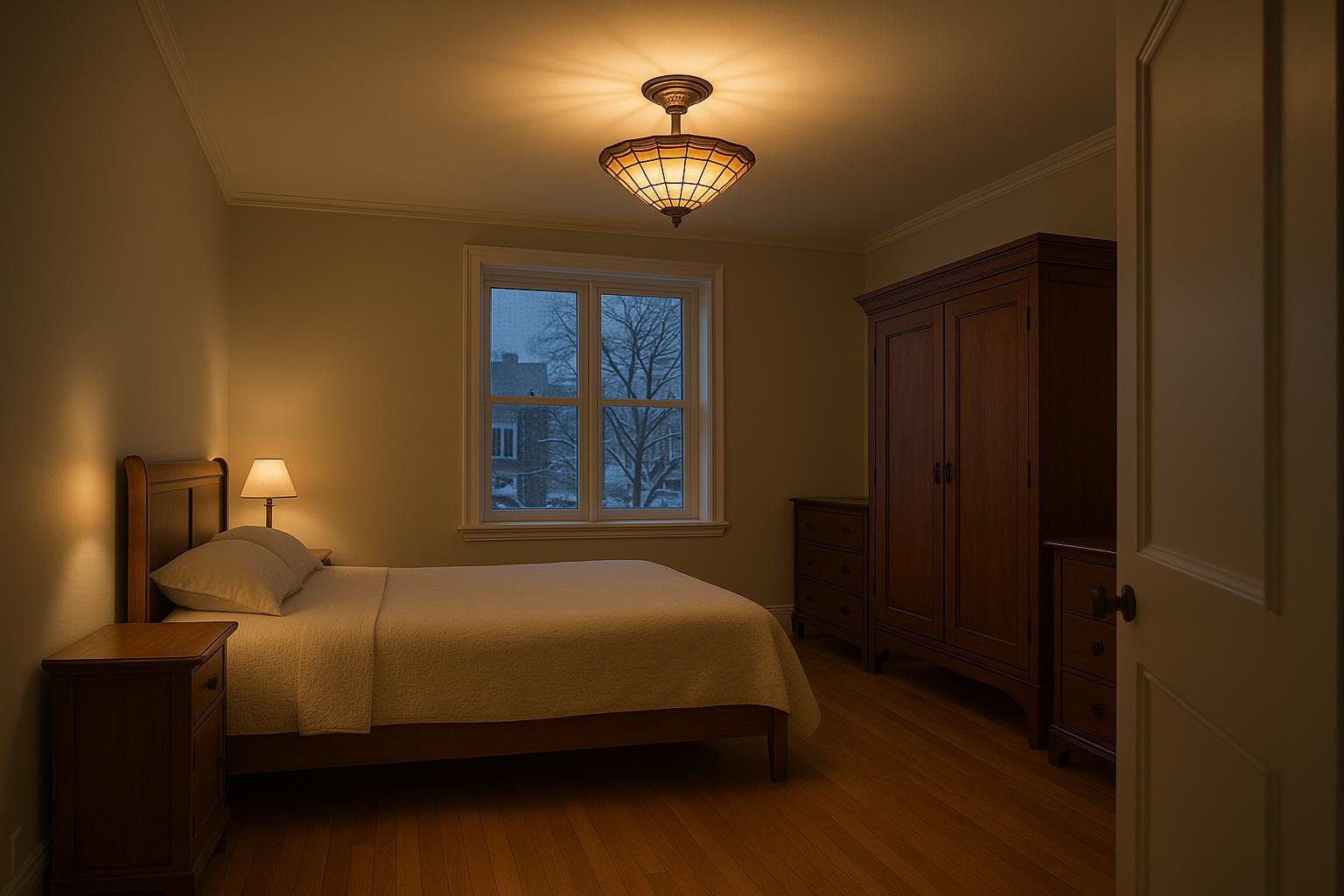
In the same direction, From Overhead to Bedside: Layering a Bedroom After Dark offers useful ideas for choosing home lighting more confidently.
Use the desk normally while the template is in place. Check whether the mouse reaches it, whether a cabinet door would brush the glass and whether the switch can be reached without leaning behind the monitor. Leave enough space around the shade that binders and folders are not repeatedly pushed against it.
Weight and visual scale also matter. A narrow wall-mounted workstation can be overwhelmed by a wide shade even when the base technically fits. On a substantial wood desk, a very small lamp may look stranded and fail to spread light across the working area. Compare the whole silhouette rather than using base diameter as the only sizing measure.
Keep coloured light under control on calls
A glowing stained-glass lamp can add depth to a video-call background, but it should not be asked to light the face. When positioned behind the chair, a bright shade may lead the camera to darken the rest of the scene. When placed close to the screen, coloured light may alter skin tones or make white paper appear warmer than it is.
Keep the lamp just outside the camera frame or let it appear as a modest background accent. Use soft, neutral light near the camera when needed. In an Ottawa townhouse office with limited daylight, separating these roles allows the lamp to warm a pale wall without becoming the dominant object on screen.
Preview the camera image before settling on a location. Look for reflections in framed glass, a visible cord crossing the background or a shade that appears to sit directly on top of the monitor. A shift of only a few centimetres can make the setup look more deliberate.
For more consistent lighting throughout the home, the article Beyond Colour: Reading the Shape of a Scalloped Tiffany-Style Lamp may also be helpful.
Reassess the office after sunset
Bulb choice should always remain within the lamp's stated requirements for bulb type and maximum wattage. Within those limits, consider both brightness and colour appearance. Warm light often complements amber, cream and red glass, while a more neutral appearance can keep pale green or geometric shades clearer beside paperwork. Very cool light can feel stark in a traditionally furnished den.
Too little output may leave a task lamp functioning mainly as decoration. Too much can reveal the bulb through lighter pieces of glass or produce glare beneath the shade. If the lamp, bulb and control are all specified as dimmable, adjustment can help the same fixture support focused work and quieter evening use. Compatibility should be confirmed rather than assumed.
Evaluate the entire room after dark. If the shade suddenly seems harsh, the answer may be to add low-level room light rather than reduce the desk lamp until it is no longer useful. Balanced layers are generally more comfortable than one bright point beside a dark screen.
Choose from the workstation outward
Before comparing motifs, confirm five practical details: the clear base area, the shade's widest measurement, the seated sightline, the writing-hand position and the lamp's relationship to the monitor. Then consider how the glass looks against the wall, furniture and other evening lighting.

- For screen-heavy work: keep the lamp to the side and avoid a bright opening aimed toward the display or your eyes.
- For paperwork: favour useful downward reach and test for hand shadows with a real page.
- For a compact desk: mock up both the base and the full shade width before buying.
- For video calls: use the coloured shade as an accent and keep facial lighting neutral.
With those limits established, browse the available Tiffany desk lamps by shape, scale and colour. The right choice should earn its place on the desk during working hours and provide a measured stained-glass glow when the office shifts into evening use.