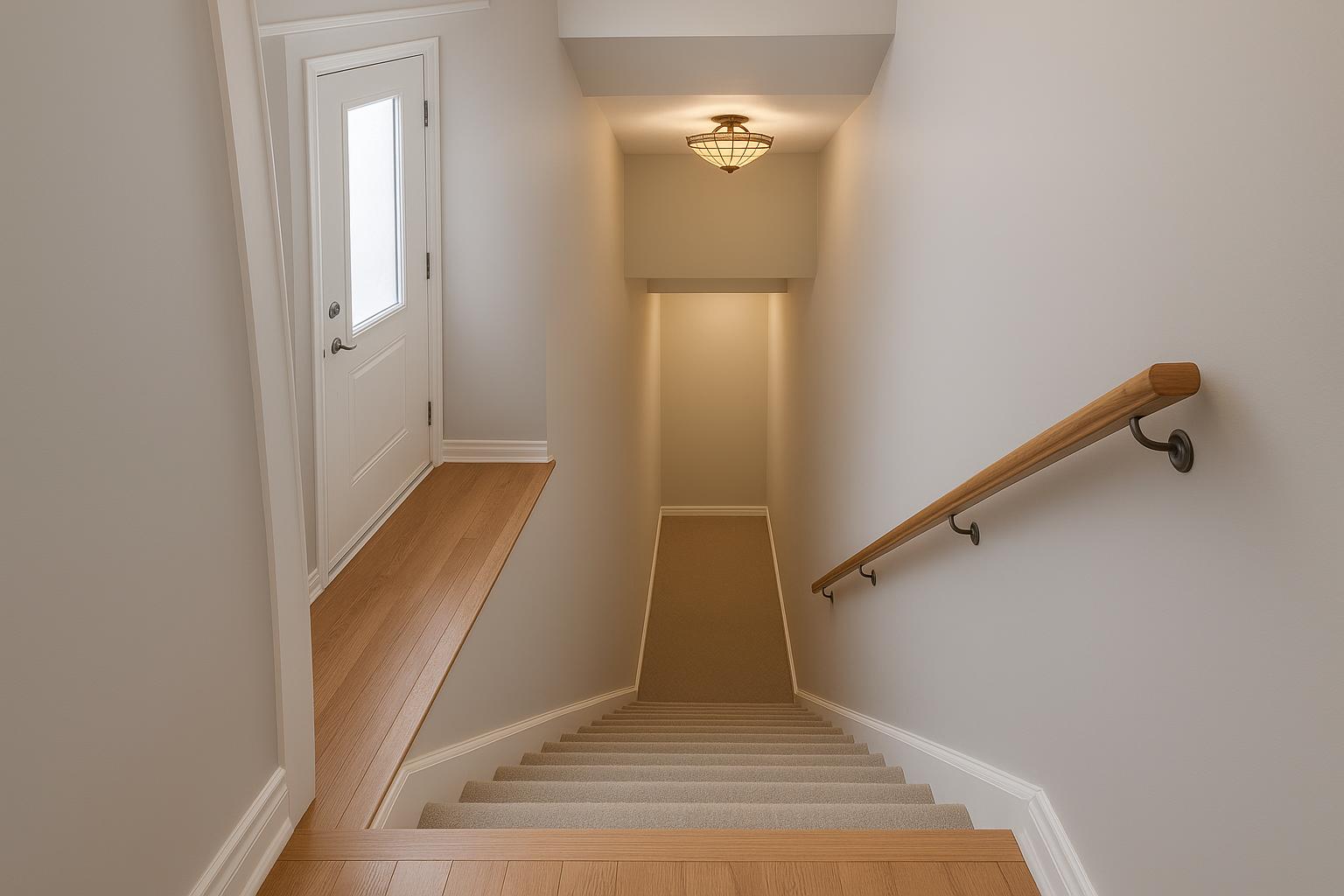
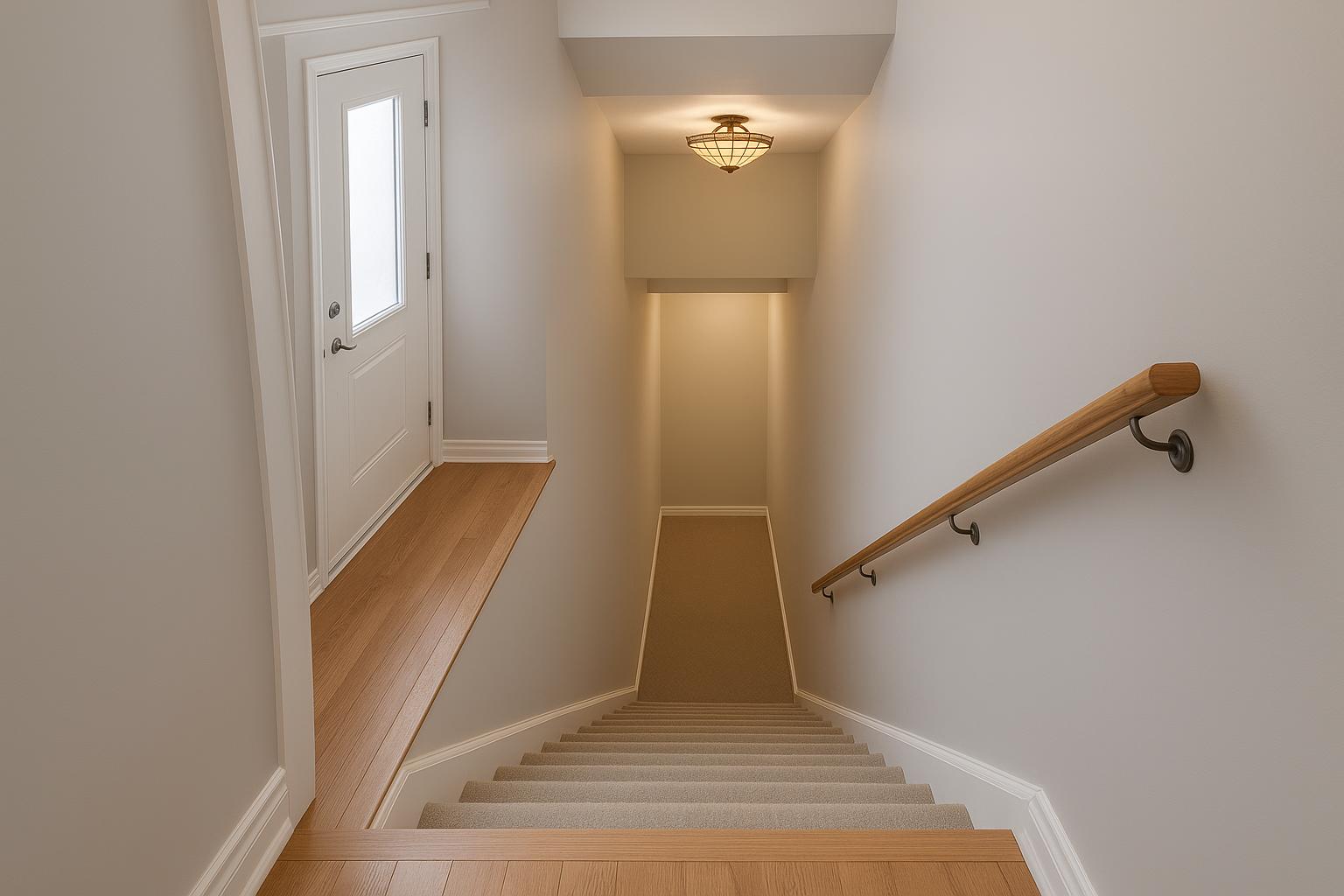
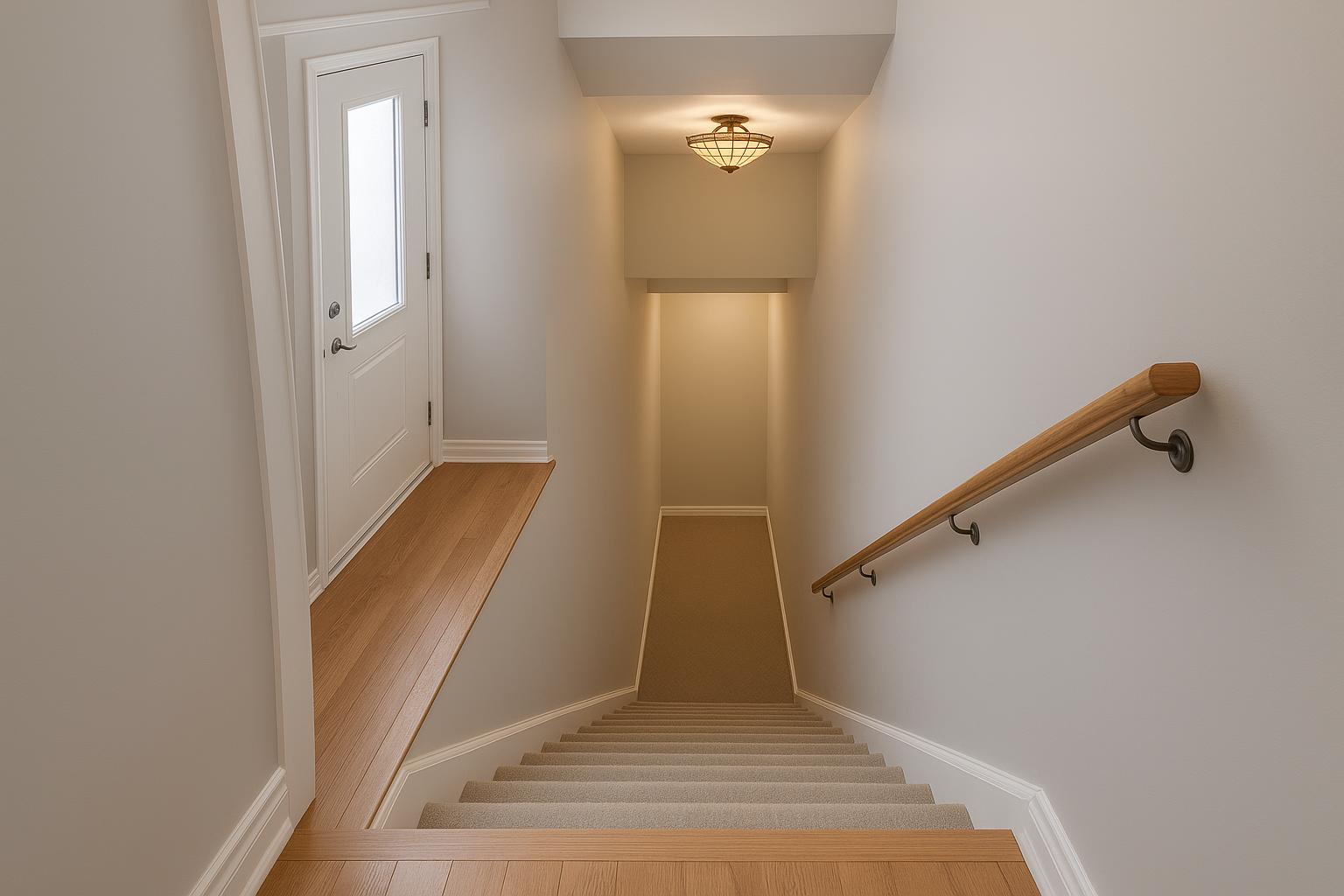
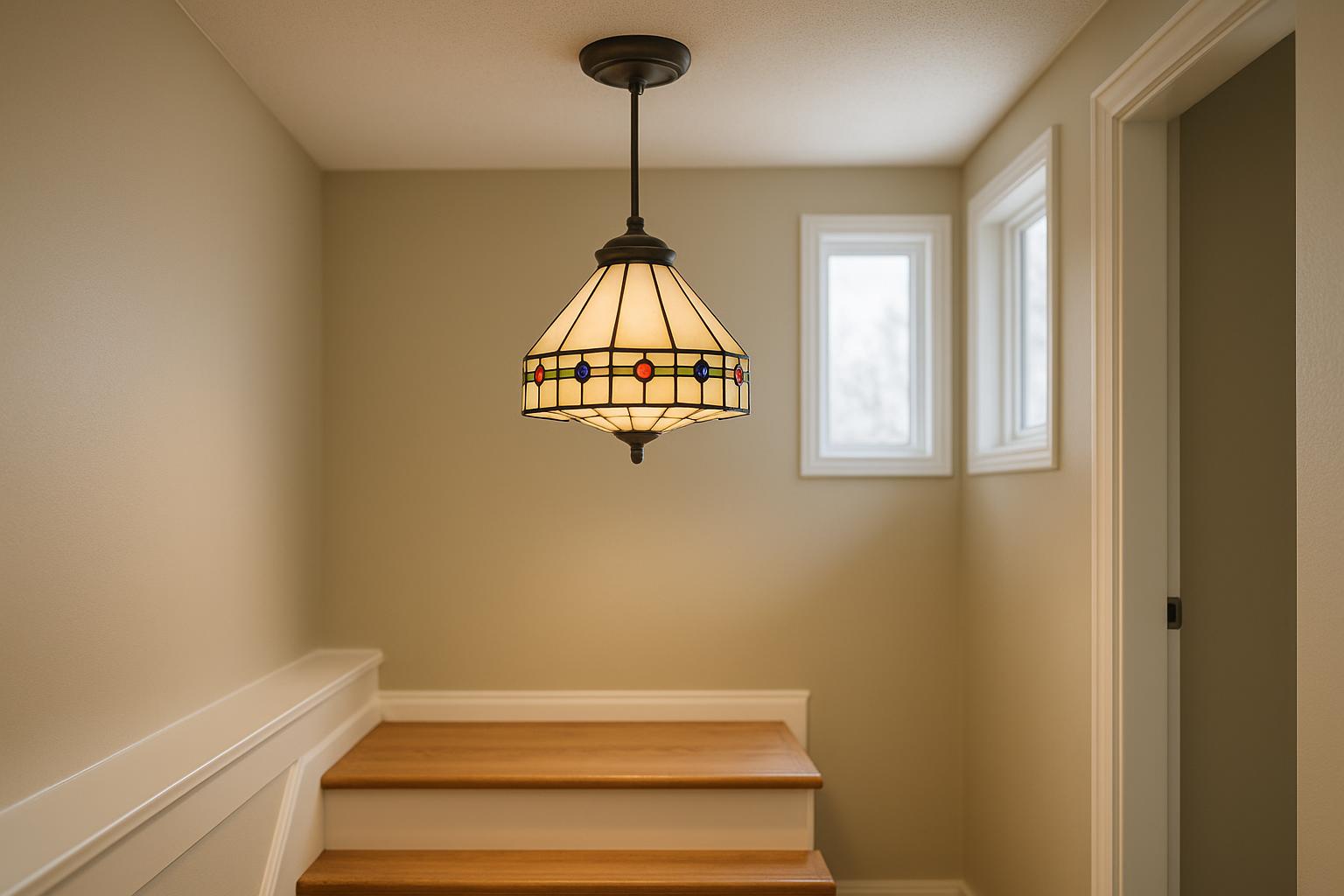
Create a clearer, more inviting route to the basement with stained-glass fixtures chosen for ceiling height,...
- There are no more items in your cart
- Shipping Free
- Total CA$0.00
Lighting the Route Down: Tiffany-Style Fixtures for Basement Hallways and Landings
A basement stairway rarely functions as a single room. It may begin in a bright foyer, pass beneath a bulkhead, turn at a half-landing and end in a corridor with little or no daylight. One ceiling fixture can leave the turn in shadow while making the bottom landing uncomfortably bright.
Tiffany-style stained-glass lighting can give this route warmth and visual continuity, but the shade is only part of the decision. Fixture depth, wall projection, glass colour and viewing angle all affect whether the result feels comfortable. The best plan follows the way people move through the space instead of treating the nearest electrical box as the natural centre.
Read the route from top to bottom
Walk the route during daylight and again after dark. From the upper floor, note where the steps become difficult to distinguish and which fixture locations are visible from the foyer or entryway. On the way back up, look for glare, dark turns and doors that blend into the surrounding walls.

It helps to divide the route into practical zones:
- Upper approach: the doorway, foyer or mudroom area where the basement entrance first comes into view.
- Stair run: the descending section where clear steps, an unobstructed handrail and comfortable headroom take priority.
- Landing: a pause or change of direction that may offer a protected position for decorative lighting.
- Lower hallway: the corridor leading to a rec room, laundry area, storage room or basement bedroom.
Existing wiring may not support a separate fixture in every zone. Even so, this simple survey shows what each available light needs to accomplish. A fixture on the lower landing, for example, may have to illuminate the corridor while also providing a visual destination from the top of the stairs.
Start with ceiling height and overhead clearance
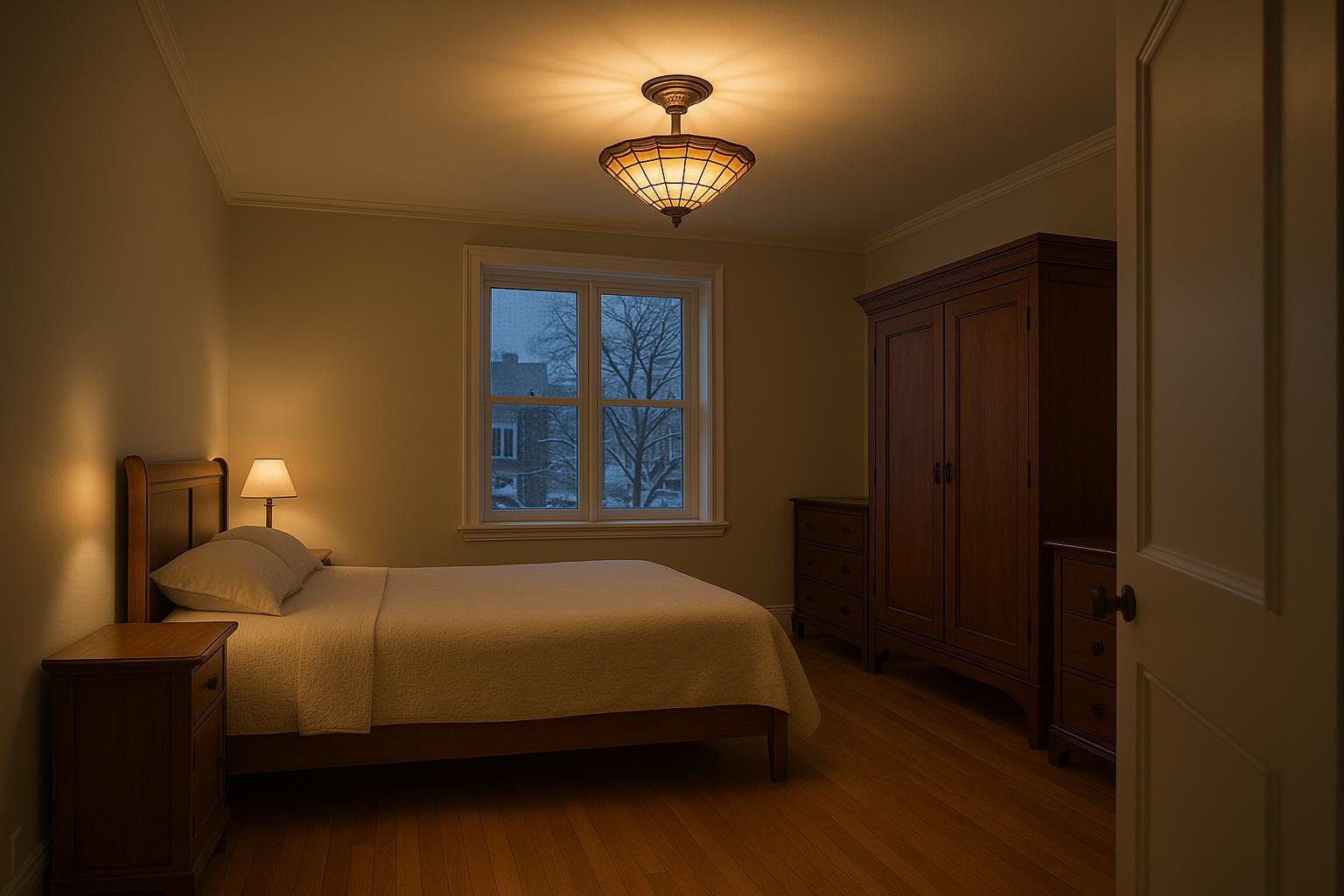
Low basement ceilings, ducts and boxed mechanical runs usually favour Tiffany flush mounts. A shallow fixture keeps the shade close to the ceiling and introduces colour without occupying the space needed for people, furniture or laundry baskets moving through the hallway.
Judge scale against the clear ceiling area around the electrical box, not the full length of the corridor. A shade fitted between a wall and a bulkhead may need to be smaller than one centred on an open square landing. Broad, densely patterned glass can also make a narrow ceiling appear lower, even when the fixture is physically out of the way.
Record the finished ceiling height in centimetres, then compare it with the complete fixture depth listed by the seller. Include the frame, finial and any decorative hardware rather than relying on the shade dimensions alone. Check nearby door swings, access panels and projecting bulkheads before choosing a diameter.
Place wall sconces away from tight circulation
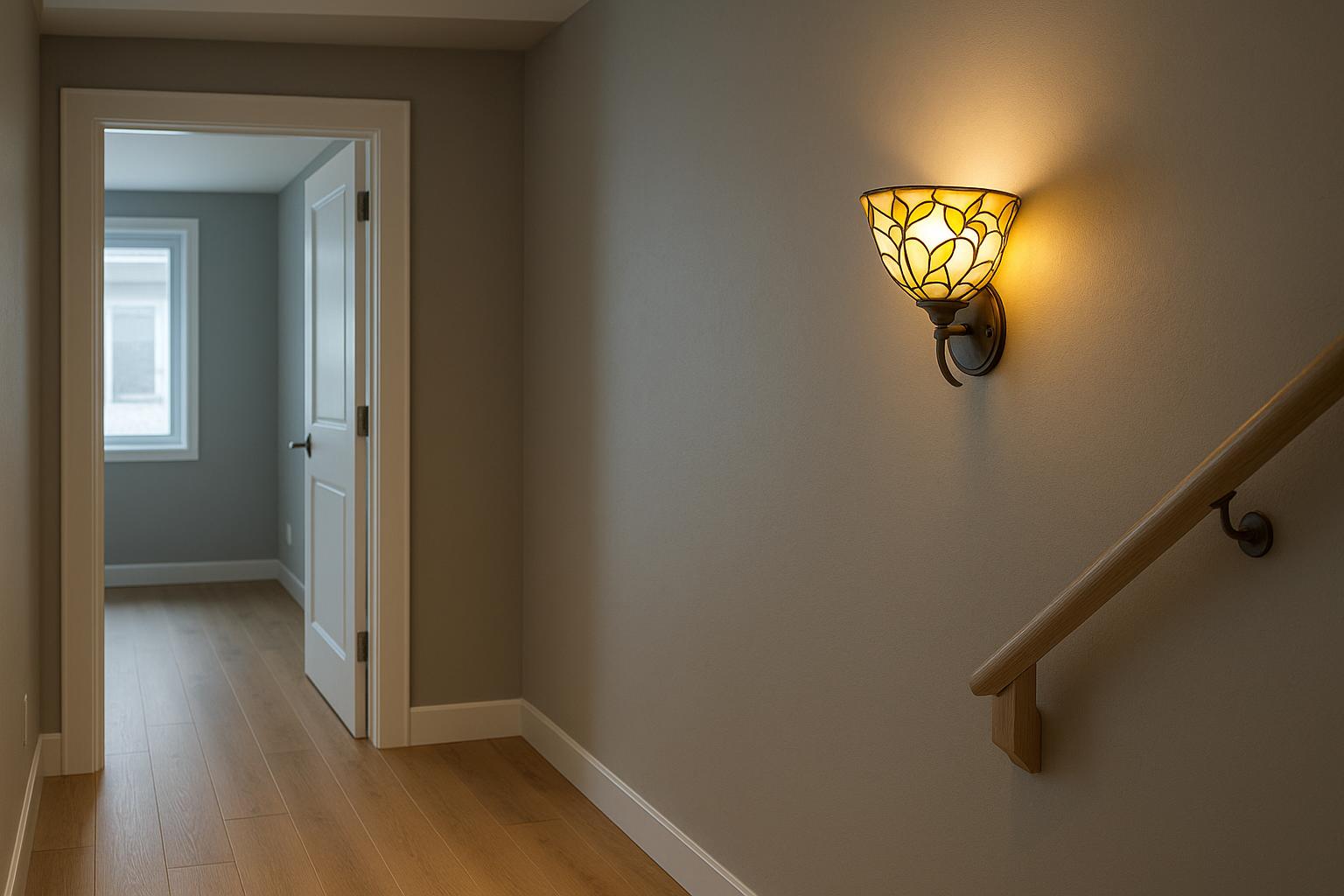
hallway wall sconces are useful when overhead light does not reach a turn or short lower passage. Because they bring light closer to eye level, they can also connect a plain basement corridor with more decorative entrance lighting upstairs. A restrained amber-and-cream shade, for instance, adds warmth to a grey wall without demanding a large field of view.
To complement this topic, you can also read A Furniture-First Guide to Rustic Tiffany-Style Lamp Sizes.

Projection is the critical measurement. A deep frame can catch a shoulder, crowd a handrail or feel intrusive beside a doorway. Measure from the finished wall to the outermost point of the fixture. A cardboard profile taped temporarily in place can show how the sconce will feel from both directions.
A broad landing wall is generally more forgiving than the side of a tight stair run. Keep the proposed location clear of trim, door movement and normal handrail use. Hardwired installation should follow the product instructions and applicable local and provincial requirements; a qualified electrician can assess the wiring and placement.
Keep pendant lights over protected landings
Small pendant lights can suit a split-level home or an open stairwell where a square landing has generous overhead space. Suspended over that protected area, a compact stained-glass shade marks the change in level and can be seen attractively from more than one floor.
A pendant is less convincing over an active tread or beneath a low bulkhead. Check the full installed drop, including the canopy and suspension, and consider people carrying boxes or moving furniture. An adjustable suspension may help with positioning, but it does not make a low or exposed location suitable.
One pendant usually looks calmer than a cluster on a modest landing. In a tall two-storey opening, however, a very small shade can appear disconnected from the architecture. View the proposed size from both floors before deciding.
Choose glass that supports useful illumination
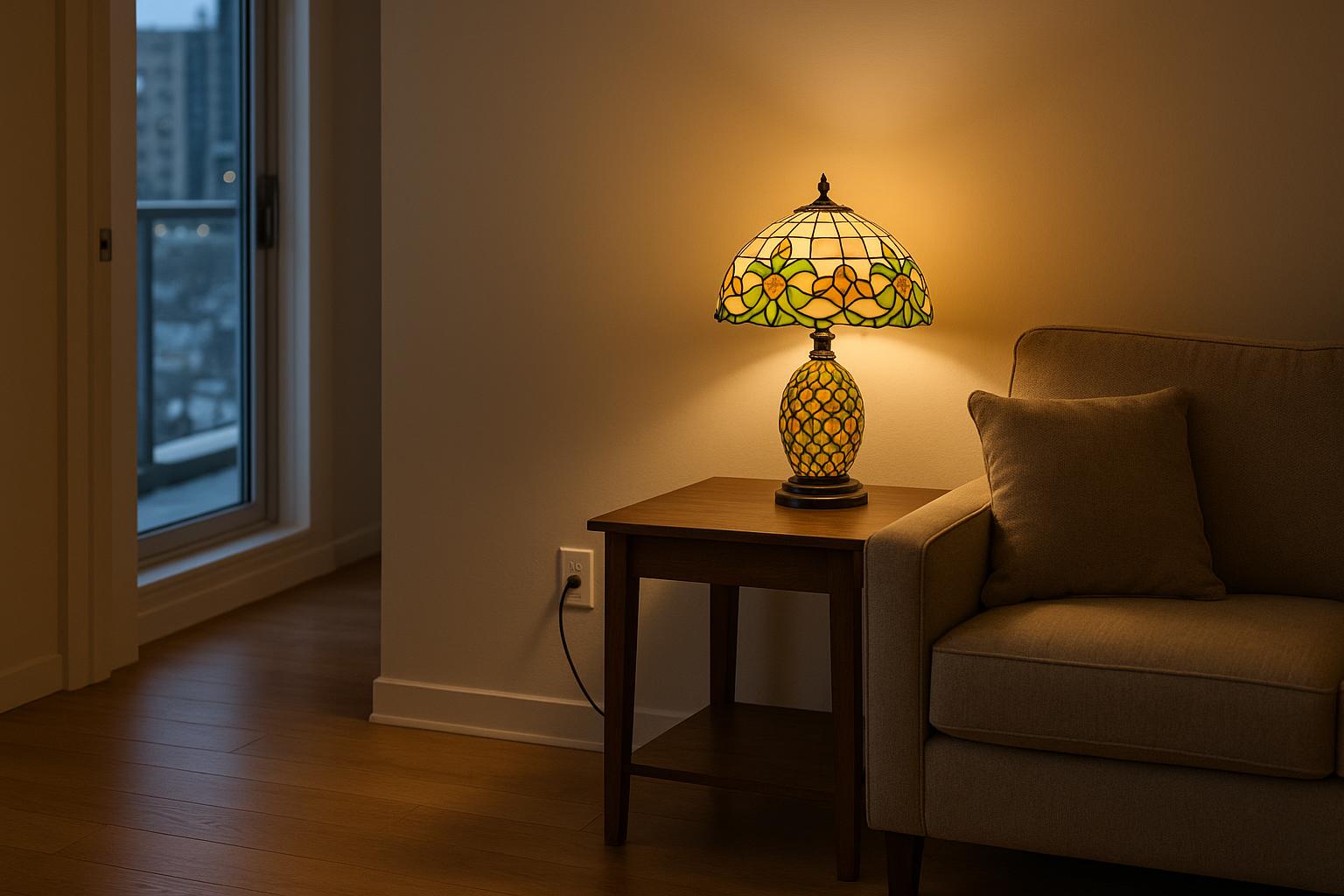
Stained glass can look dramatically different when lit. Deep red, blue and green pieces provide richness, but a shade dominated by saturated glass may deliver less general illumination than its size suggests. Along a basement route, decorative colour should not make steps, doors or changes in level harder to read.
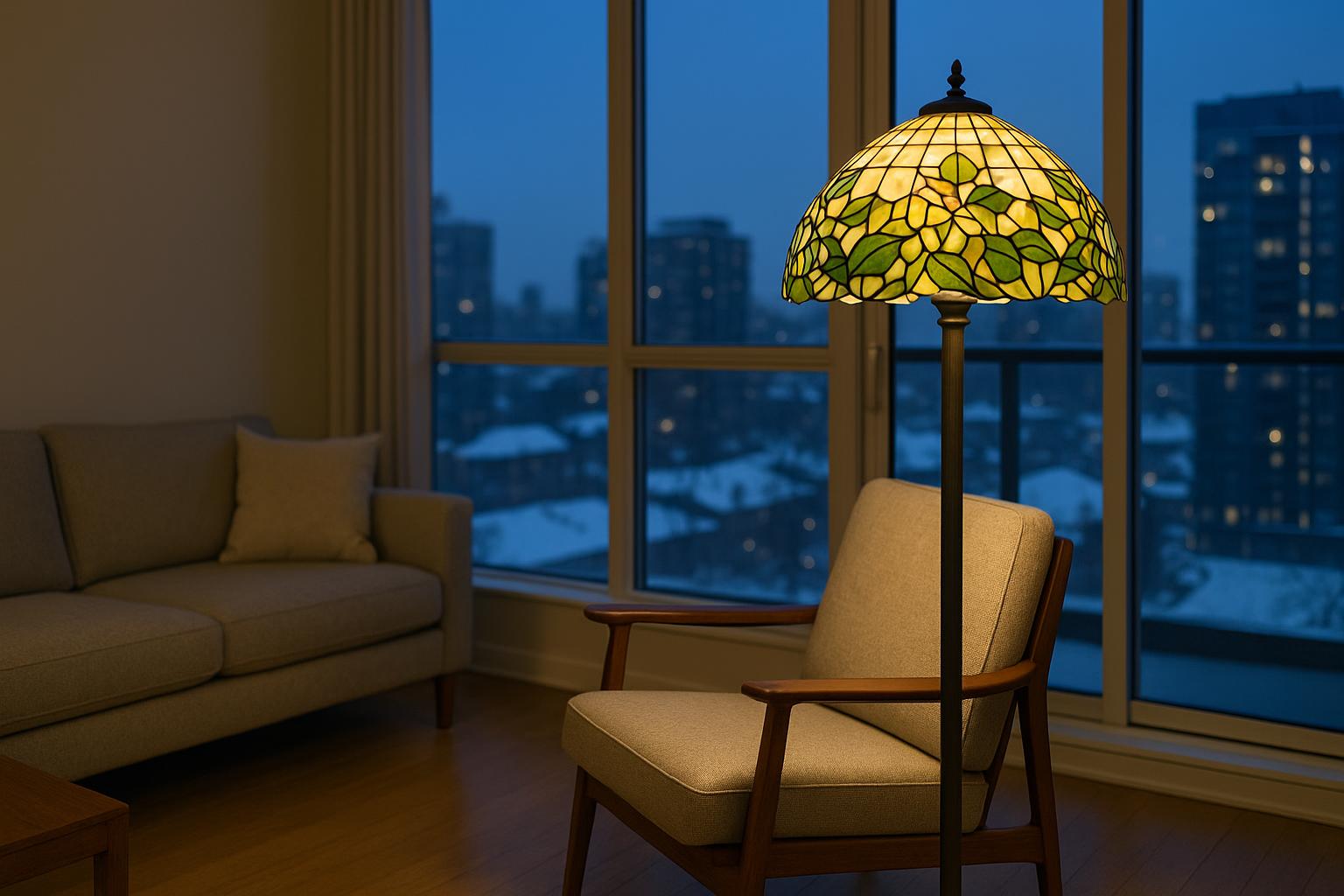
In the same direction, Room to Glow: Scaling a Large Tiffany-Style Floor Lamp offers useful ideas for choosing home lighting more confidently.
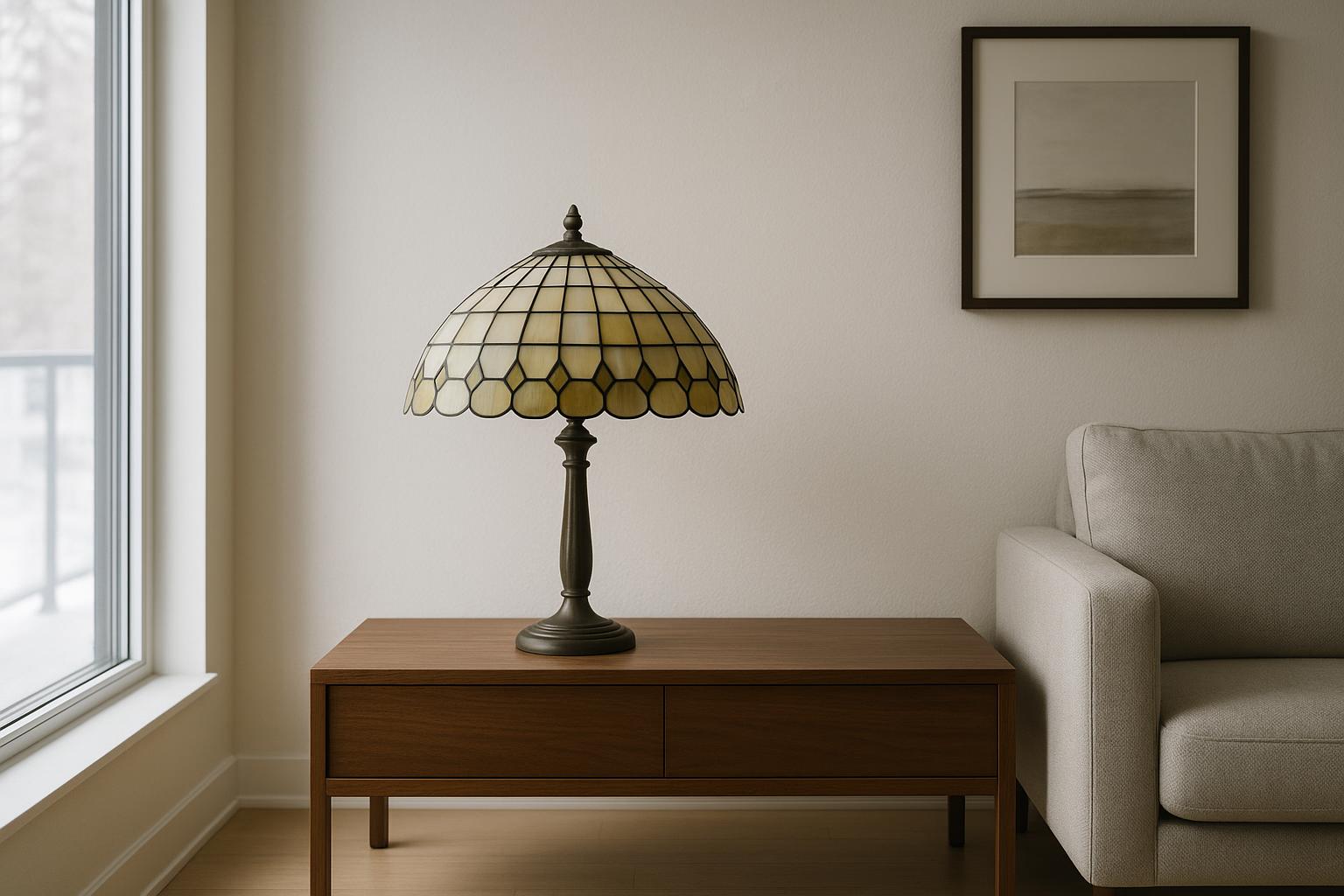
Cream, pale amber and lightly mottled neutral glass allow more light to contribute to the surrounding space. Dark borders or occasional jewel-toned pieces can add definition without controlling the entire shade. Mission and Prairie-inspired patterns work particularly well in hallways because their geometric lines relate naturally to doors, rails and rectangular landings.
Floral and leaf patterns can soften a newly finished basement, although a dense motif needs visual breathing room. If the lower hallway already contains several doors, wall art or panelled treatments, a simpler shade often feels more settled. Remember to assess the fixture unlit as well; it may be visible from the main floor throughout the day.
Connect the route with layered lighting
Decorative stained-glass lighting is most effective as part of the ambient layer. It should not be expected to solve every dark spot along a stairway. A flush mount at the bottom may provide broad illumination while a compact sconce identifies a turn. Light from a rec room or laundry room can help when a door is open, but it should not be the hallway's only dependable source.
Look at the route as a group when choosing bulbs or other compatible light sources. Follow each fixture's instructions for permitted bulb type and output. Similar colour appearance between the upper approach and lower hallway usually feels more continuous than one noticeably cool source beside one very warm source.
Also check where the glass and bulbs sit in relation to normal sightlines. Someone descending often looks directly toward the lower fixture, so exposed glare can be more noticeable than it would be in a conventional room. If convenient switching from both ends is a concern, ask an electrician to review the existing controls and suitable options.
Measure the whole fixture before ordering
When comparing Tiffany hallway and landing lights for basements, begin with a short measurement sheet. Record ceiling height, clear ceiling width, maximum practical wall projection and the distance to nearby doors or trim. For a pendant, include the canopy, suspension and shade in the total drop. For a sconce, note whether the product dimensions refer to the shade alone or the complete frame.

Photograph the space from the top and bottom of the stairs. These two views often reveal alignments that a floor plan misses, such as a fixture appearing directly behind a handrail or awkwardly close to a door frame. If the shade is visible from the foyer, compare its dominant glass colours and metal finish with nearby fixtures. Coordination is more useful than an exact motif match.
With those dimensions in hand, browse the Hallway and Landing Tiffany Lights collection and shortlist only the formats that fit the route. Colour and pattern can then decide between practical candidates rather than distracting from clearance.
Carry the home's character downstairs
A basement hallway does not need the scale or formality of a main-floor entrance. A shallow geometric flush mount, a modest wall sconce or one compact pendant over a protected landing can provide enough character. The fixture should clarify the route, preserve comfortable movement and look proportionate from every level where it can be seen.
Used this way, Tiffany-style lighting does more than decorate a dim passage. It marks the point where daylight recedes and makes the lower floor feel connected to the rest of the home.