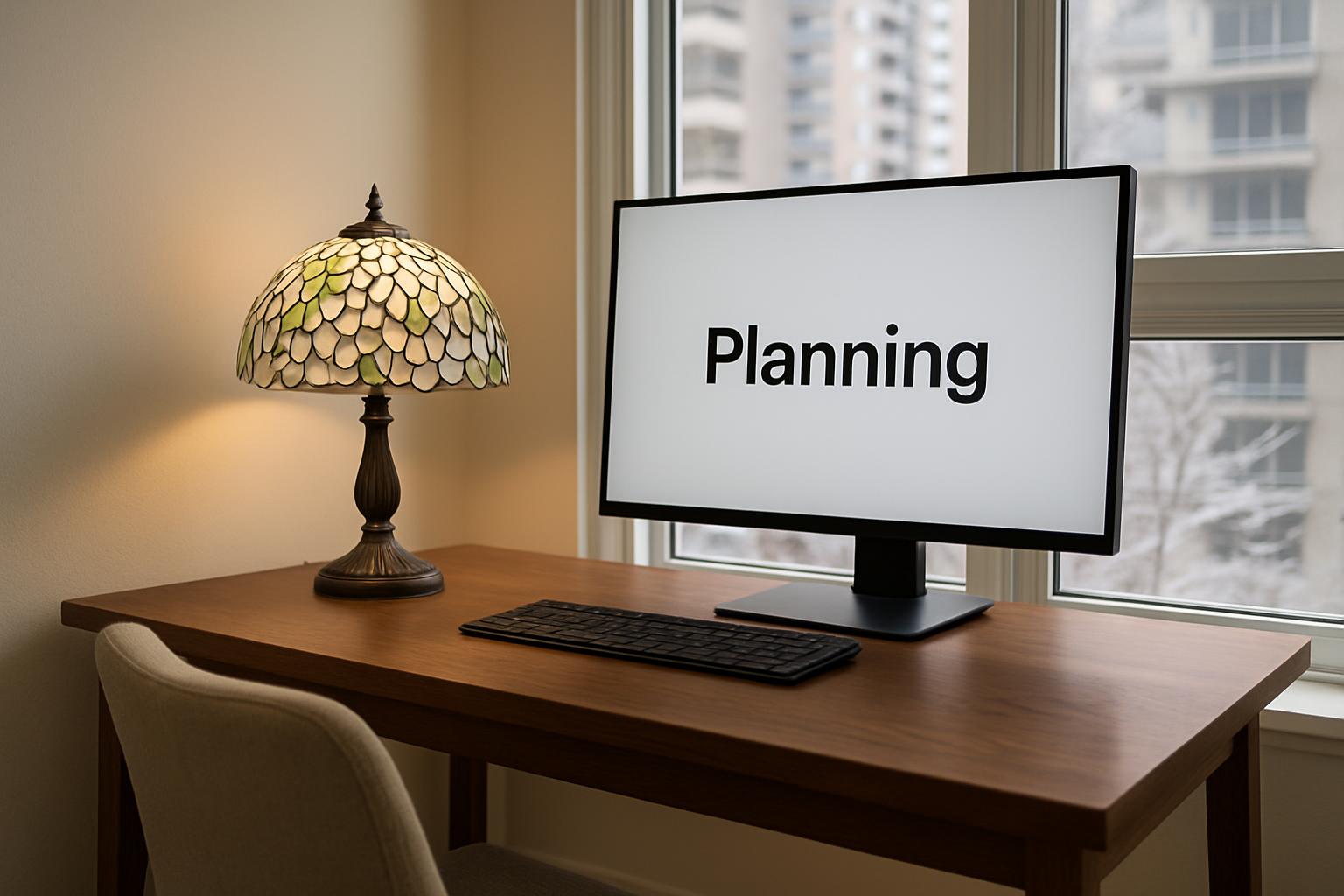
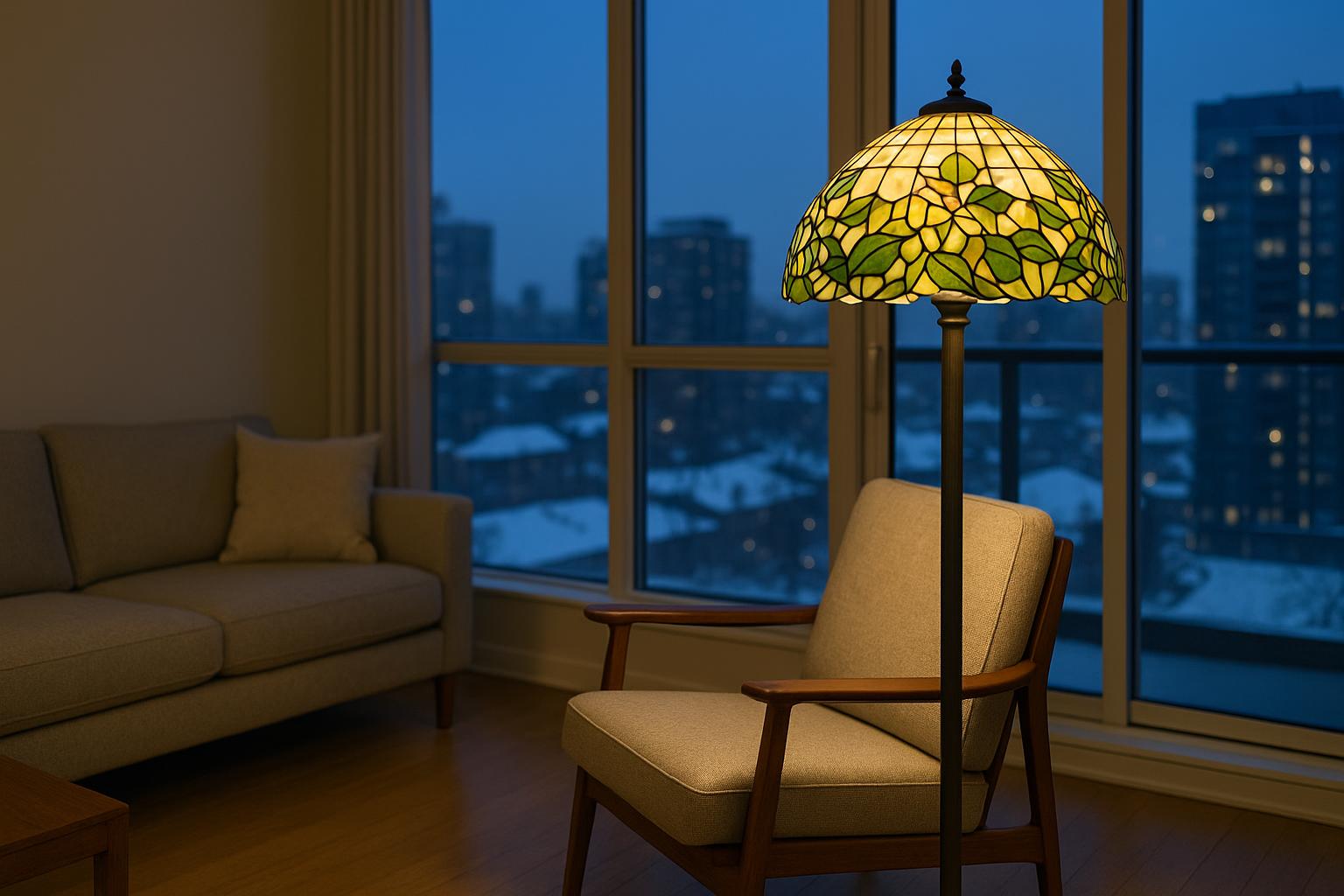
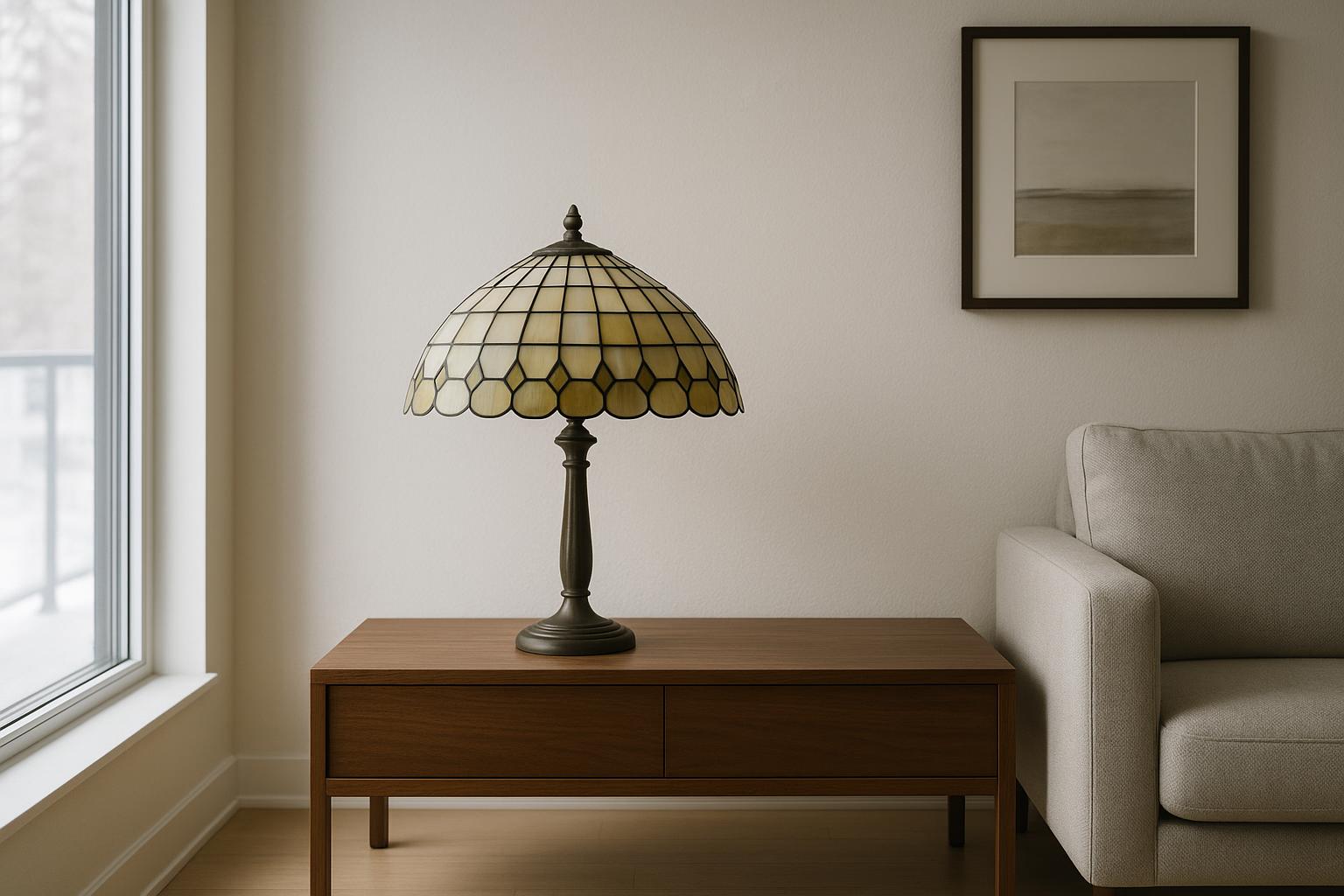
A lighted-base Tiffany-style lamp can animate a bare wall without permanent wiring. Learn how to choose the...
- There are no more items in your cart
- Shipping Free
- Total CA$0.00
Using a Lighted-Base Tiffany-Style Lamp on an Unwired Wall
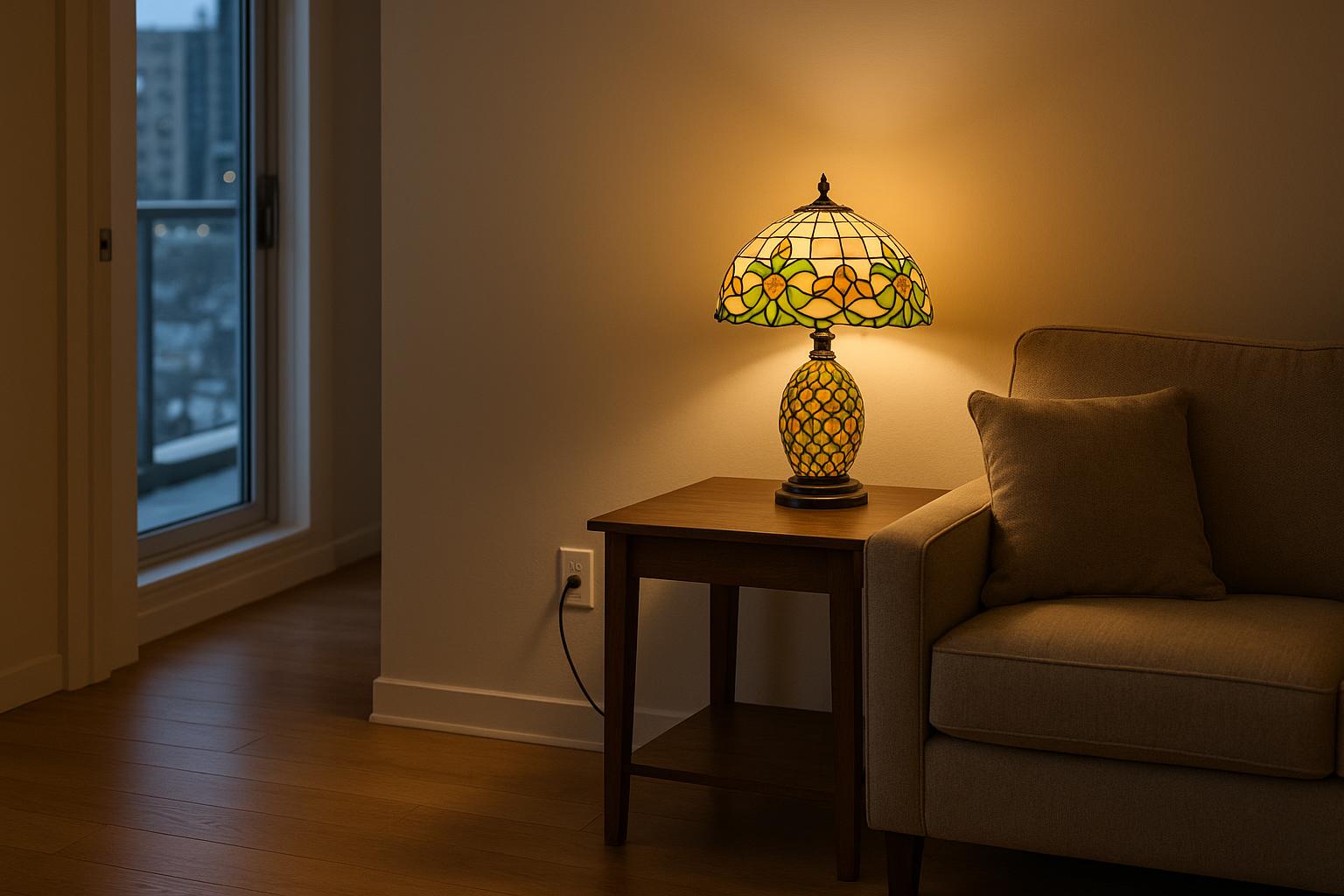
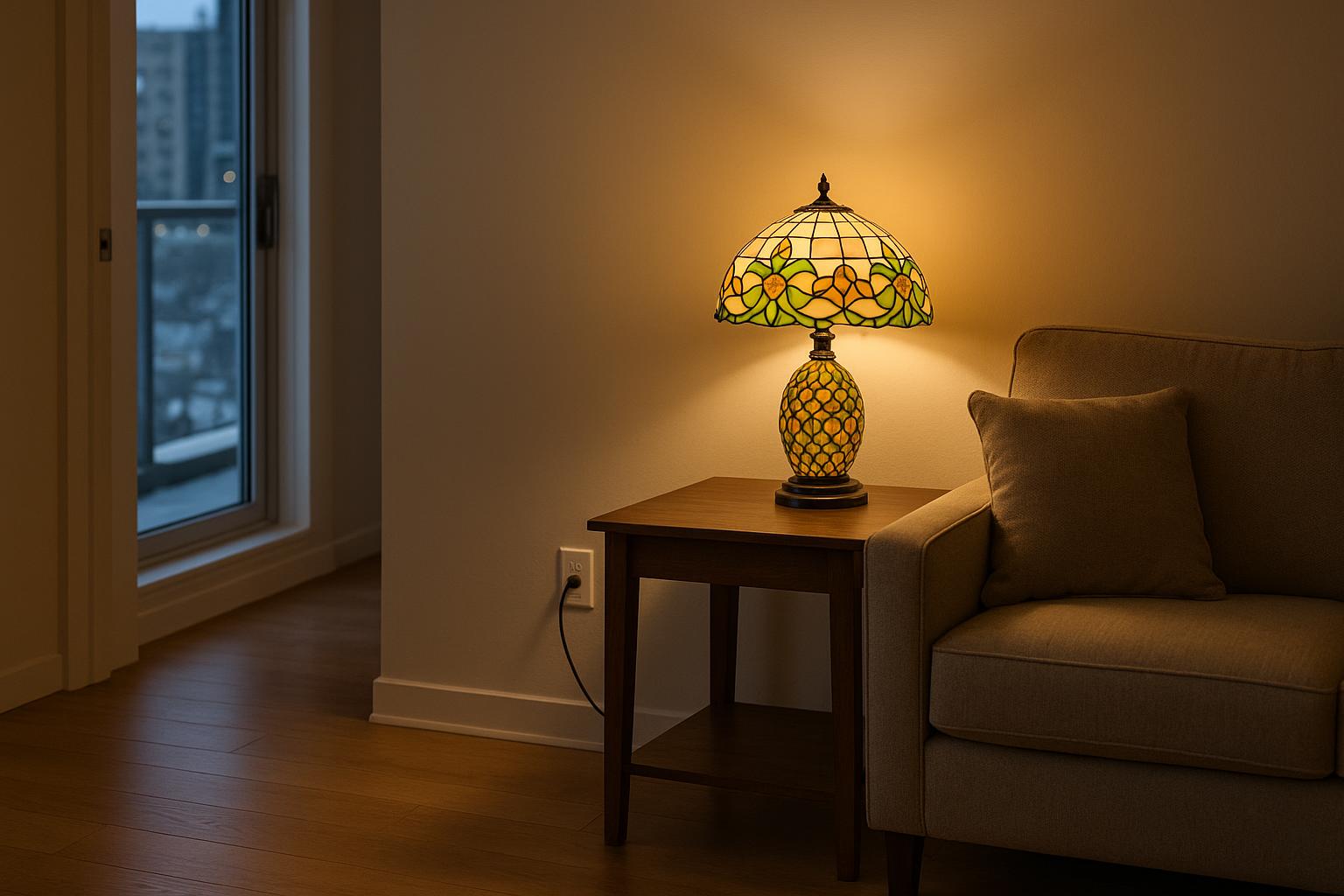
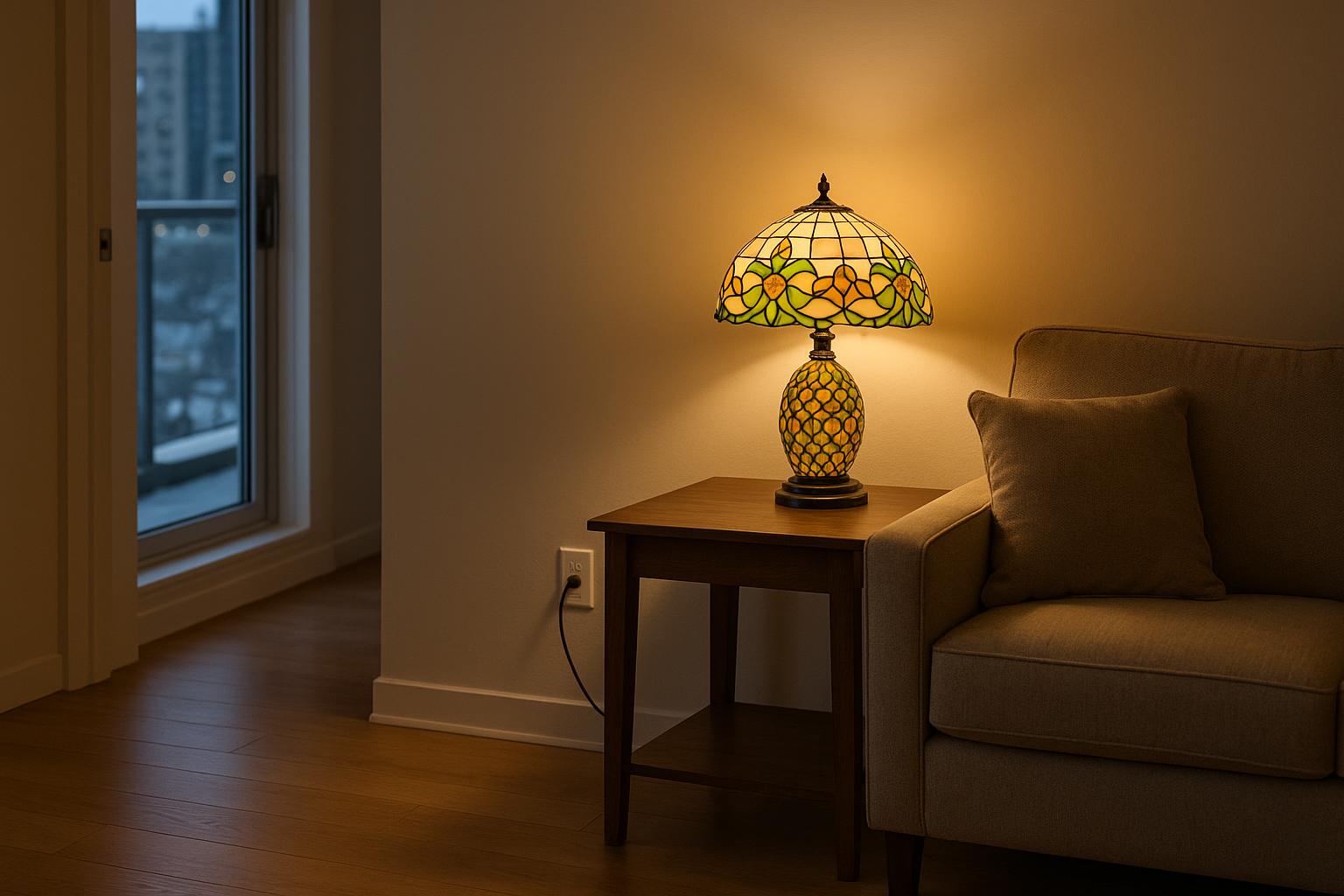
A bare stretch of wall does not always need artwork or a permanently installed fixture. In a rental, condo or finished room where opening the wall is undesirable, a lighted-base Tiffany-style lamp can add colour at two heights from an ordinary furniture surface. The upper shade provides the main decorative glow, while the illuminated base keeps the lower half of the arrangement from disappearing after dark.
The result can suggest some of the layering associated with a wall sconce, but it still behaves like a table lamp. It needs stable furniture, a convenient receptacle and enough open space for both sections to be seen. Planning around those requirements is more useful than choosing the most elaborate glass pattern and trying to find a place for it later.
Start with the Wall Rather Than the Motif
Begin by identifying the wall that feels visually flat in the evening. It might be the short wall beside a sofa, the area above a bedroom dresser or a quiet section of a den. Check that furniture can sit there without narrowing a doorway, interfering with drawers or forcing a cord across a walking route.

Next, look at the background. Cream, warm white and soft grey tend to give coloured glass a calm setting. Dark paint can create a richer effect but may reduce the visual separation between a dark metal frame and the wall. Busy wallpaper, open shelving and gallery arrangements can make an illuminated base difficult to distinguish.
A simple test helps before ordering. Mark the proposed shade width and total height on the wall with removable painter's tape, using the published measurements. Mark the base footprint on the furniture as well. Then view the arrangement from the doorway and the nearest seat. This reveals whether the lamp will command the wall or feel squeezed into it.
Read the Shade and Base as Separate Light Zones
A conventional stained-glass table lamp concentrates most of its colour in the lampshade. With a lighted-base design, the lower glass becomes a second focal area. The two sections do not have to match exactly, but they should make sense together when illuminated.
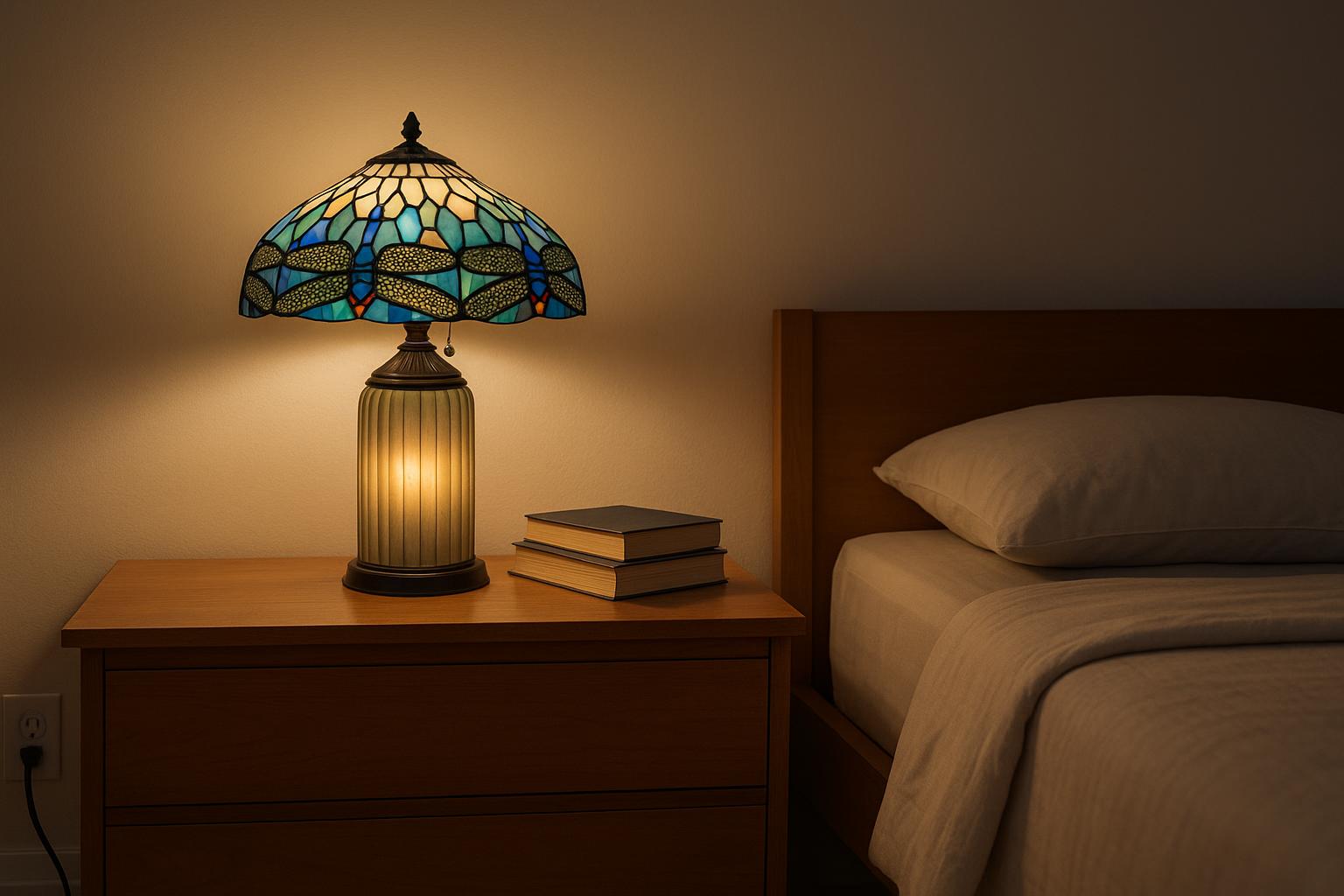
If the shade contains dense floral, dragonfly or grape imagery, a quieter base can keep the design legible. A geometric shade can tolerate a somewhat more detailed base, particularly in a Mission- or Prairie-influenced room. When both sections are highly patterned, the surrounding furniture and wall should be restrained enough to prevent visual clutter.
Pay attention to colour distribution rather than counting every glass tone. Amber in the shade might connect with a smaller amber section below, while green or blue provides contrast. There is no need to repeat each colour elsewhere in the room. One connection to upholstery, wood, a rug or a ceramic accent is usually sufficient.
Keep the Illuminated Base in View
Illuminated lamp bases lose much of their purpose when hidden by framed photographs, tall books or decorative branches. Leave the lower glass unobstructed from the room's main viewing direction. A low tray, bowl or short stack of books can share the surface without cutting across the base.
To complement this topic, you can also read Choosing a Tiffany-Style Pendant for the Dining Table.
The supporting furniture matters just as much. Confirm its depth and width in centimetres, then compare those figures with the lamp's base and shade. All feet or contact points must rest securely on the surface. A shade that extends beyond the furniture edge may also be vulnerable in a busy household, even when the base technically fits.
Height should be checked from a seated position. Bright glass directly in the line of sight can become tiring beside a sofa or bed. Product photographs are not enough because they are often taken from standing height. Use the stated measurements to estimate where the lower edge of the shade and the brightest part of the base will sit relative to the usual viewer.
Choose Locations That Justify the Footprint
A lighted base earns its space where the entire lamp can contribute to the evening composition. It is less convincing on a crowded surface or in a position where the lower section faces away from the room.

- Living room end table: Choose a substantial table beside the outer end of a sofa. Keep the base visible from the room entrance and avoid placing it behind a deep chair arm.
- Bedroom dresser: A dresser can provide more breathing room than a compact bedside table. Position the lamp so it does not block a mirror or compete with several tall accessories.
- Den credenza: The lamp can give an underused wall more presence during long winter evenings, particularly when ceiling lighting feels too broad or flat.
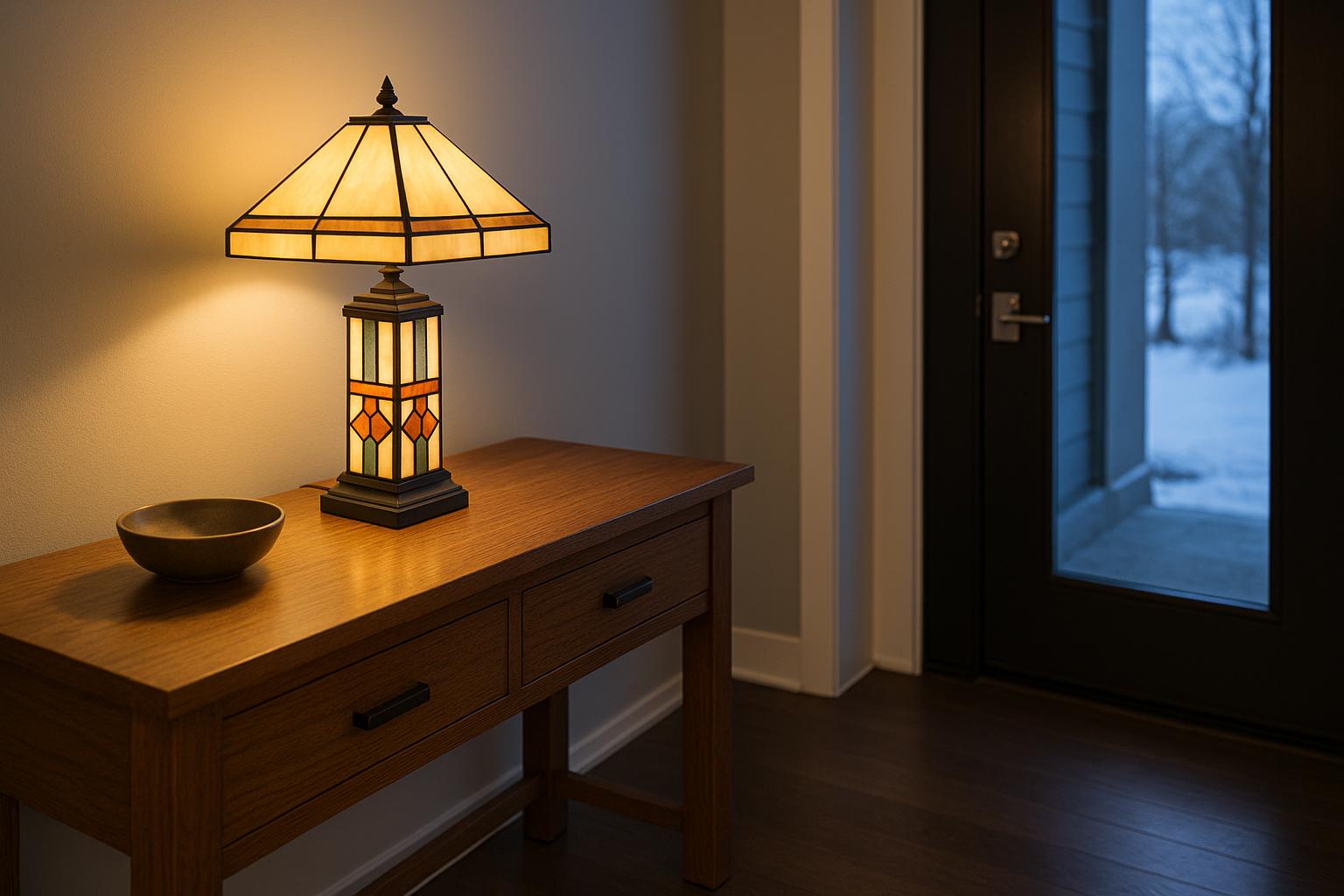
- Foyer console: Use a stable console with enough depth for the complete base. Preserve the entry route and rely on proper room lighting, not the accent lamp alone, for safe circulation.
- Cottage cabinet: Amber, cream and green glass can sit comfortably with timber finishes, provided the lamp is not crowded beneath low shelving or a sloped ceiling.
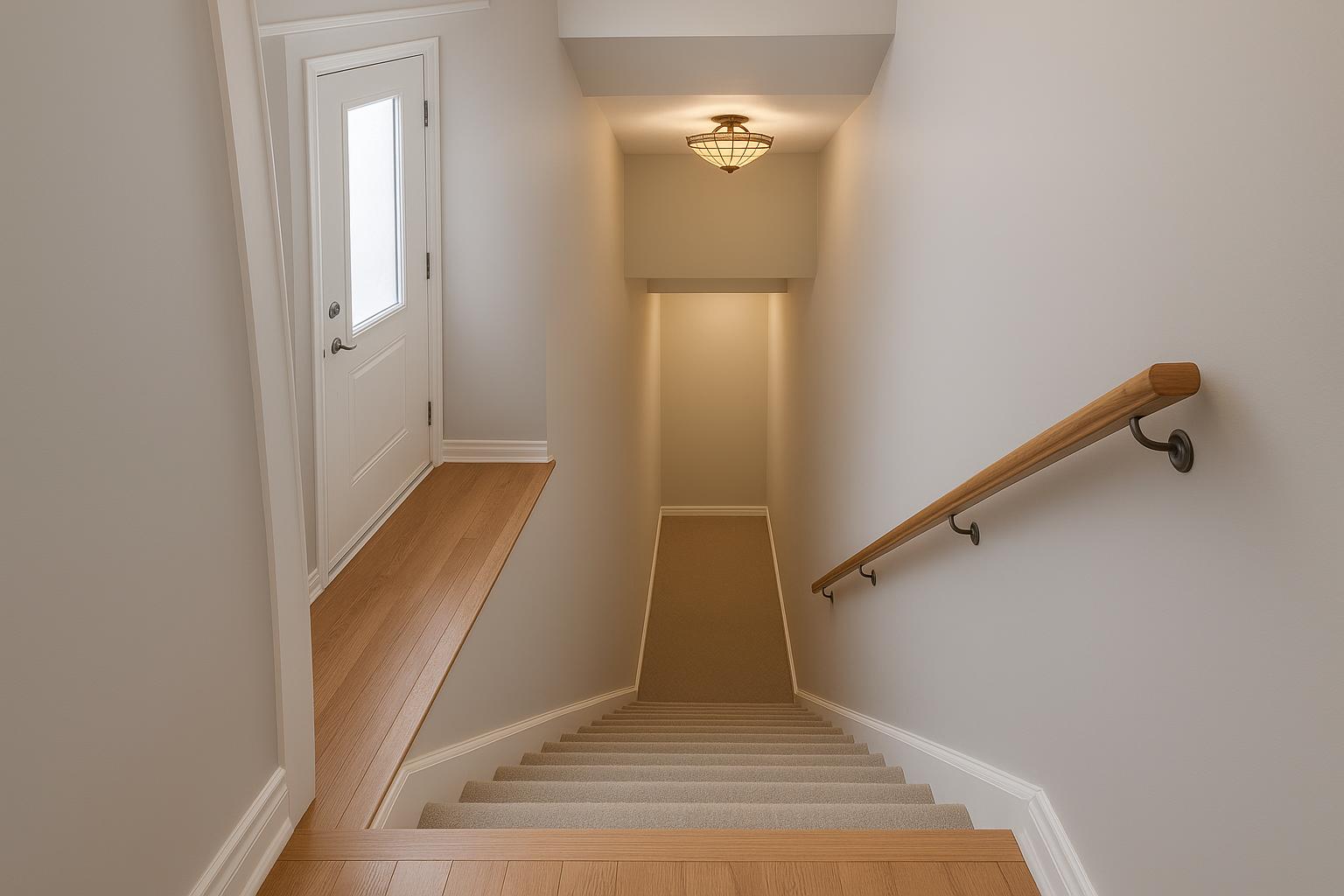
Very narrow halls, stair landings and other active routes are usually poor candidates. Furniture and projecting shades can become obstacles, and decorative table lamps should not be treated as required safety lighting.
Know Where the Wall-Sconce Comparison Ends
Lighted-base Tiffany lamps and wall sconces can both break up a tall, dark wall, but they solve the problem differently. A sconce mounts above the furniture line and may spread light directly onto the wall. A portable lamp places its colour lower, occupies surface space and can move when the room is rearranged.
The table-lamp approach suits a renter who cannot alter a Montreal flat, a condo owner avoiding work on a concrete wall or anyone who expects the furniture plan to change. It is also useful when the desired effect is decorative rather than architectural. The lamp can make a corner feel finished without becoming part of the building.
In the same direction, Lighting the Route Down: Tiffany-Style Fixtures for Basement Hallways and Landings offers useful ideas for choosing home lighting more confidently.
A permanent wall fixture remains the better choice when the surface must stay clear or when lighting is needed in a narrow passage. Electrical installation should be handled according to the applicable requirements for the home and location. The portable option avoids wall work; it does not make placement, cord management or dependable general lighting irrelevant.
Check Bulbs, Switches and Cords
Do not assume that every double-lit Tiffany-style lamp operates the same way. Some models allow the shade and base to be switched separately, while others use a different arrangement. Read the product specifications and instructions before planning how the lamp will be used.
Separate controls can be valuable. The base alone may provide a low decorative glow, while both sections create a stronger evening presence. Neither setting should automatically be considered suitable for reading, paperwork or detailed hobbies. Those activities may still need a dedicated task lamp positioned for the user.
Use only bulb types and wattages permitted by the manufacturer, and confirm that each bulb physically fits its compartment. Bulb brightness and colour appearance affect how the glass reads. An overly intense source can make pale panels uncomfortable to look at and flatten subtle differences between adjoining pieces.
Plan the cord before styling the surface. The receptacle should be reachable without an extension cord crossing a doorway or open floor. Make sure the switch remains accessible and that the cord is not pinched behind heavy furniture. If dimming is contemplated, verify that the lamp and bulbs are intended for that control method rather than assuming compatibility.
For more consistent lighting throughout the home, the article A Furniture-First Guide to Rustic Tiffany-Style Lamp Sizes may also be helpful.
Review the Lamp at the Hour You Will Use It
Stained glass can look muted in daylight and much stronger after sunset. Low winter sun and reflected outdoor glare may also disguise the contrast between sections during the day. Make the final judgement for the hours when the lamp will normally be switched on.
Consider three evening views: from the room entrance, from the main seat and from an adjacent space. From the entrance, the lamp should give the wall a clear focal point. From a seat, neither the shade nor the base should produce distracting glare. From the next room, its colours should sit comfortably beside other visible lamps rather than creating an isolated patch of brightness.
A nearby mirror can duplicate both patterns and make the display busier than expected. If reflection is important, test the angle with an existing lamp before committing to the location. A matte print or an unadorned wall is often easier to balance.
Shop with the Evening Arrangement in Mind
Before comparing designs, record the available surface dimensions, the preferred total height, the viewing angle and the distance to the receptacle. Then check the base pattern as carefully as the shade, since both will remain visible when the lamp is on.

- Confirm the overall height, shade width and base footprint.
- Check whether nearby objects will conceal the lower glass.
- Review bulb requirements and switching details.
- Allow comfortable clearance from doors, seating and walking paths.
- Decide whether the purpose is ambience, decoration or supplementary room light.
- Compare the illuminated colours with the wall and furniture, not just with small accessories.
With those measurements in hand, browse the lighted base Tiffany lamps collection for a design that suits the actual wall and furniture. The strongest choice will leave the lower glass visible, keep the shade out of the main sightline and provide the layered evening effect without pretending to replace a properly placed wall fixture.