Plan a stained-glass dining pendant around the table, seated views, ceiling conditions and the way the room is used...
- There are no more items in your cart
- Shipping Free
- Total CA$0.00
Choosing a Tiffany-Style Pendant for the Dining Table
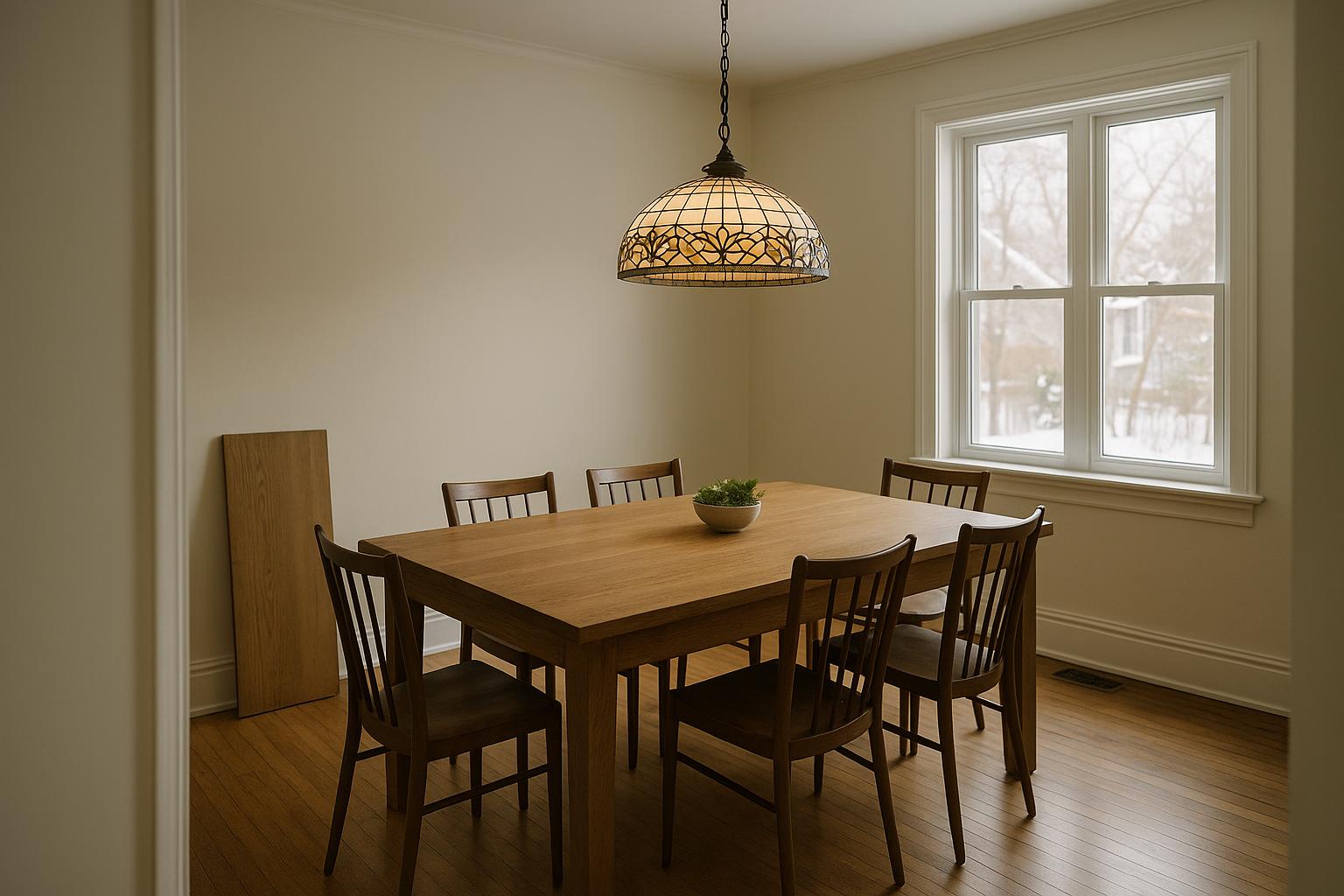
A dining pendant is seen from unusually close range. People sit beneath it, look across it and rely on its light for meals, serving and conversation. With a Tiffany-style fixture, the shade also changes character between daylight and evening. Choosing well therefore begins at the table rather than with a favourite colour or pattern.
Measure the table you use every day
Record the tabletop length, width and height in its normal configuration. If the table has extension leaves, measure the extended version as well, but do not let an occasional holiday arrangement dictate the entire choice. A fixture that suits the table for weekly meals will usually feel more at home than one scaled only for its largest possible setting.

Furniture mass matters alongside dimensions. A thick oak table can visually support a broader shade or more substantial metalwork. A slim glass or laminate top may call for a lighter silhouette, even when the two tables have the same footprint. Note any tall centrepieces too, since they affect the view across the table.
Choose a light footprint that suits the tabletop
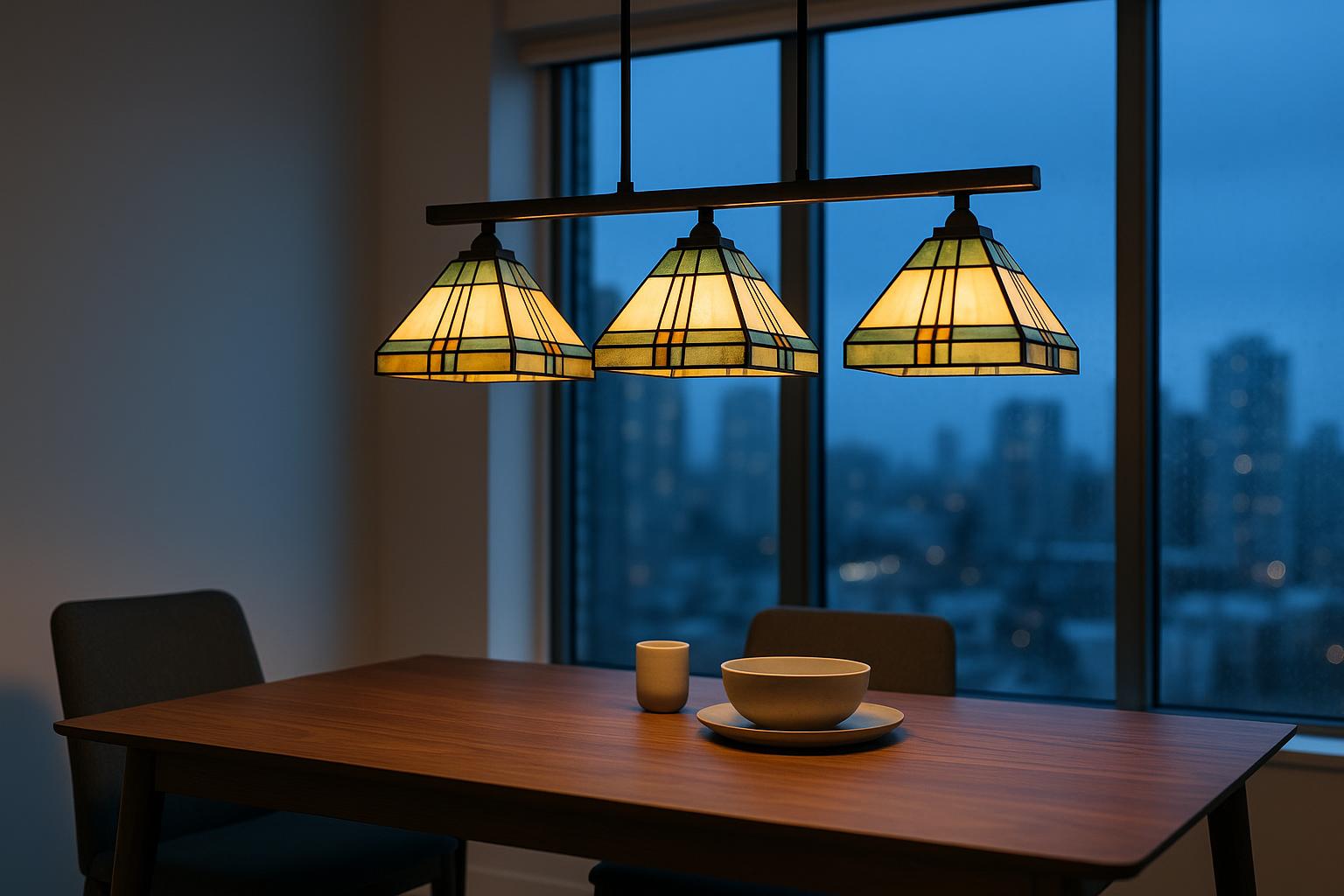
The fixture does not have to copy the table shape, but the two should look intentional together. A round pendant creates a strong centre over a circular table. An elongated fitting can follow the direction of a rectangular top, while a compact bowl can provide a single focal point without tracing its full length.
As a basic visual check, the complete fixture should normally remain well inside the table outline. Include arms, decorative metalwork and multiple shades when assessing width. This leaves breathing room at the ends and reduces the chance that part of the fixture will project into the space around the chairs.
- Single pendant: a concentrated decorative feature for a compact or medium table.
- Linear multi-light pendant: a useful visual spread for a longer rectangular top.
- Inverted bowl pendant: a softly diffused effect with less direct view of the lamps.
- Tiffany-style chandelier: a taller, more architectural choice for a defined dining room.
Do not judge scale from the shade diameter alone. The canopy, chain, frame and arms all contribute to the fixture's presence.
Centre the fixture where meals happen
In an open-concept home, the table may sit outside the geometric centre of the room because of a kitchen island, patio door or circulation route. The pendant should relate to the tabletop, not an abstract room centre line.
Mark the table centre on the floor plan and compare it with the ceiling outlet. If they do not align, consult a qualified electrician before choosing a fixture or planning an offset. A chain or cord should not be casually draped across the ceiling. Any installation must suit the fixture instructions, electrical box and ceiling structure.
To complement this topic, you can also read Lighting the Route Down: Tiffany-Style Fixtures for Basement Hallways and Landings.
For models that suit this style, you can also browse our selection of tiffany dining table pendant lights online canada.
Test the drop from every chair
A common planning range places the bottom of a dining pendant about 75 to 90 cm above the tabletop. That is a starting point, not a fixed prescription. Shade depth, household height and the view into adjoining rooms can all change the best position.
Test the proposed drop while seated in several chairs. A deep bowl occupies more of the sightline than a shallow shade at the same height. Check whether diners can see one another comfortably and whether the fixture crowds serving dishes or a centrepiece. Raising it too far can weaken its connection to the table and reveal more direct lamp glare.
Also consider what happens when the table moves. A low pendant that is safe above furniture can become a head-height obstacle if the dining area is cleared for another use.
Let the ceiling guide the suspension
Read the listed fixture height, overall drop and adjustment range before ordering. Standard-height rooms generally need a controlled suspension, while a tall or vaulted ceiling may allow a longer chain. Extra ceiling height does not automatically require a larger shade; the table still establishes the main scale.

For a sloped ceiling, confirm that the canopy and suspension method are suitable for the intended installation. In an older Ottawa townhouse or Atlantic Canadian home, beams, medallions and plaster details may also affect the canopy position. A simpler frame can be a better neighbour to ornate architecture than elaborate metalwork competing overhead.
In the same direction, A Furniture-First Guide to Rustic Tiffany-Style Lamp Sizes offers useful ideas for choosing home lighting more confidently.
Compare the glass with the lights on and off
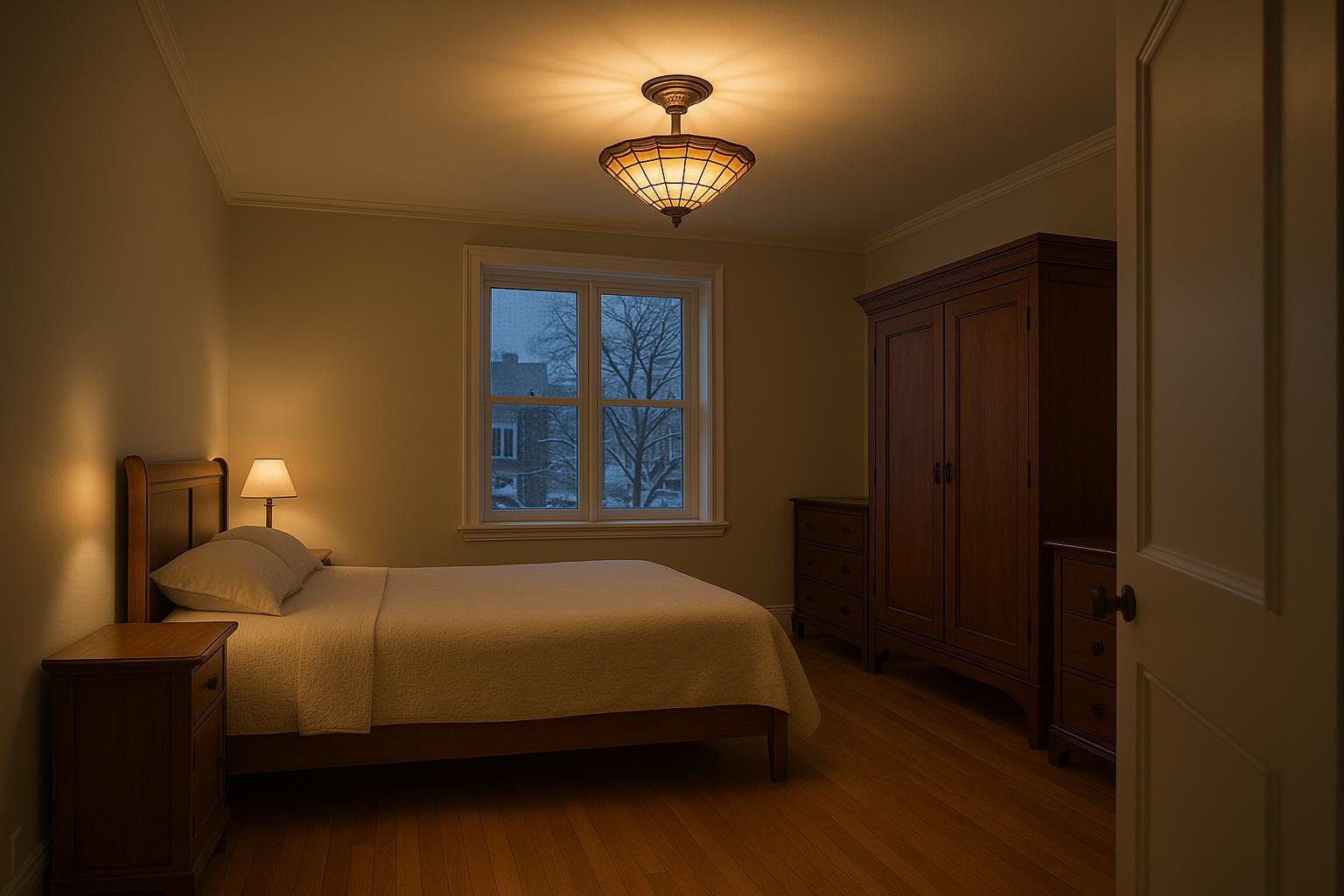
Stained glass can look markedly different after sunset. Cream and amber pieces often become warmer, while dense blue and green areas may transmit less light than product photos suggest. Dark leading becomes more graphic when the shade is illuminated. During long winter evenings, that lit appearance may be the one seen most often.
Review product images showing both states. The unlit shade must work with the room during the day, while the illuminated colours should complement finishes used in the evening. Floral and grape patterns add movement to quiet rooms. Mission and Art Deco designs can sit more readily beside streamlined furniture because their geometry is clearer.
Coloured glass creates atmosphere, but it may alter the appearance of food and finishes. Do not assume it will provide neutral task light across a large table or buffet.
Give the pendant a defined role
A dining pendant does not need to supply every layer of light. In a Toronto condo, existing recessed lighting may handle general illumination while the stained-glass fixture marks the dining zone. In a separate dining room, wall sconces or a buffet lamp can keep the perimeter from disappearing when the pendant is dimmed.
Consider serving, dining and cleanup separately. Brighter ambient light may be useful before and after dinner, while lower output allows the glass to glow during a meal. If dimming is important, verify compatibility among the fixture, permitted lamps and control. The number of lamp holders alone does not establish useful output.
For more consistent lighting throughout the home, the article Room to Glow: Scaling a Large Tiffany-Style Floor Lamp may also be helpful.
Use product details to narrow the choice
Shopping for Tiffany dining table pendant lights online in Canada becomes easier when each product page is treated as a dimension sheet. Compare complete width, shade depth, fixture height, stated drop, number of lights and installation instructions before focusing on colour.
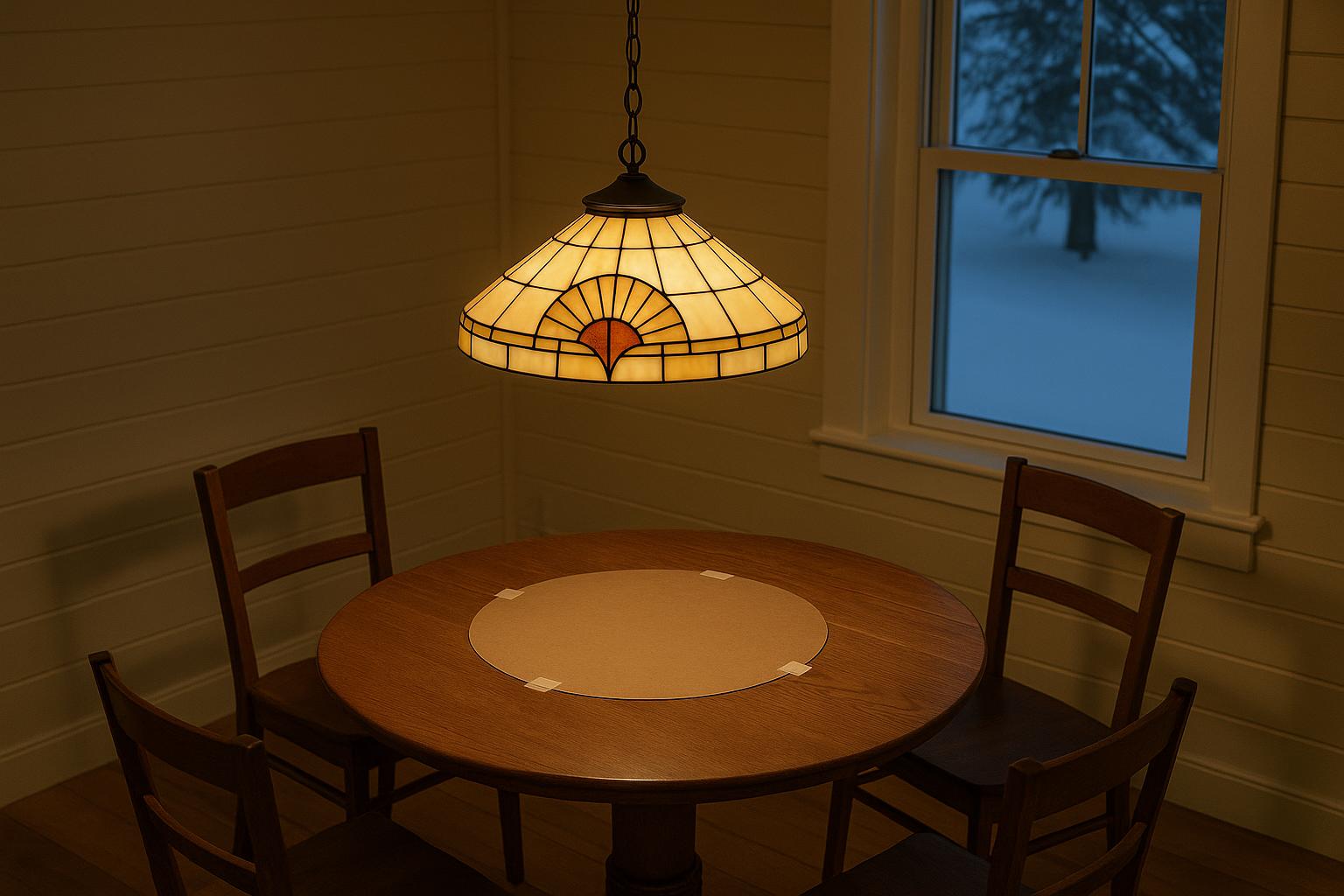
Map the proposed fixture over the table with removable tape, paper or cardboard. For a round shade, cut a paper circle to the listed diameter. For a linear fitting, mark its full length and widest point. View the outline from the doorway and from the chairs; this reveals proportion more reliably than a tightly cropped catalogue image.
Confirm the lamp specifications, ordering terms, payment information and shipping details actually stated by the retailer. Do not presume that chains can be extended, stems shortened or controls added unless the product information supports it.
Make the final comparison in the room
Keep a short list of table dimensions, ceiling height, outlet position, preferred drop and maximum comfortable fixture width. Then compare no more than a few formats against the same measurements. This prevents colour from distracting from a poor fit.

When the practical limits are clear, you can browse Tiffany dining table pendant lights by shape and pattern. The best choice will feel connected to the everyday table, stay clear of seated views and give the room a welcome point of colour after dark.