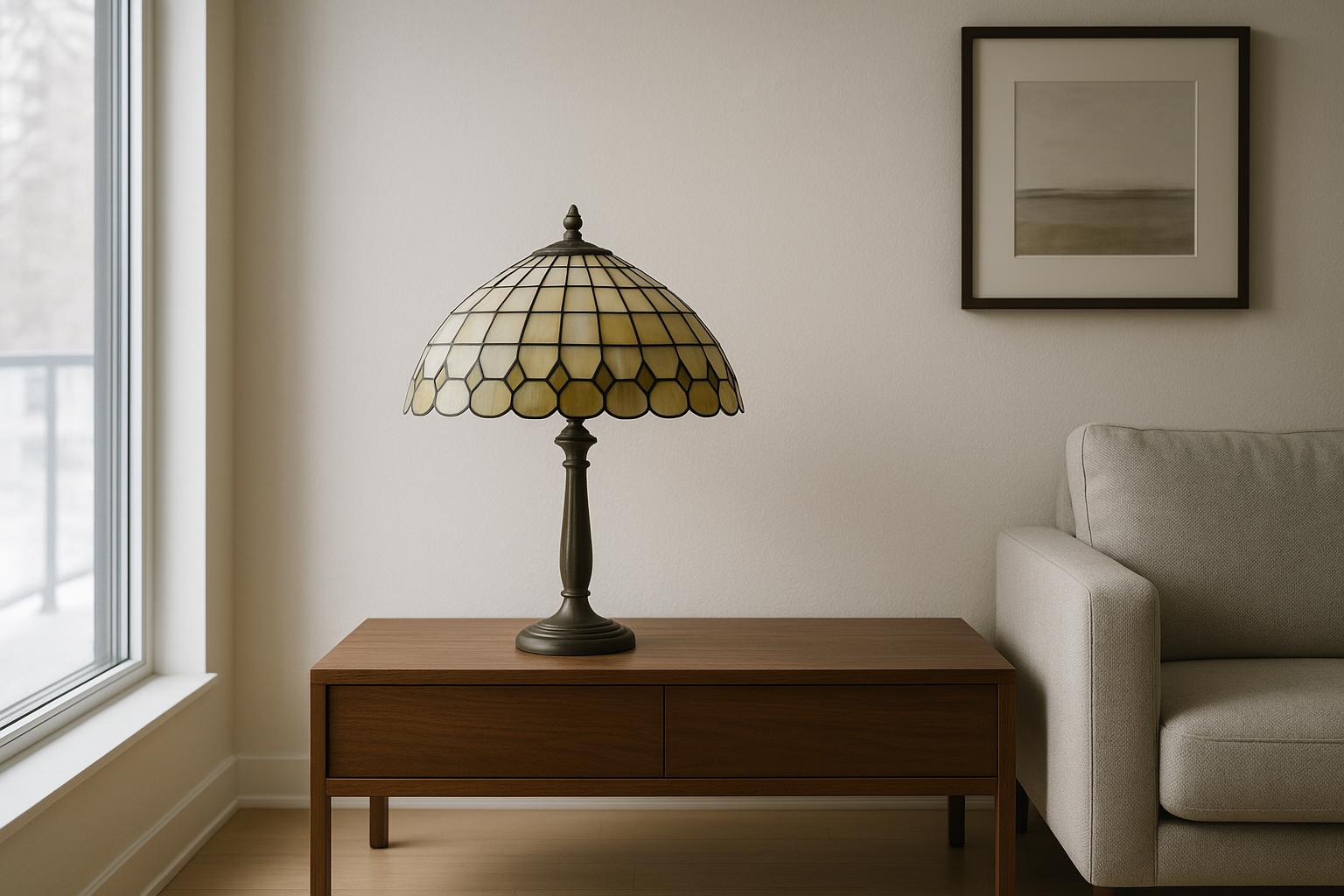
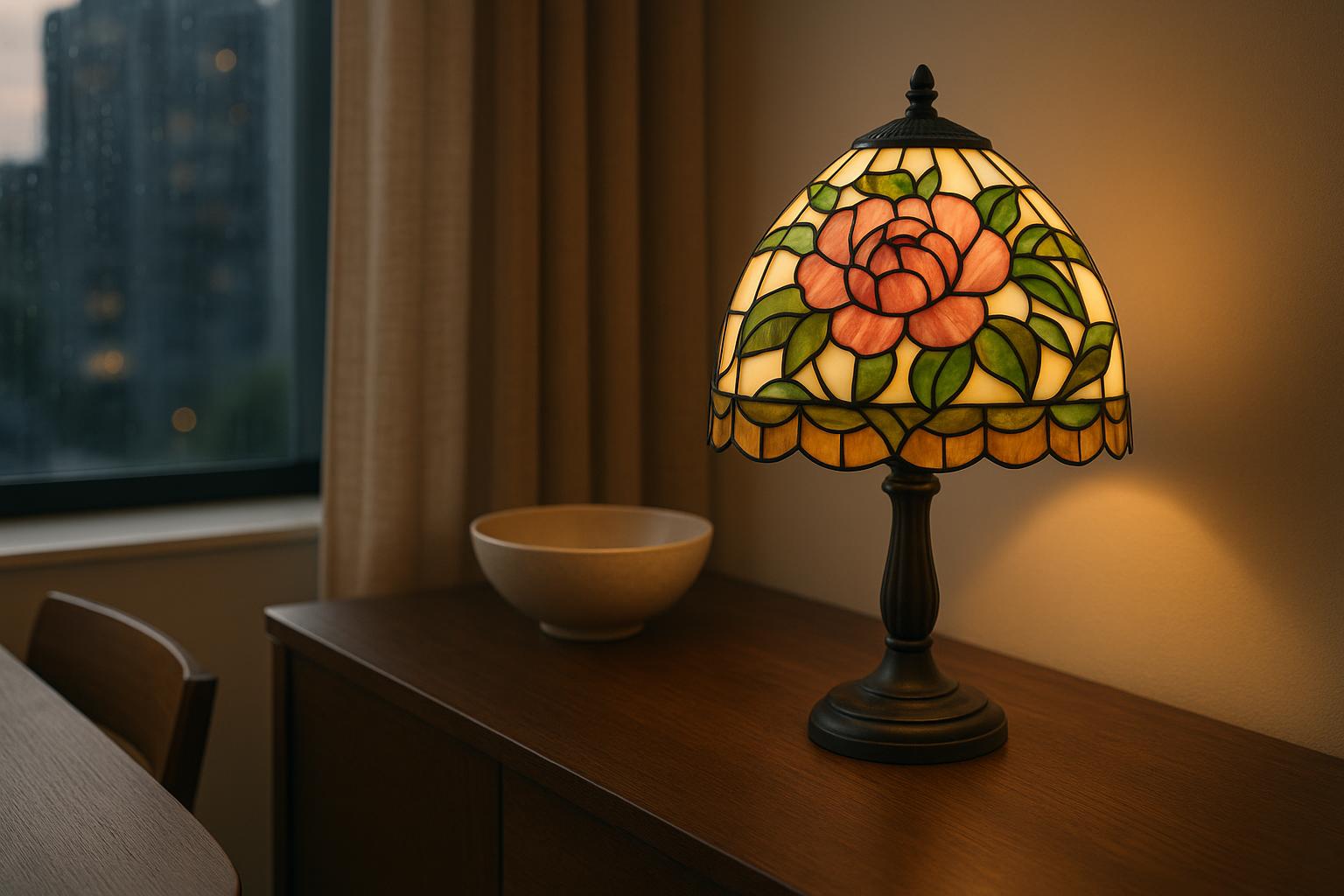
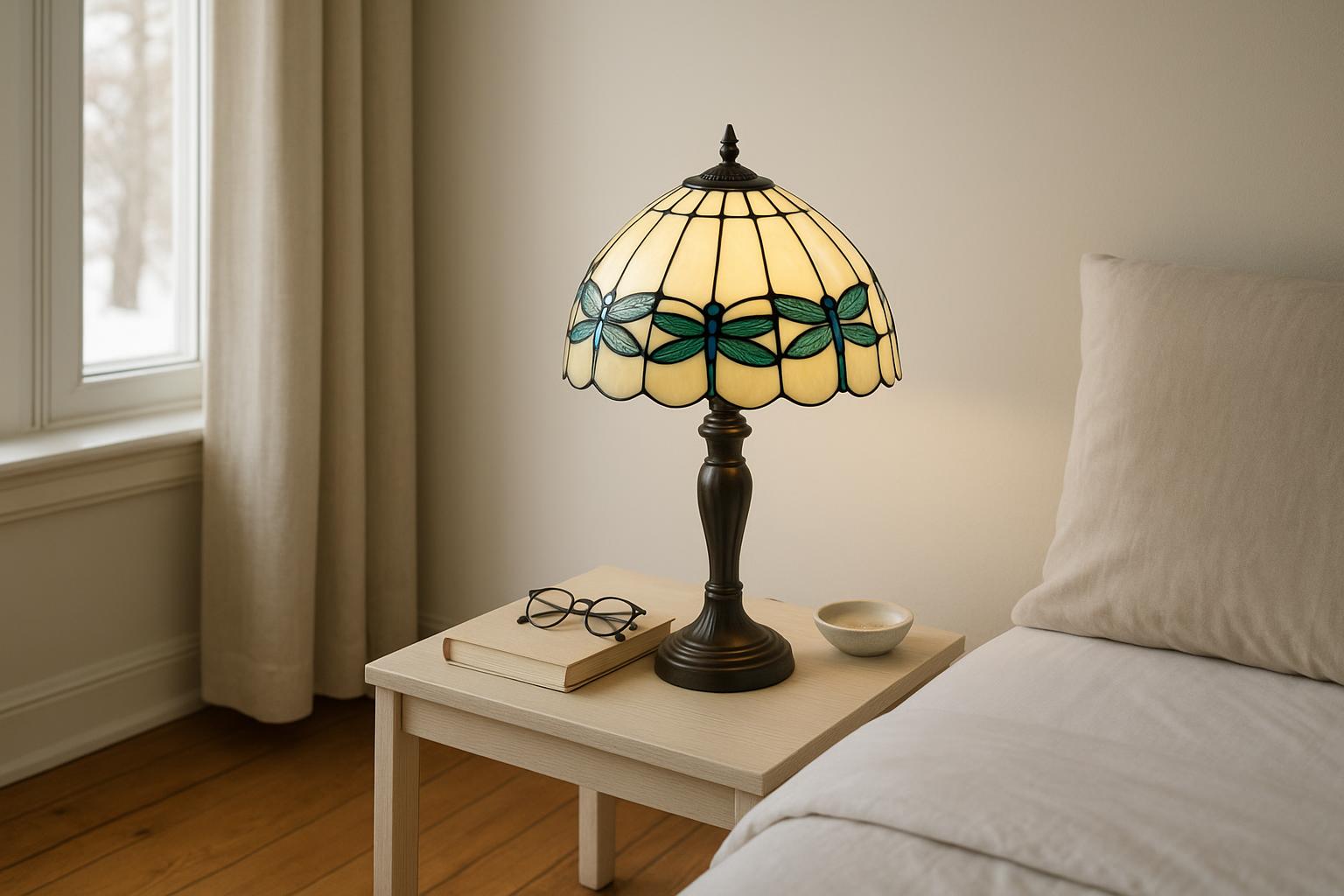
The lower edge of a stained-glass shade affects its scale, sightlines and character. Learn to compare scalloped...
- There are no more items in your cart
- Shipping Free
- Total CA$0.00
Beyond Colour: Reading the Shape of a Scalloped Tiffany-Style Lamp
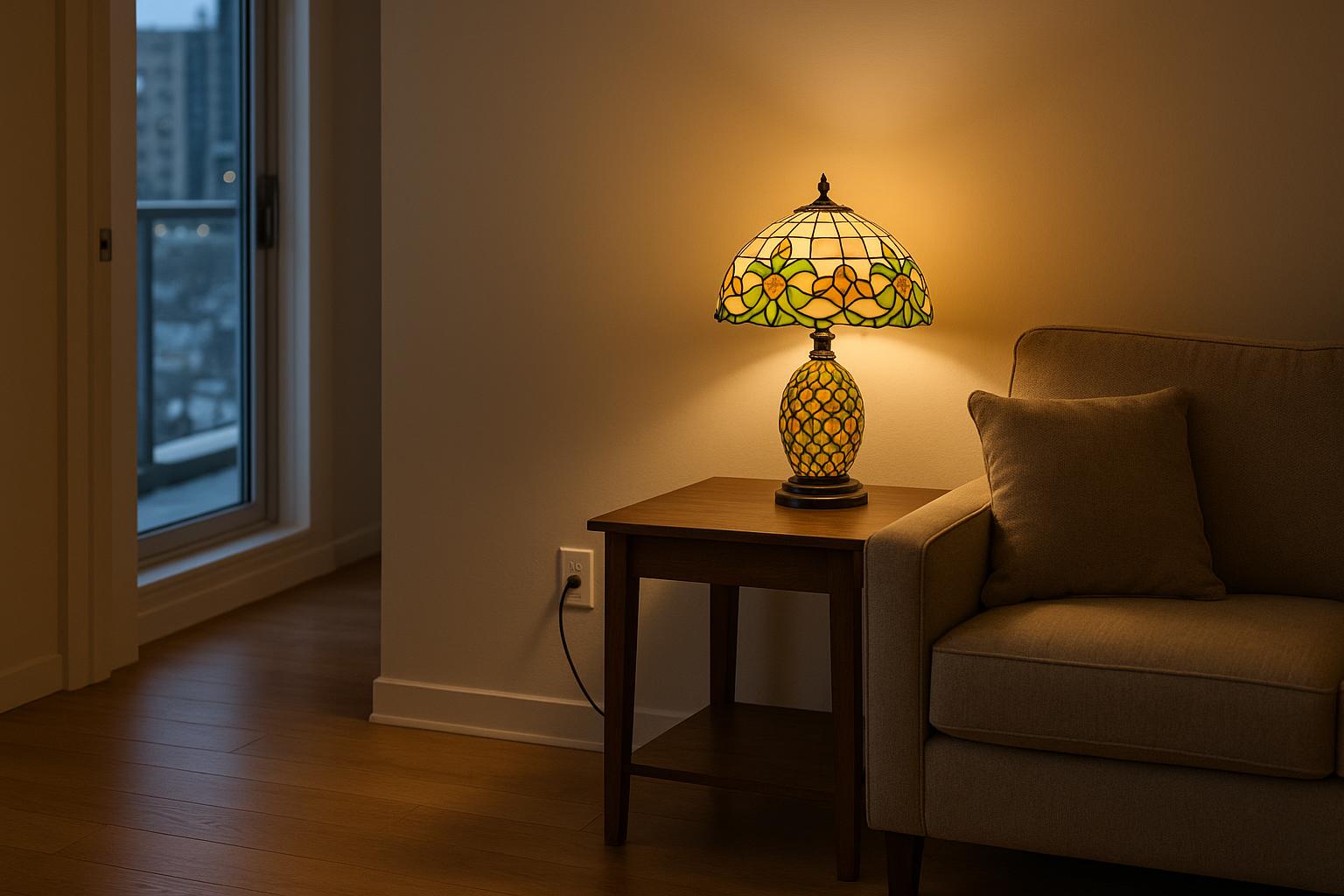
Colour usually wins the first glance, but the lower edge of a Tiffany-style lampshade often has more influence on how the lamp fits a room. A straight rim establishes a firm horizontal line. A scalloped rim breaks that line into a sequence of rises and dips, making the shade appear softer, livelier or more ornate.
When shopping for scalloped shade Tiffany lamps in Canada, it helps to treat the perimeter as part of the lamp's structure rather than a decorative afterthought. The right choice should hold together as a silhouette when the lamp is off, remain comfortable within everyday sightlines and suit the amount of detail already present in the room.
Strip away colour and study the contour
Begin with the product photograph that gives the clearest side view. Ignore the palette for a moment and follow the outer line from the finial to the lowest point of the shade. A compact bell, broad dome and open umbrella profile can each carry scallops, but they distribute visual weight differently.

If colour makes comparison difficult, reduce the photographs to greyscale or trace the outlines on paper. Place the images side by side at roughly the same scale. This simple exercise reveals whether the shade feels balanced on its base and whether the curves are restrained or dominant.
Dimensions still matter. Mark the listed height and shade diameter on a piece of cardboard or kraft paper, then hold the template where the lamp would sit. The template will not reproduce the complete form, but it can show whether a broad edge crowds a mirror, wall art or the corner of a room.
Read the shade profile and edge depth together
Scallop depth cannot be judged in isolation. Shallow waves on a wide, low dome may still create a strong horizontal presence. Deeper lobes on a narrow bell can read as compact and vertical. Compare the distance between the highest and lowest points of the rim with the overall depth of the shade.
A shallow, regular edge is usually easier to place because it preserves a relatively calm baseline. It can add softness to decorative table lamps without making the perimeter the main event. Deep curves create a more emphatic vintage character and may suggest petals, hanging leaves or folds of fabric.
Also check how frequently the curves repeat. Numerous small scallops can look animated, while fewer broad lobes produce a slower, more substantial rhythm. Neither is inherently better. The useful choice is the one that can be read clearly from the lamp's normal viewing distance.
Look for agreement between pattern and perimeter
The best scalloped stained-glass shades connect the internal pattern to the outer edge. A floral composition might end with petals or leaves that settle naturally into the curves. A geometric design may use repeated glass sections to give an otherwise soft perimeter some order.
To complement this topic, you can also read Using a Lighted-Base Tiffany-Style Lamp on an Unwired Wall.
Agreement does not require literal imitation. Floral lamps do not need a separate lobe for every blossom. In fact, an intricate rose, peony or vine pattern may benefit from a quieter edge. Simpler panels can carry a deeper scallop because the outline supplies much of the visual movement.
Pay attention to awkward interruptions. A strong border that stops abruptly at each dip, or an irregular motif paired with unrelated curves, can make the shade seem unsettled. Consistent repetition generally makes vintage shade shapes easier to understand from across a room.
Judge the outline against its daytime and evening backgrounds
A silhouette is only as clear as the background behind it. An uncluttered pale wall will define every curve, while open shelving, framed art or patterned wallpaper can break the perimeter into fragments. Before choosing, identify the view from the chair, doorway or hallway where the lamp will be seen most often.
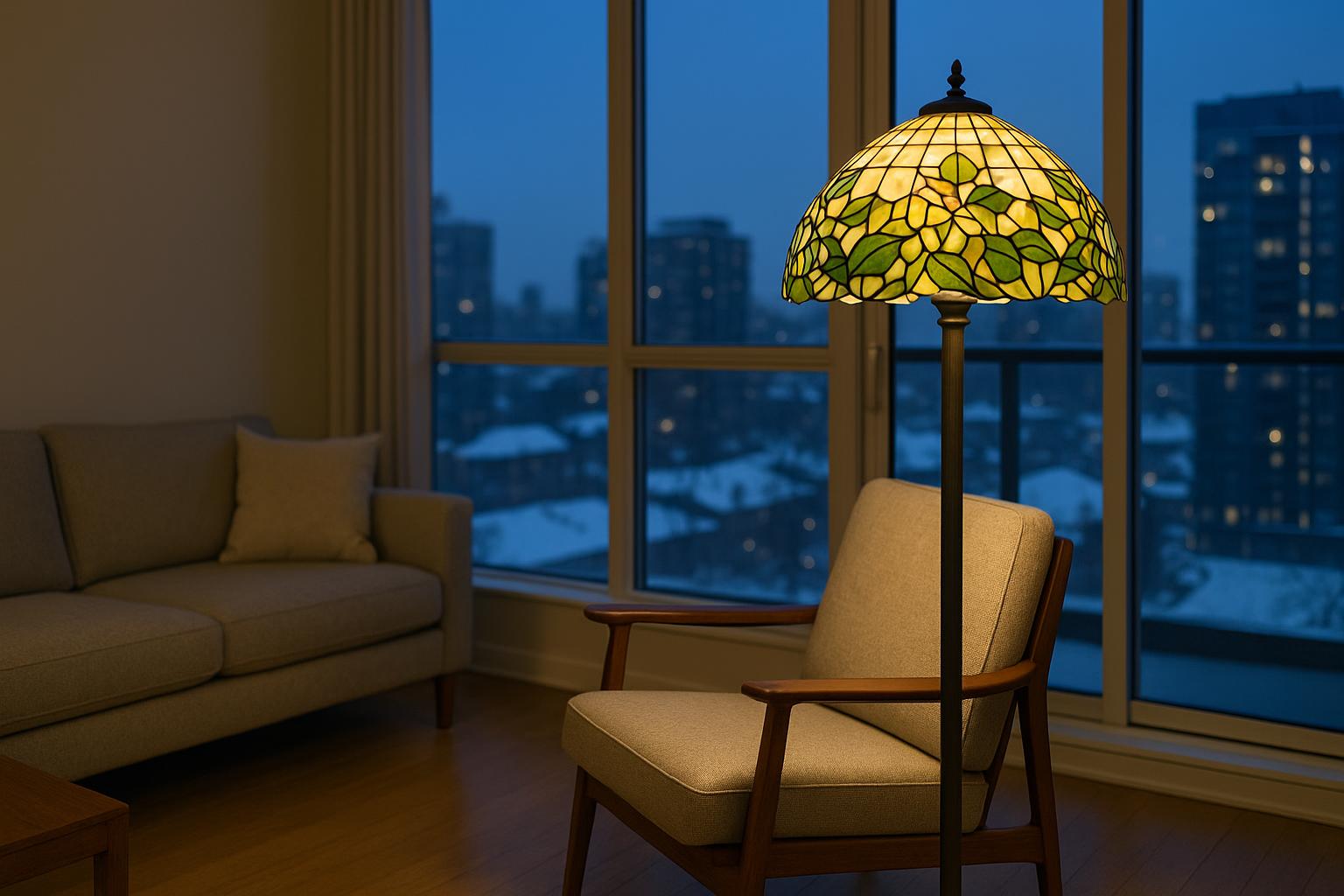
Large windows change the reading throughout the day. Low winter sun or light reflected from snow can darken an unlit stained-glass shade against the window, bringing the rim forward while suppressing subtle colour. After dark, the glass becomes brighter and the window may behave like a reflective black surface.
Consider the closed-window treatment as well. Blinds and drapery create a different field from bare glazing. A pronounced edge may remain legible against several backgrounds, but a quieter scallop can be preferable where reflections or nearby patterns already provide plenty of activity.
Protect seated views and working surfaces
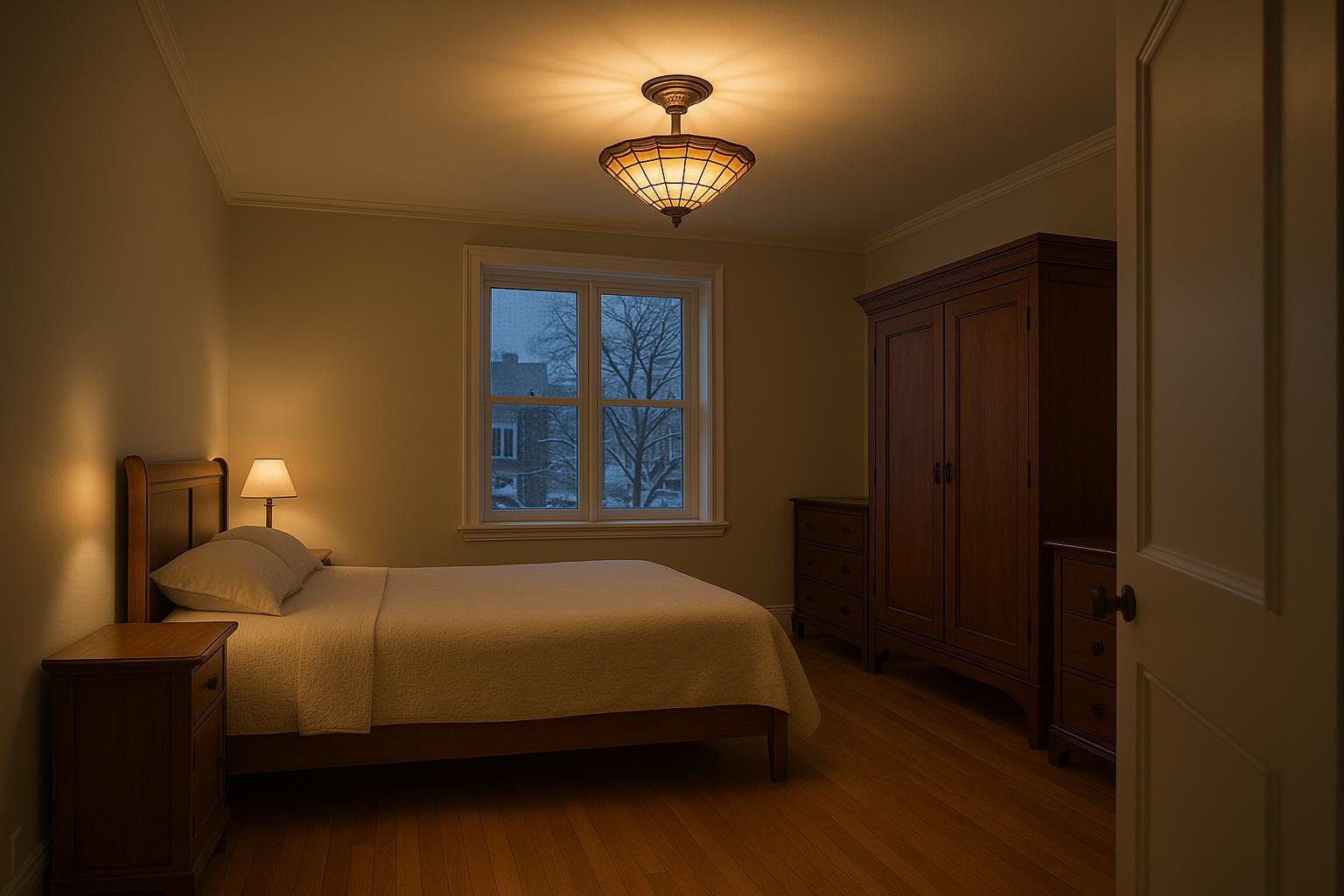
Deep scallops bring portions of the shade lower than its main rim. On a bedside table, one lobe may sit near eye level when someone is reading in bed. On an end table, a broad low shade can interrupt the view between seats or place a bright section of glass directly in the line of sight.

Measure from the floor to the tabletop, then from the tabletop to the lamp's lowest and highest shade points. Compare those figures with the seated eye line and, in a bedroom, the top of the mattress. There is no universal ideal height; the useful measurement is the one taken in the room where the lamp will be used.
In the same direction, Choosing a Tiffany-Style Pendant for the Dining Table offers useful ideas for choosing home lighting more confidently.
Physical clearance deserves equal attention. Keep projecting edges away from curtains, cabinet doors and the part of a table used for books, drinks or a phone. In a compact condo or townhouse bedroom, a smaller shade with moderate curves may be more comfortable than a wide design that leaves little usable surface.
Use contrast to balance decorative curves
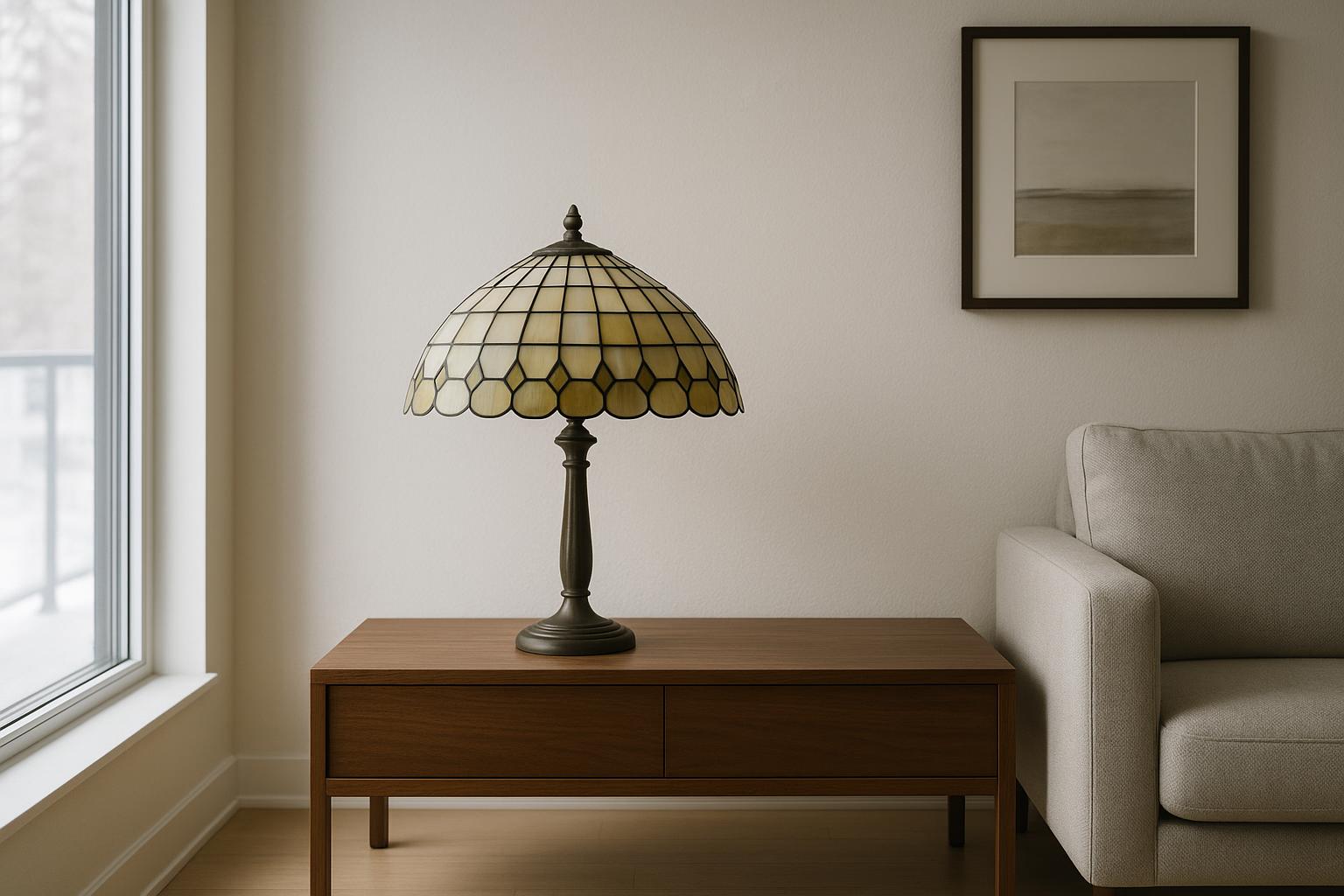
curved Tiffany lamps do not need to be surrounded by curved furniture. A scalloped shade often looks more assured on a straight-lined walnut console, plain nightstand or contemporary sideboard. The furniture gives the composition stability while the lampshade contributes ornament and colour.
Repeated curves work best when they are selective. A shade might relate to an arched doorway, round mirror or rolled chair arm without copying every shape nearby. If the room already contains carved wood, patterned textiles and elaborate trim, a shallow edge can prevent the lamp from becoming one flourish too many.
Scale the visual weight to the setting. An airy base and orderly rim may suit a Toronto condo or Vancouver apartment. A broad shade with deeper, evenly spaced lobes can hold its own in a Calgary family room or beneath a vaulted cottage ceiling, provided the surrounding space is generous.
Confirm the lamp can do its intended job
A scalloped outline affects appearance, but the lamp must still provide useful light. Coloured glass commonly produces decorative and ambient illumination. Whether it can support reading or desk work depends on the individual shade, lamp height, placement and permitted light source.
For a reading chair, consider whether the lowest curves block light from reaching the page. At the bedside, check for bright glass near the eyes as well as adequate light on a book. On a foyer console, a softer glow may be entirely appropriate because the lamp serves as a welcoming layer rather than task lighting.
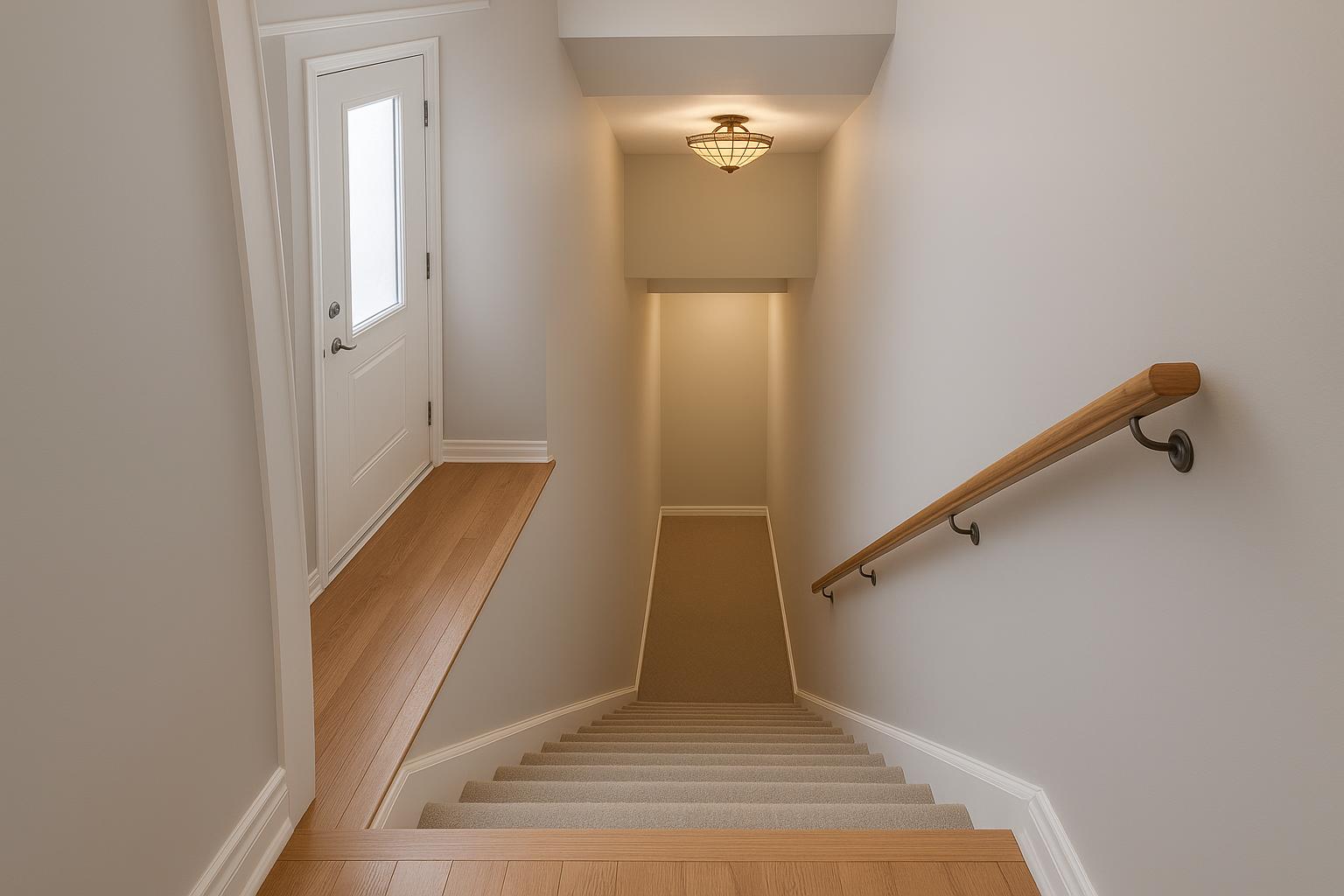
For more consistent lighting throughout the home, the article Lighting the Route Down: Tiffany-Style Fixtures for Basement Hallways and Landings may also be helpful.
Review the product information before selecting a bulb. Use a compatible bulb, stay within the manufacturer's stated requirements and follow the supplied operating and assembly instructions.
Compare shortlisted lamps on equal terms
Close-up photographs tend to exaggerate glass detail and hide scale. Once the shortlist is manageable, compare each lamp using the same set of observations:
- Complete profile: Note whether the shade is a dome, bell or open umbrella shape.
- Edge depth: Compare the highest and lowest points of the scalloped rim.
- Curve rhythm: Check whether the repetitions feel calm, busy or irregular.
- Pattern connection: Look for a natural transition from the glass motif to the perimeter.
- Base relationship: Make sure the base appears substantial enough to support the shade visually.
- Room conditions: Recheck the actual background, seated view and available surface area.
This method keeps a striking palette from outweighing practical concerns. It also makes it easier to distinguish a lamp that photographs well from one whose proportions genuinely suit the intended location.
Choose the curve that belongs in the room
A scalloped shade succeeds when its movement feels deliberate. Its outline should remain visible without crowding nearby objects, and its lowest points should sit comfortably within the room's normal sightlines. Once those conditions are settled, colour and motif become much easier to assess.

To compare profiles, edge depths and stained-glass patterns, browse the collection of scalloped Tiffany-style lamps. Favour the lamp whose unlit shape already looks at home; the evening glow should strengthen that choice rather than rescue it.