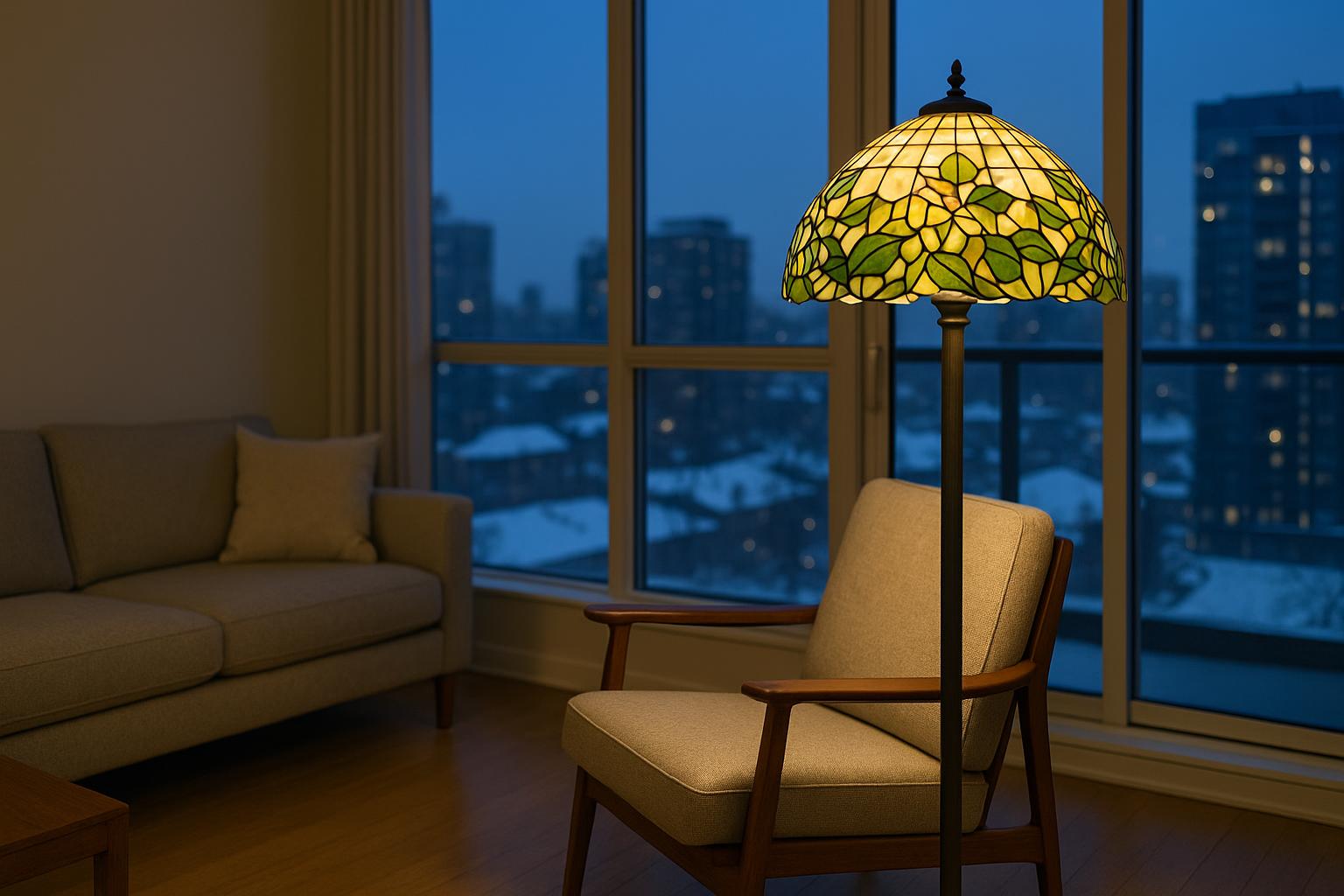
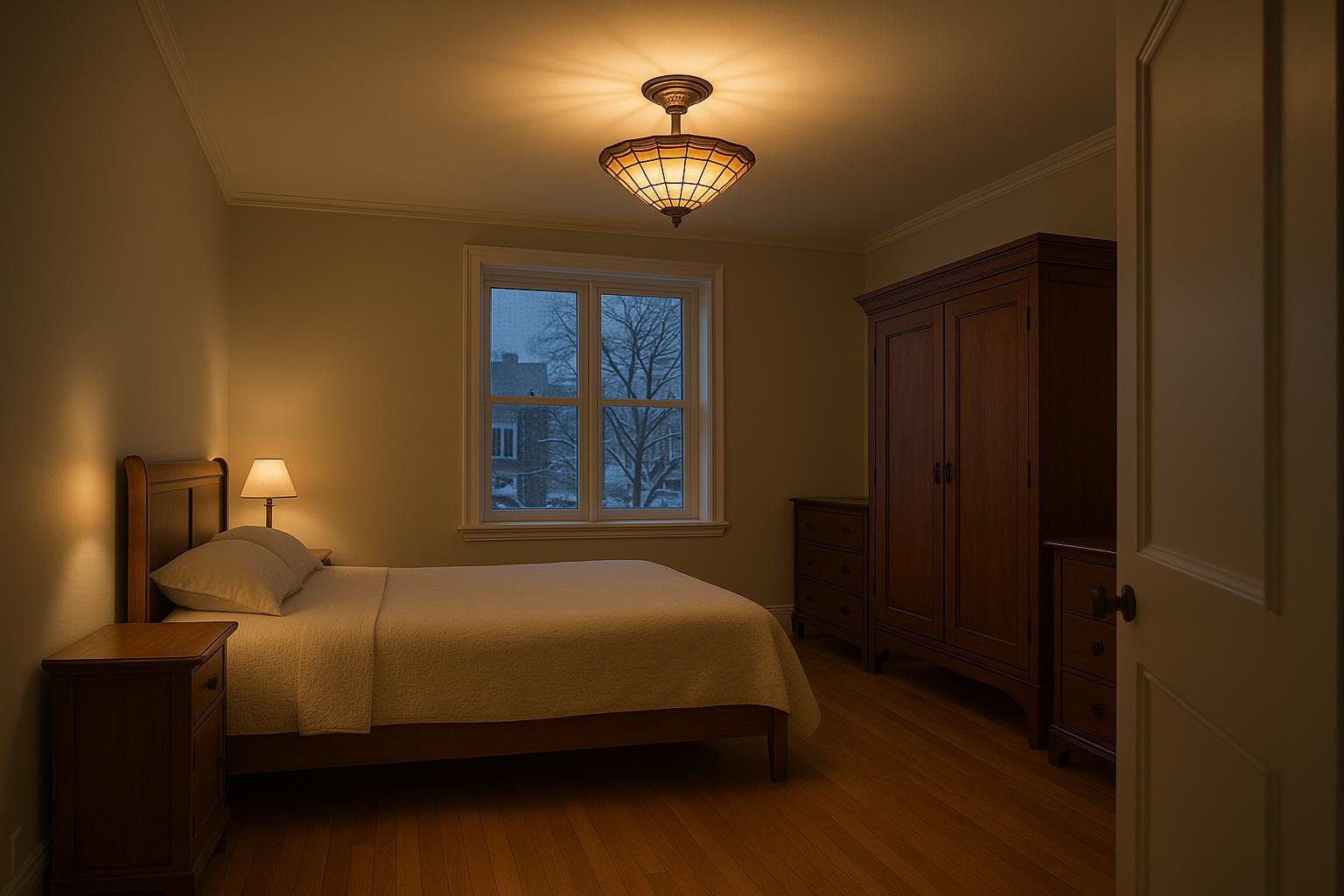
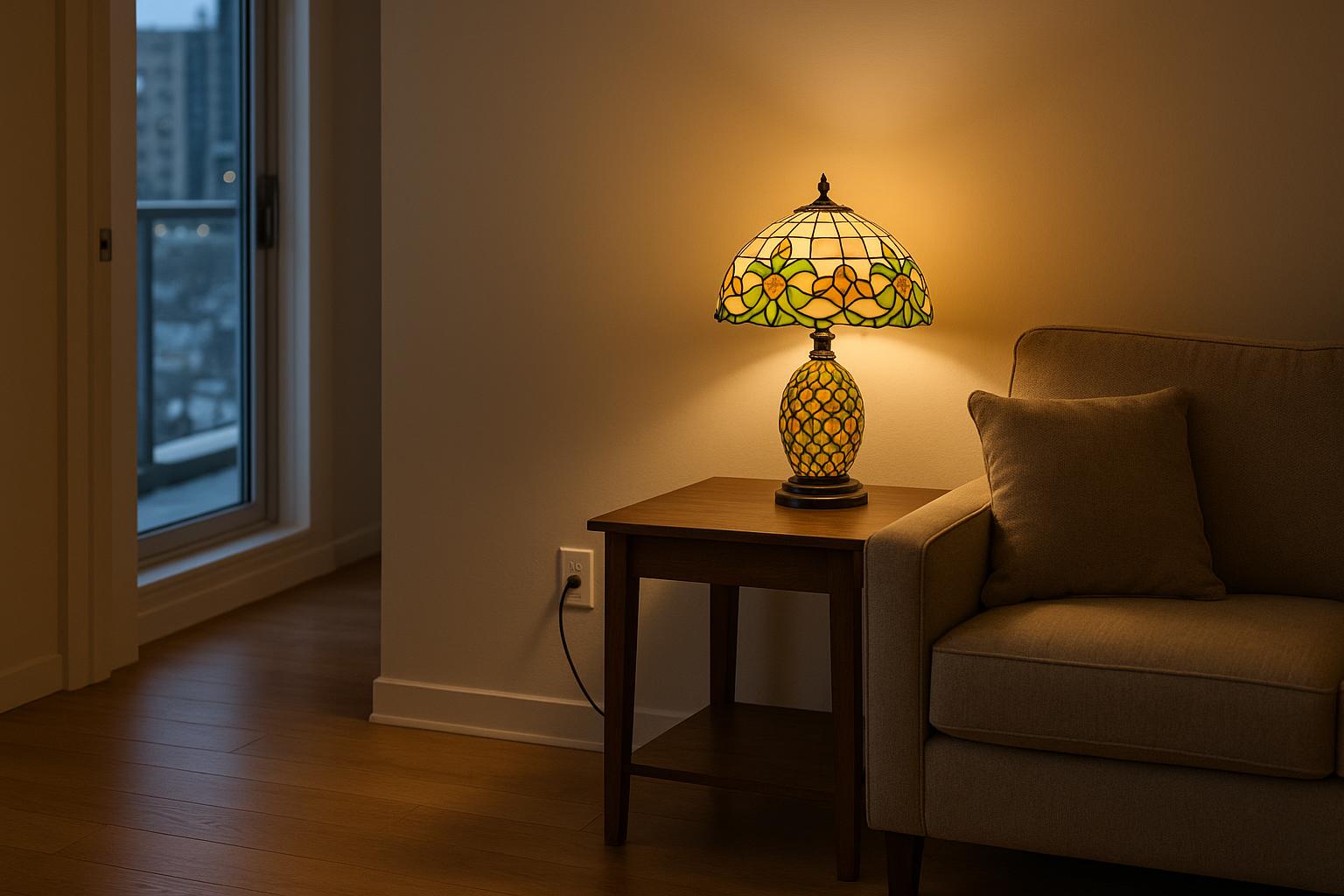
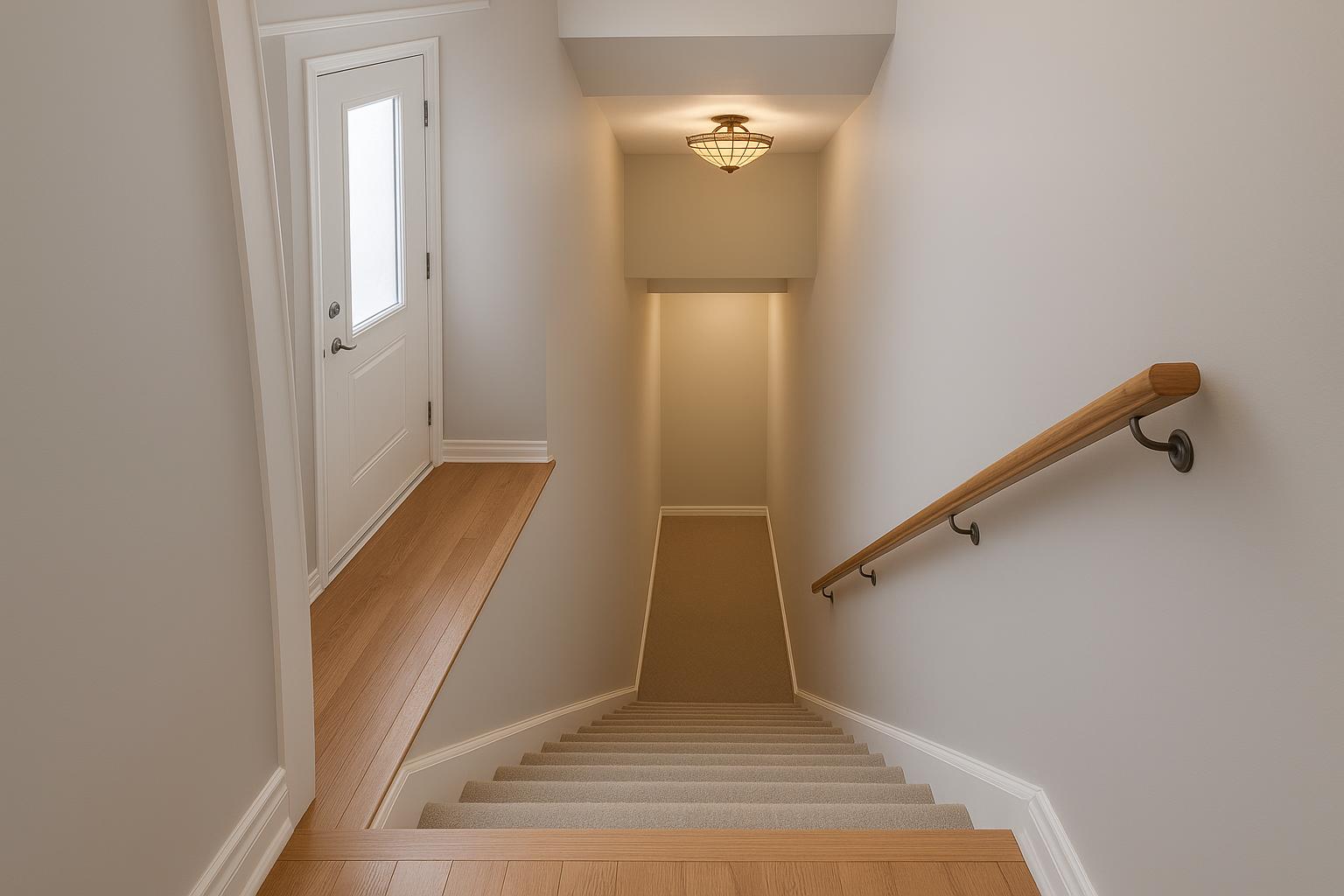
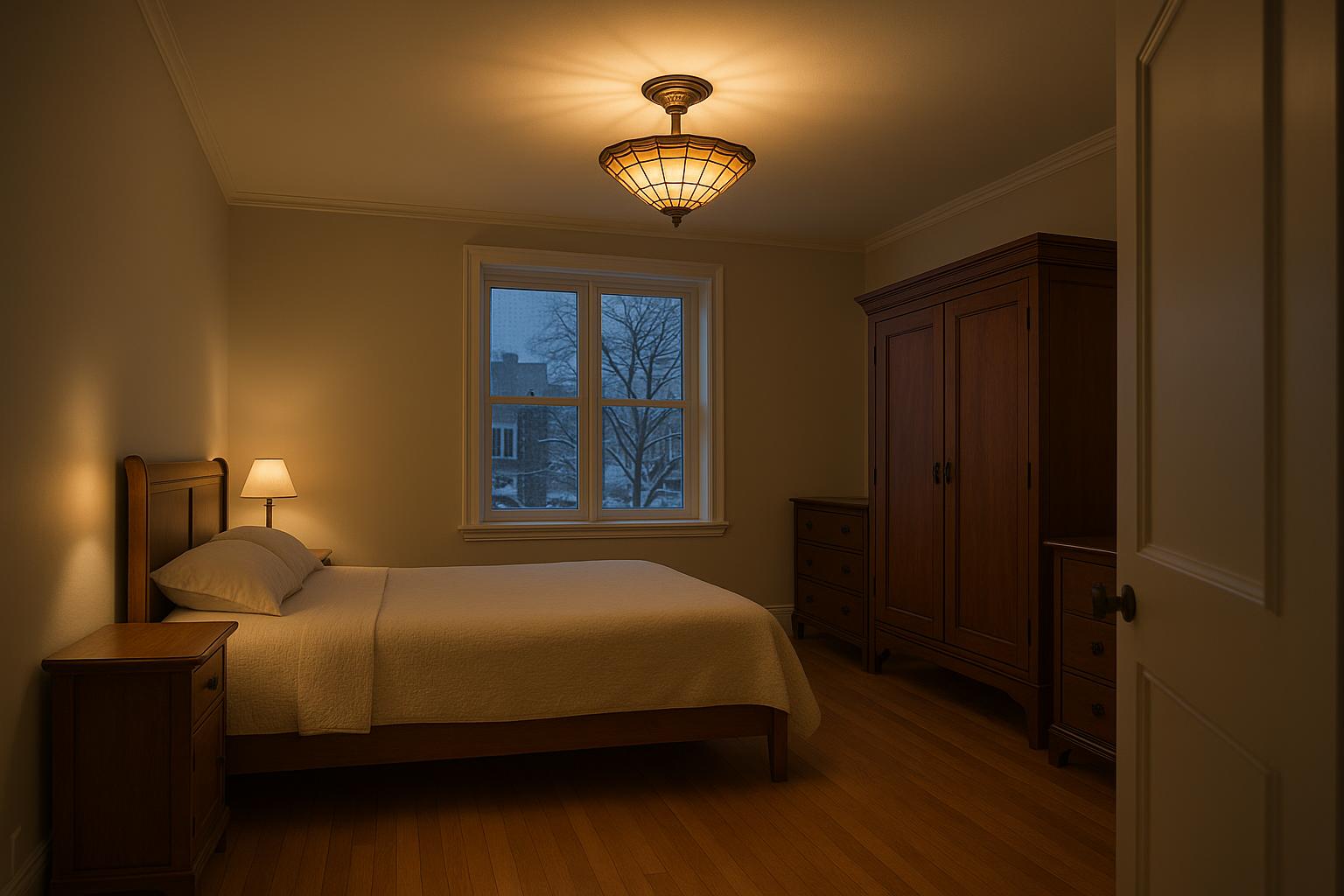
Give overhead, reading and accent lights distinct jobs to create a flexible bedroom that feels practical early in the...
- There are no more items in your cart
- Shipping Free
- Total CA$0.00
From Overhead to Bedside: Layering a Bedroom After Dark
Planning layered tiffany lamps for bedrooms begins with a simple observation: the light needed to sort laundry is not the light wanted while reading in bed. Bedrooms change character over the course of an evening. They may first serve as dressing rooms, then as reading spaces and finally as quiet places where only enough light for orientation is required.
A stained-glass fixture can contribute to each stage, but no single lamp should be expected to cover the whole room. The more useful approach is to assign separate jobs to the ceiling, bedside area and a point away from the bed. Each layer can then be switched on only when it is useful.
Plan for three stages of the evening
Before comparing fixtures, walk through an ordinary evening in the room. General light may be needed between the entryway, wardrobe and dresser. Reading requires a smaller, better-controlled pool near the pillow. Later, a low lamp across the room may provide enough illumination to put away a book or cross the floor without returning to bright overhead light.

Make these observations after sunset. Daylight can conceal weak areas and reflections that become obvious during a long winter evening. Check the room from the doorway, in front of the wardrobe and from both sides of the bed. A mirror may also reveal a bright bulb or open shade that is not noticeable while standing elsewhere.
- General layer: supports dressing, cleaning and movement through the room.
- Reading layer: directs useful light toward a book without shining into the other side of the bed.
- Low evening layer: maintains a gentle background glow after stronger fixtures are switched off.
This map is more valuable than counting fixtures. A compact bedroom might need only an overhead light, one reading lamp and one low accent lamp. A larger room with two readers may need separate lights on each side of the bed, but it does not necessarily need a larger or brighter ceiling fixture.
Treat overhead light as a practical tool
Bedroom ceiling lights are most effective when treated as work lights for the room rather than the default source for the entire evening. A Tiffany-style flush mount or semi-flush light can provide general illumination while keeping visual clearance in a condo or townhouse with a modest ceiling. A pendant light may suit a taller room, provided its drop does not interfere with circulation or the view across the bed.
Use the overhead layer when choosing clothing, packing a suitcase or cleaning. Once those tasks are finished, switch it off and rely on lower sources. The change reduces the amount of light entering the eyes and brings the colour of the bedside glass forward without making the whole room feel dim.
Before ordering, note both the fixture diameter and its total drop in centimetres. Compare those dimensions with doors, wardrobe openings and any route that passes beneath or close to the fixture. A cardboard circle or painter's-tape outline can make an unfamiliar diameter easier to judge than a product photograph alone.
Fit bedside light to the reader and furniture
Tiffany bedside lamps should be assessed from a reclining position, not only from the doorway. The shade needs to conceal the brightest part of the bulb while allowing light to reach the page. Mattress height, pillow arrangement, table height and shade depth all affect that relationship.
To complement this topic, you can also read Beyond Colour: Reading the Shape of a Scalloped Tiffany-Style Lamp.
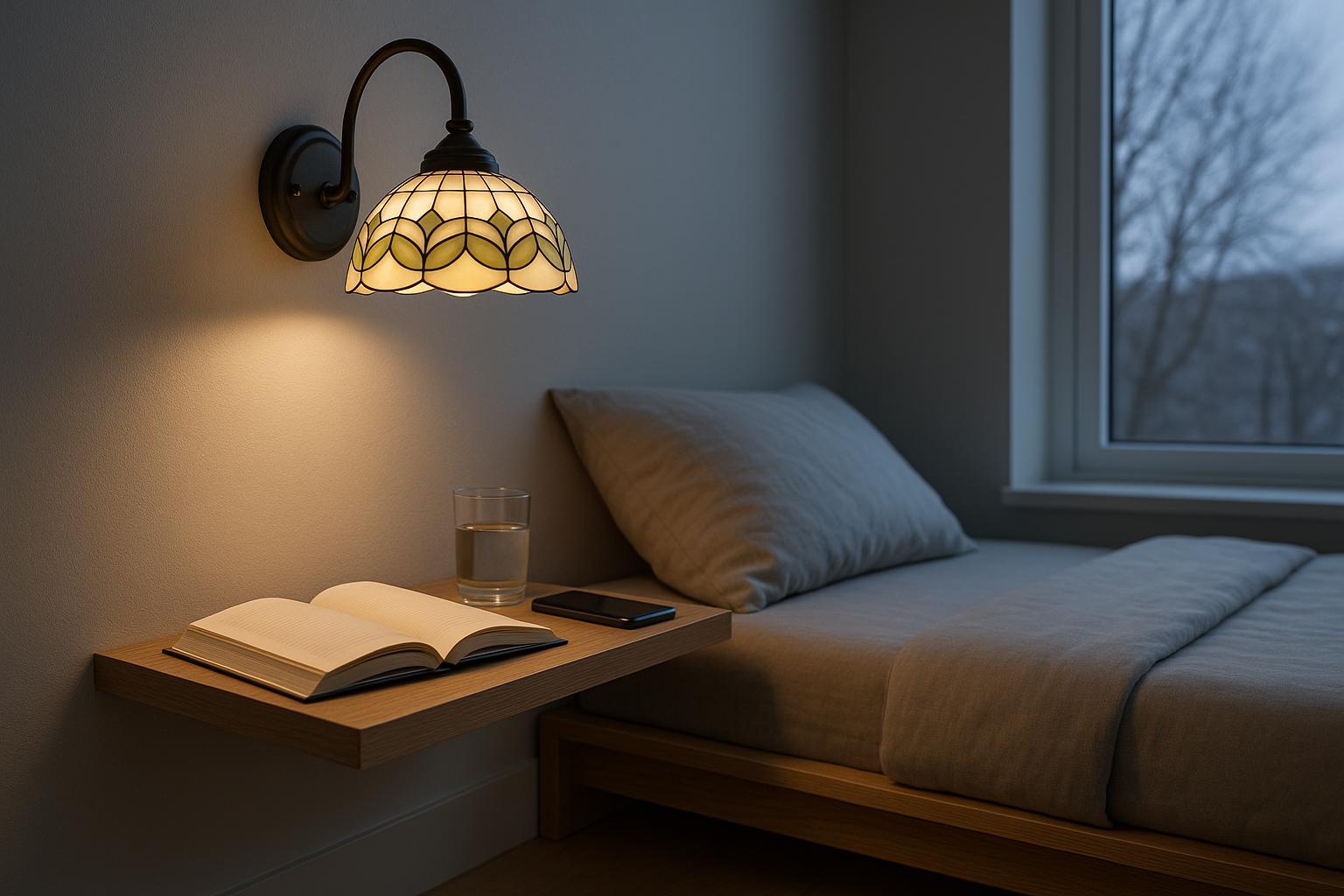
Measure the usable top of the night table and mark the proposed lamp footprint. Leave practical space for a book, phone and water glass, as well as room to operate the switch without touching the shade. This step is especially important on narrow floating shelves, where a lamp that appears small in isolation can occupy nearly the entire surface.
A shared bed does not require identical lamps. One side may accommodate a medium table lamp while the other needs a slimmer base. What matters is that each reader has suitable light and an independent switch. If the fixtures differ in shape, repeat one restrained feature such as cream background glass, dark leading or a muted green accent.
Free a small night table with wall sconces
Bedroom wall lights can move the reading layer off the furniture entirely. They are useful beside platform beds, in guest rooms with narrow shelves and anywhere a table lamp would crowd the path beside the mattress. A wall sconce also reduces the chance of catching a shade while reaching for something in the dark.

Do not choose the mounting position from a generic diagram alone. Mark the proposed shade and arm on the wall with removable tape, then sit against the pillows with a book. Check whether the fixture lights the page, whether its underside is visible and whether it can be reached comfortably. Repeat the test while reclining, because a source that feels comfortable when seated may produce direct glare from a lower position.
For hardwired sconces, confirm the product instructions, compatible controls and installation requirements before work begins. Electrical installation should be completed by a qualified electrician in accordance with applicable local and provincial requirements.
Place an accent lamp beyond the bedside zone
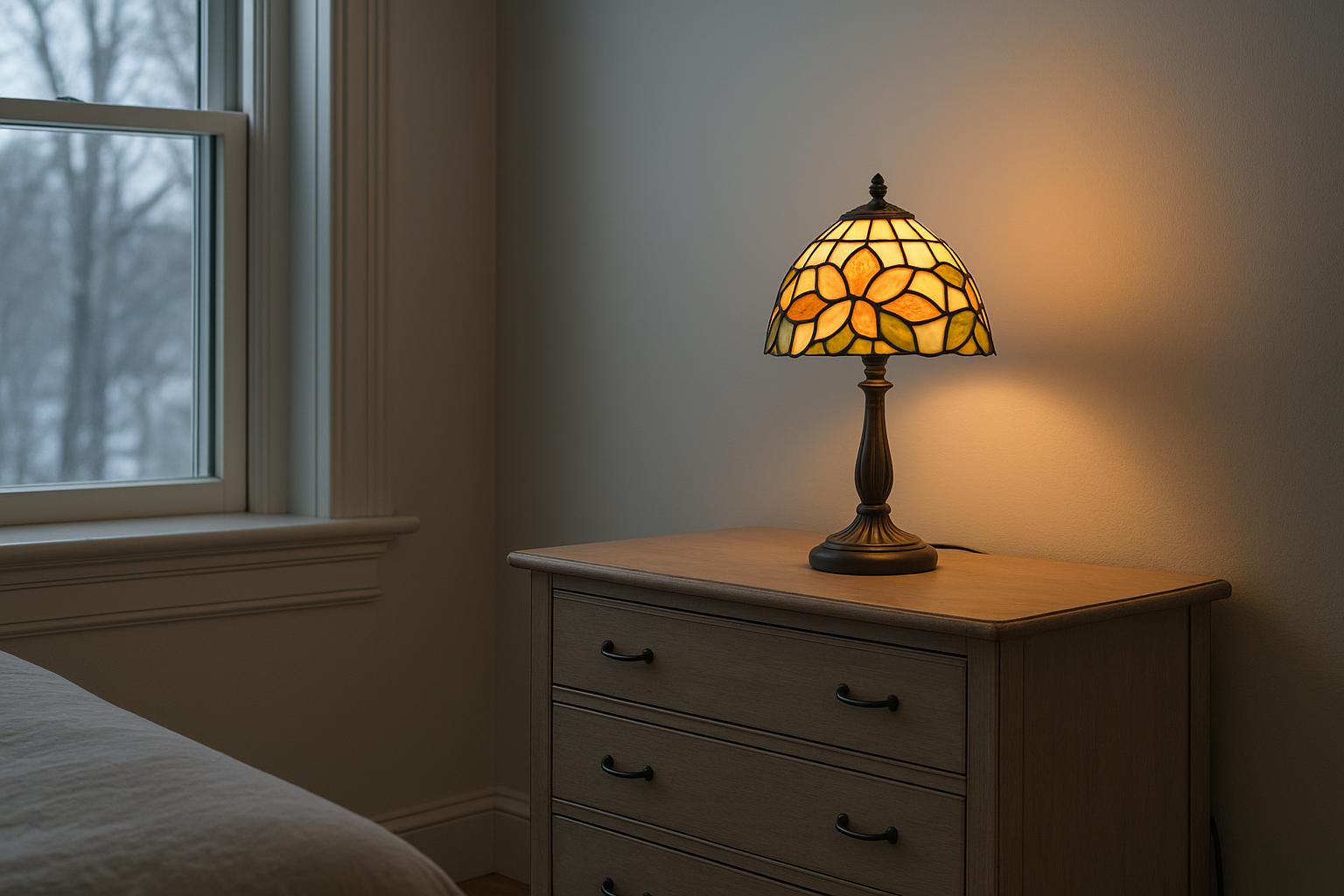
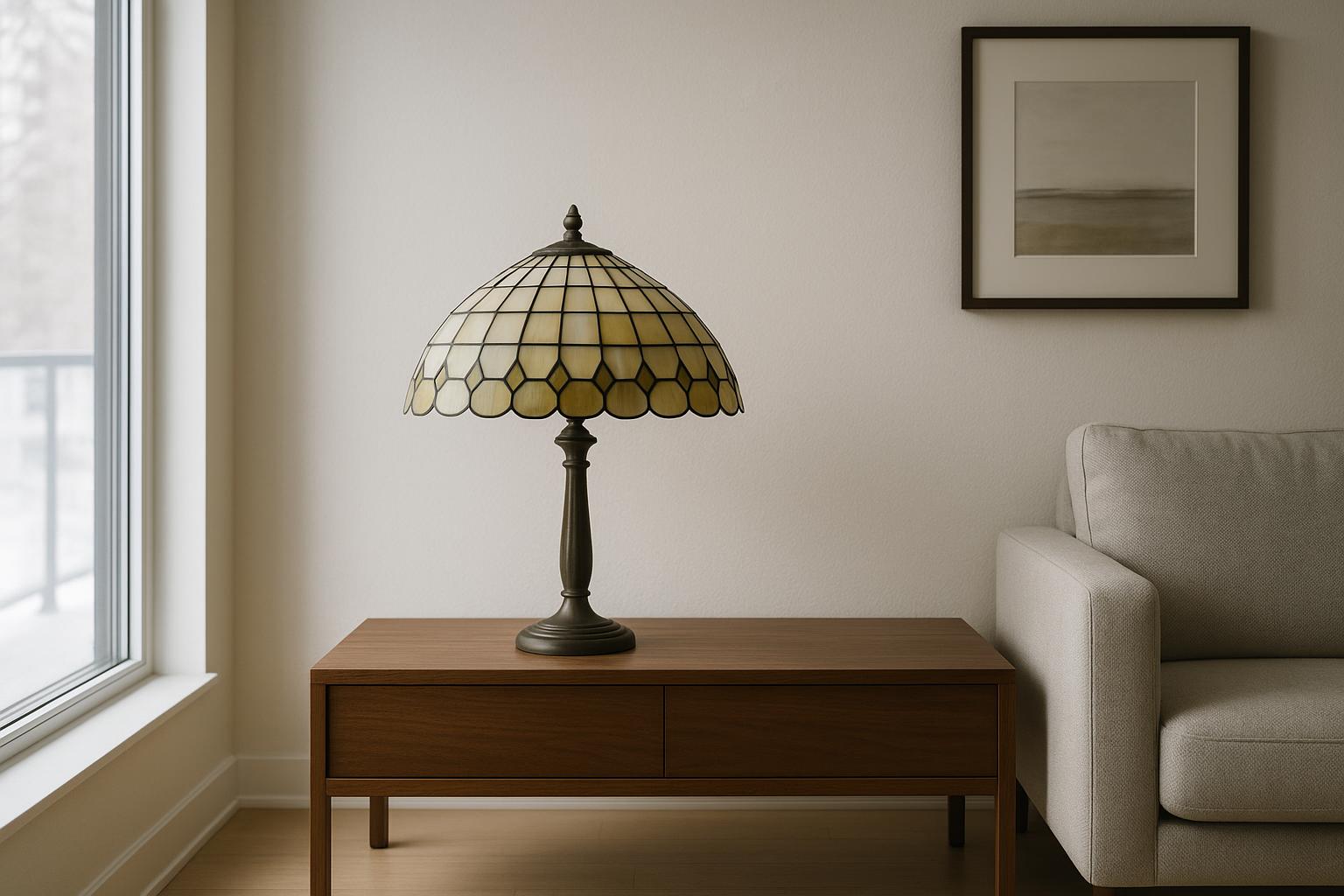
Small stained glass lamps are well suited to a dresser, low chest or protected shelf away from the bed. Their job is not to illuminate the wardrobe or replace a reading lamp. Instead, they keep one part of the room from falling completely dark and place a softer pool of colour within view.
Position the lamp where the shade has visual breathing room and the base sits fully on a stable surface. Keep the cord away from drawer pulls and walking routes. A pale wall behind the lamp will show more projected colour than dark paint, so test strong red, blue or green glass in the actual room before relying on it for a subdued effect.
In the same direction, Using a Lighted-Base Tiffany-Style Lamp on an Unwired Wall offers useful ideas for choosing home lighting more confidently.
In an Atlantic Canadian home with painted wood trim, a compact botanical lamp might add warmth to a plain dresser. In a prairie-style house, a small geometric shade could echo the room's horizontal lines. The accent should respond to the architecture without turning the bedroom into a period display.
Coordinate colour without matching every fixture
Several stained-glass fixtures can coexist without forming a matched set. In fact, repeating the same intricate motif at the ceiling, wall and bedside may make a modest room feel crowded. Select one common thread and allow the other elements to vary.
An amber-and-cream ceiling shade could be paired with quieter green bedside lamps if all three use dark leading and simple geometry. A floral accent lamp could then introduce more detail while repeating a small amount of amber from the overhead fixture. Bedding, curtains and wall colour can provide the connection instead of another identical lampshade.
Balance visual weight as well as colour. If the ceiling fixture has dense patterning, choose calmer shades near the face. If the ceiling light is restrained, the reading or accent layer can carry more botanical detail. Always compare stained glass both illuminated and unlit; a shade that glows softly at night may appear much darker during the day.
Plan bulbs, controls and glare as one system
warm lighting depends on more than amber glass. Bulb output, colour appearance, shade opacity and nearby finishes all influence the result. Pale panels can expose an uncomfortable bright point, while dense glass may reduce useful reading light. Follow each fixture's instructions for bulb type and maximum rating rather than assuming that similar-looking lamps use the same source.
For more consistent lighting throughout the home, the article Choosing a Tiffany-Style Pendant for the Dining Table may also be helpful.
Controls should follow the way the room is used. The overhead light should be convenient on entry. Each reader should be able to operate a bedside lamp or wall sconce without crossing the room. The accent lamp should also have an accessible switch rather than requiring someone to reach behind furniture.
If dimming is planned, verify that the fixture, bulb and control are mutually compatible. Dimming can adjust output, but it cannot correct direct sight of the bulb or compensate for a shade positioned too high above the mattress.
Test the room after dark
Evaluate each layer separately before turning everything on together. Begin with the ceiling light and walk between the doorway, wardrobe and dresser. Next, test each reading light from the pillow. Finish with the accent lamp alone and confirm that it provides a comfortable route without creating distracting reflections in a mirror or window.

Live with the arrangement for several evenings before adding another fixture. A corner that first appears too dark may feel appropriately quiet once the reading lights are in use. If something is missing, identify the task before buying: general visibility, page light or low-level orientation.
When it is time to compare options, the bedroom Tiffany lamps collection brings together bedside, ceiling, wall and decorative formats. Choose the fixture that fills a specific gap in the plan rather than one that duplicates a layer already working well.