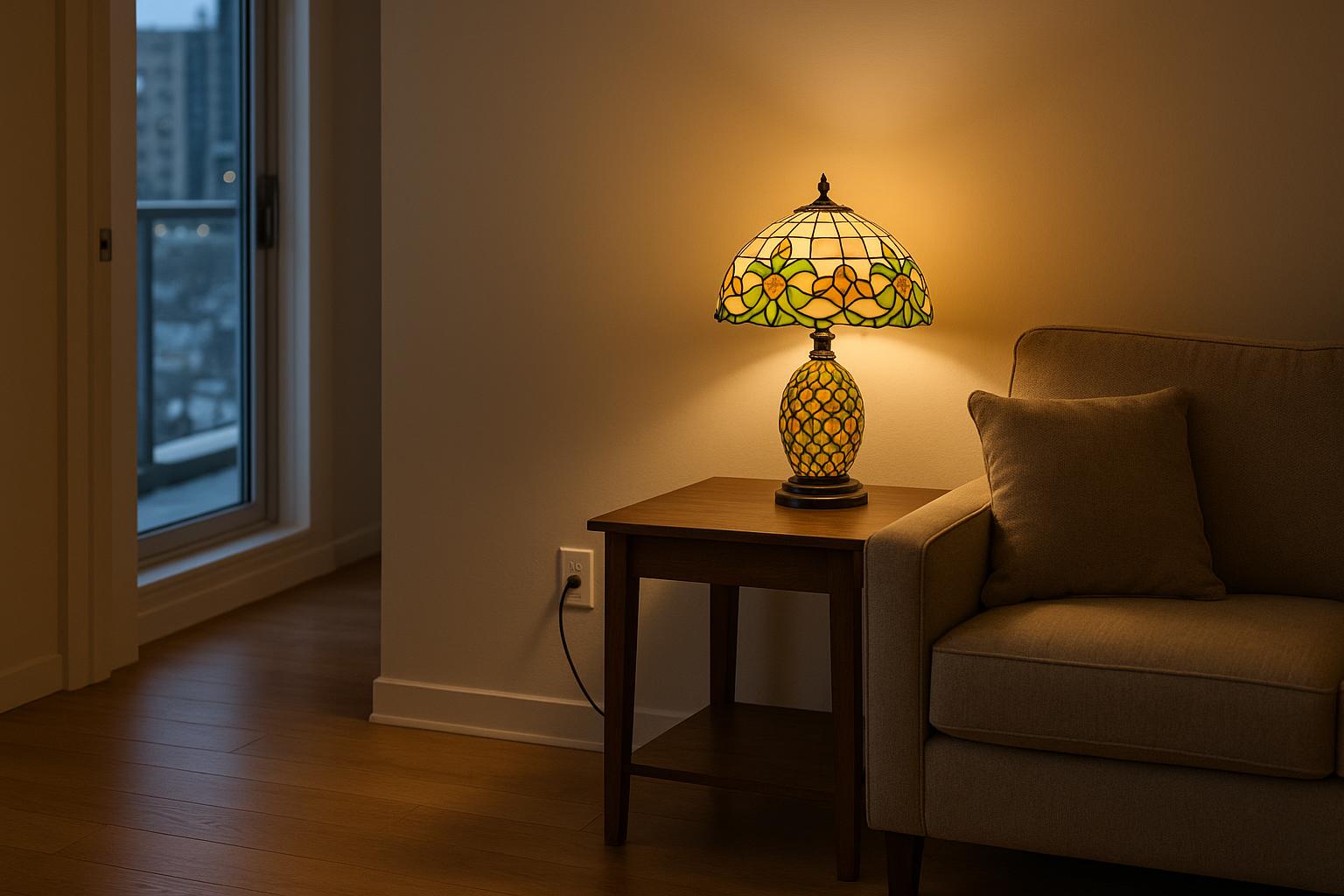
A practical method for sizing rustic stained-glass table lamps, floor lamps and ceiling lights around furniture,...
- There are no more items in your cart
- Shipping Free
- Total CA$0.00
Room to Glow: Scaling a Large Tiffany-Style Floor Lamp
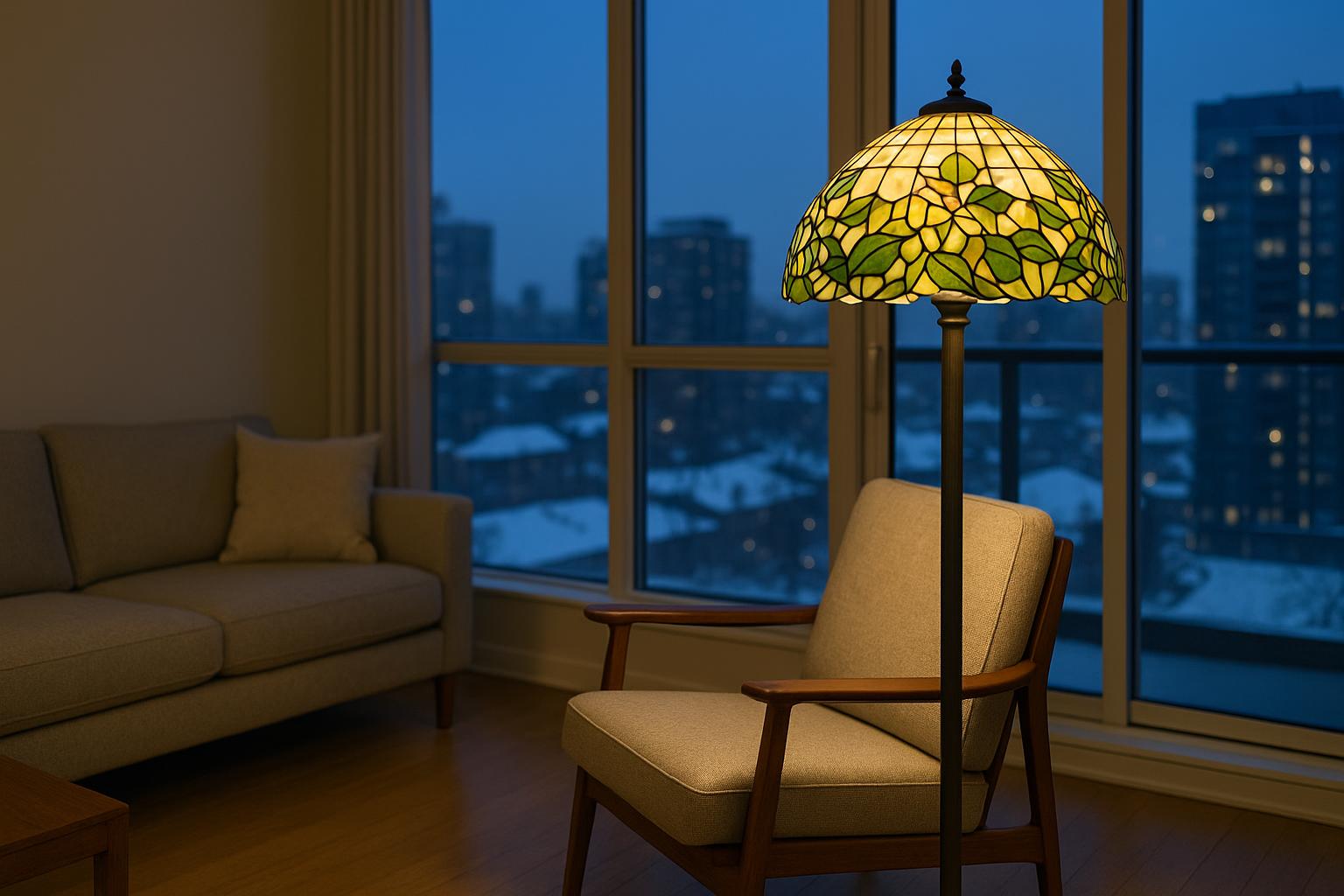
A large Tiffany-style floor lamp does not need to blend into a contemporary room. In fact, its strongest contribution may be the contrast between an expressive stained-glass shade and simpler furniture. The lamp feels current when the room gives its shape, colour and light enough space to register.
That requires more than finding an empty corner. A wide shade can overlap artwork, interrupt a view or appear top-heavy beside undersized furniture. The base may fit on the floor while the upper half crowds a curtain or projects into a walkway. Before choosing among modern large tiffany floor lamps, assess the fixture as a complete piece of furniture rather than as a close-up image of coloured glass.
Judge the complete silhouette
Start with total height, maximum shade width, base footprint and the visual weight of the stem. These features determine how the lamp reads from the doorway and across the room, long before the eye notices a floral, geometric or dragonfly motif.

A broad dome creates a low, sheltering line and usually needs clear space on both sides. A tapered or gently scalloped shade exposes more of the supporting structure and may look lighter at a similar width. A simple dark stem can form a crisp vertical beside clean-lined furniture, while a decorative base asks the surrounding room to be quieter.
Do not judge scale from the shade alone. A generous shade on a narrow stem can appear top-heavy, and a substantial base may occupy more usable floor area than product photography suggests. Compare all listed dimensions with the proposed location.
Reserve space around the shade
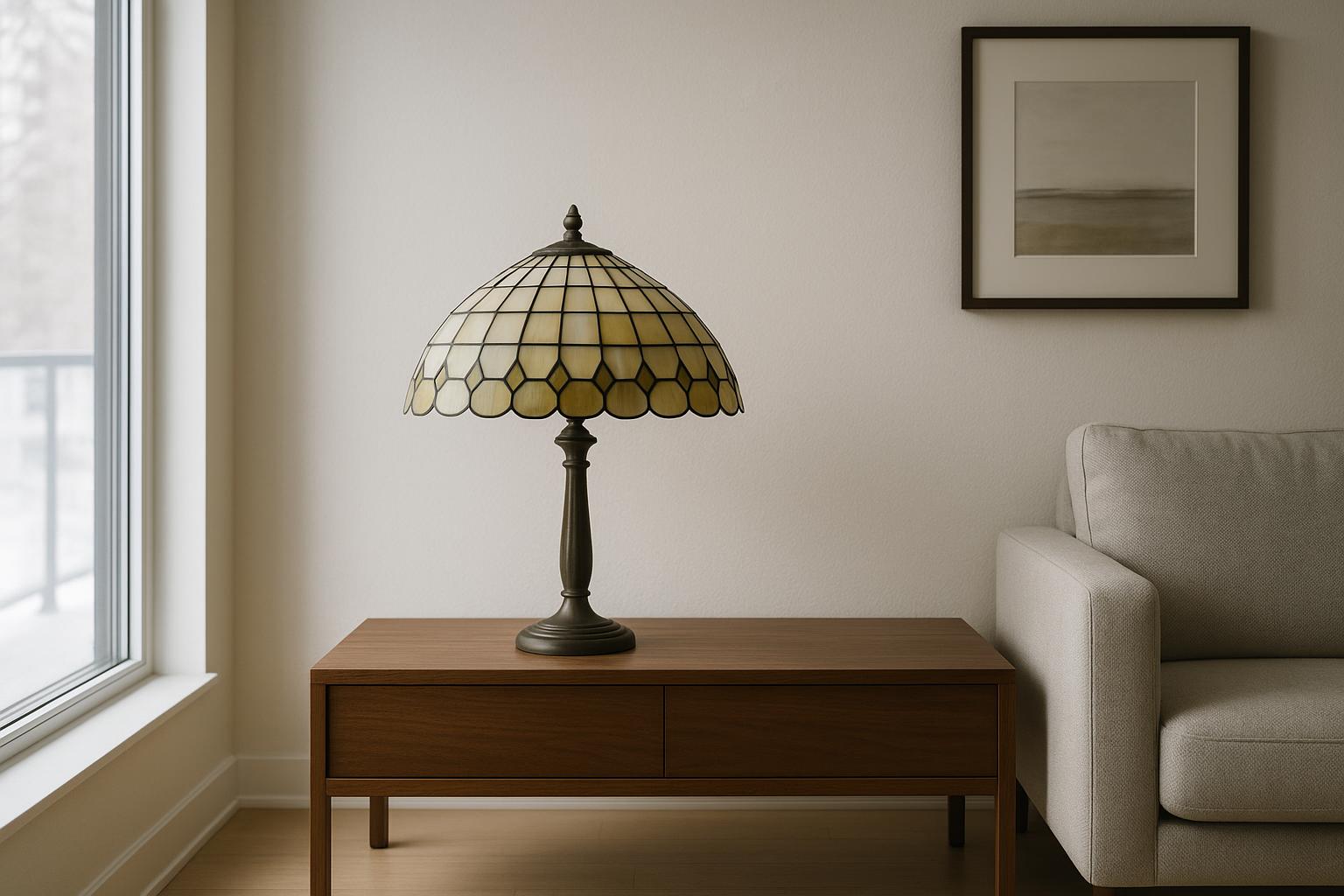
Stained glass is easiest to appreciate against a calm visual field. A warm white wall, softly textured curtain or plain wood panel allows the outline and illuminated colours to remain clear. Patterned wallpaper, crowded shelving and a dense gallery wall can compete with the same details.
The background need not be bare. One low console, a restrained artwork or a plant below the shade line can give the corner context. What matters is separation. From the main seat and room entrance, the shade should not appear to slice through a picture frame, window mullion or tall cabinet.
Look at the location after dark as well as during the day. Amber and cream glass may lend warmth to a pale wall, while green, blue and multicoloured sections can become more pronounced once illuminated. On a dark wall, deep glass may lose some definition when the lamp is off, so the daytime silhouette deserves particular attention.
Relate the lamp to the seating group
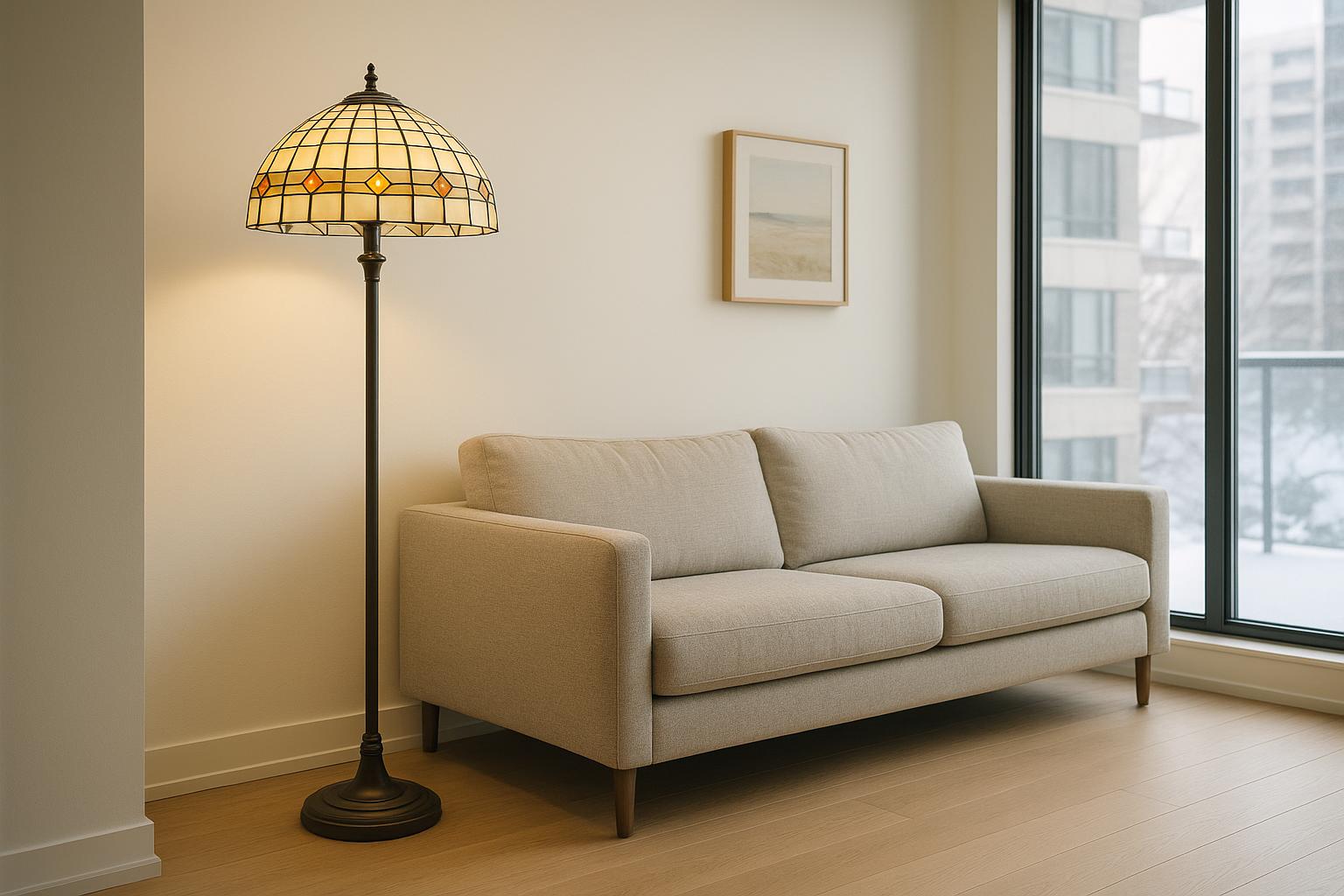
Large stained-glass lamps tend to look convincing beside furniture with enough visual mass to support them: a full sofa, deep lounge chair, broad sideboard or long media unit. An oversized standard lamp paired with a very small occasional chair can make the chair look temporary and the lamp disproportionately dominant.
Use the entire seating group as the reference rather than matching the lamp to one side table. The shade should belong to the arrangement without appearing to sit directly on the sofa back. Leaving a visible break between the two shapes helps each retain its outline.
If the lamp will be used for reading, sit in the intended chair and check the position of the shade's lower edge. Confirm that the light reaches the page without placing the glowing bulbs or brightest glass directly in the reader's sightline. A decorative floor lamp may contribute useful local light, but its stained-glass shade will not necessarily provide the broad output of a dedicated task lamp.
Test circulation and seated sightlines
A floor plan shows where the base fits; it does not show where a wide shade meets the eye. Test the location from a seated position, from the entry to the room and from adjoining areas in an open-concept home. Check views toward windows, a television, the fireplace and other people in the seating group.

Then walk the normal routes around the furniture. The shade should not project unexpectedly into a passage, and the base and cord should remain outside regular foot traffic. Keep the switch accessible and follow the fixture's instructions for positioning and operation.
In a compact living room, placing the lamp behind the outer third of a sofa can help the base recede while leaving the shade visible. This often uses space more efficiently than centring the fixture beside the sofa arm. In a larger family room, a corner placement may balance tall windows or cabinetry without cutting across the conversation area.
Edit the stained-glass palette
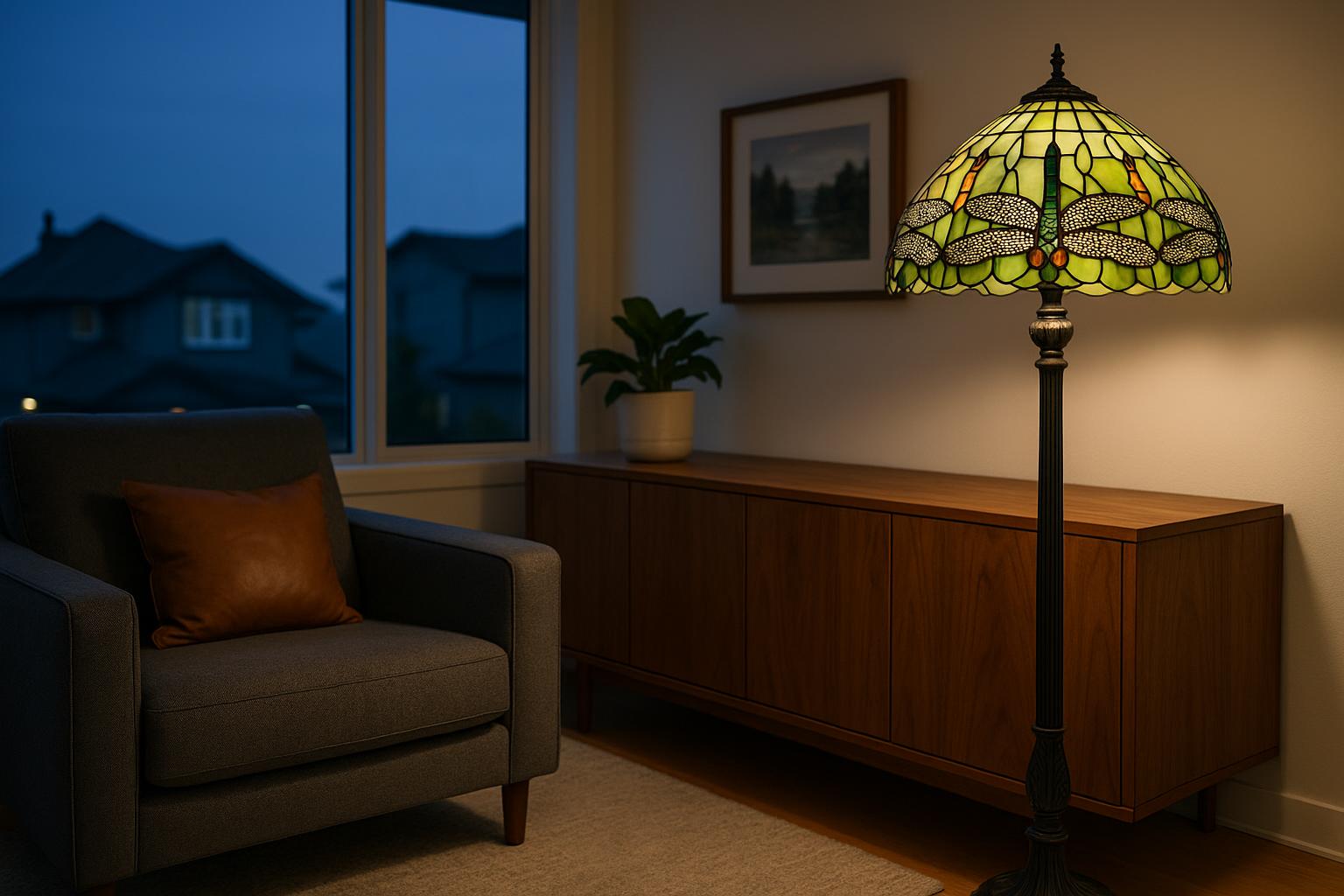
A contemporary room rarely benefits from matching every colour in the lampshade to the upholstery. Repeat one or two notes instead. Green glass might connect with a plant or a muted stripe in a rug. Amber can relate to oak, walnut, cognac leather or warm metal without turning the room into a coordinated colour scheme.
In a neutral interior, the lamp can carry most of the room's pattern and colour. Grey upholstery, pale wood and quiet walls leave room for botanical or dragonfly designs. If the room already contains saturated colour, compare undertones rather than searching for an exact match. A clear blue-red, for example, may feel disconnected from textiles built around softer rust and clay tones even when all are described as warm.
Geometric and Mission-inspired shades often sit easily with rectilinear furniture, but an elaborate floral design can also work. The deciding factor is usually the amount of competing ornament nearby. Contrast looks deliberate when the coffee table, cushions and wall treatment are restrained.
Plan the rest of the evening light
A Tiffany-style floor lamp is usually most effective as decorative and ambient light. The coloured glass filters the source and creates a concentrated glow, which is part of its appeal. It should not be expected to light every part of the room evenly.
Support it with a separate reading light where close work takes place and modest ambient light elsewhere. A dimmed ceiling fixture, wall sconce or table lamp can reduce the stark contrast between a luminous shade and a dark room. That balance is especially useful during long winter evenings or in a basement rec room with limited natural light.
Bulb choice changes the appearance of the glass. Begin with the fixture's stated bulb type and limits. Within those requirements, a warmer colour appearance often enriches cream and amber, while a more neutral appearance may keep blue and green sections clearer. Because glass and wall colours respond differently, evaluate the result in the actual room rather than relying on a universal formula.
Adapt the scale to the type of home
In a Toronto condo or Vancouver apartment, the limiting factor may be a long cross-room view rather than floor area alone. A lamp can fit beside the sofa yet interrupt the view from the kitchen island. Measure the elevator, corridor, unit entrance and tightest turn in centimetres before ordering, particularly if the shade and base arrive in large packages.
An open-concept Calgary home may offer more floor space but expose the lamp from the living, dining and kitchen zones. Check that the silhouette remains balanced from each one. In an Ottawa townhouse, a quiet end of the living room will usually be more successful than a narrow landing or busy entryway.
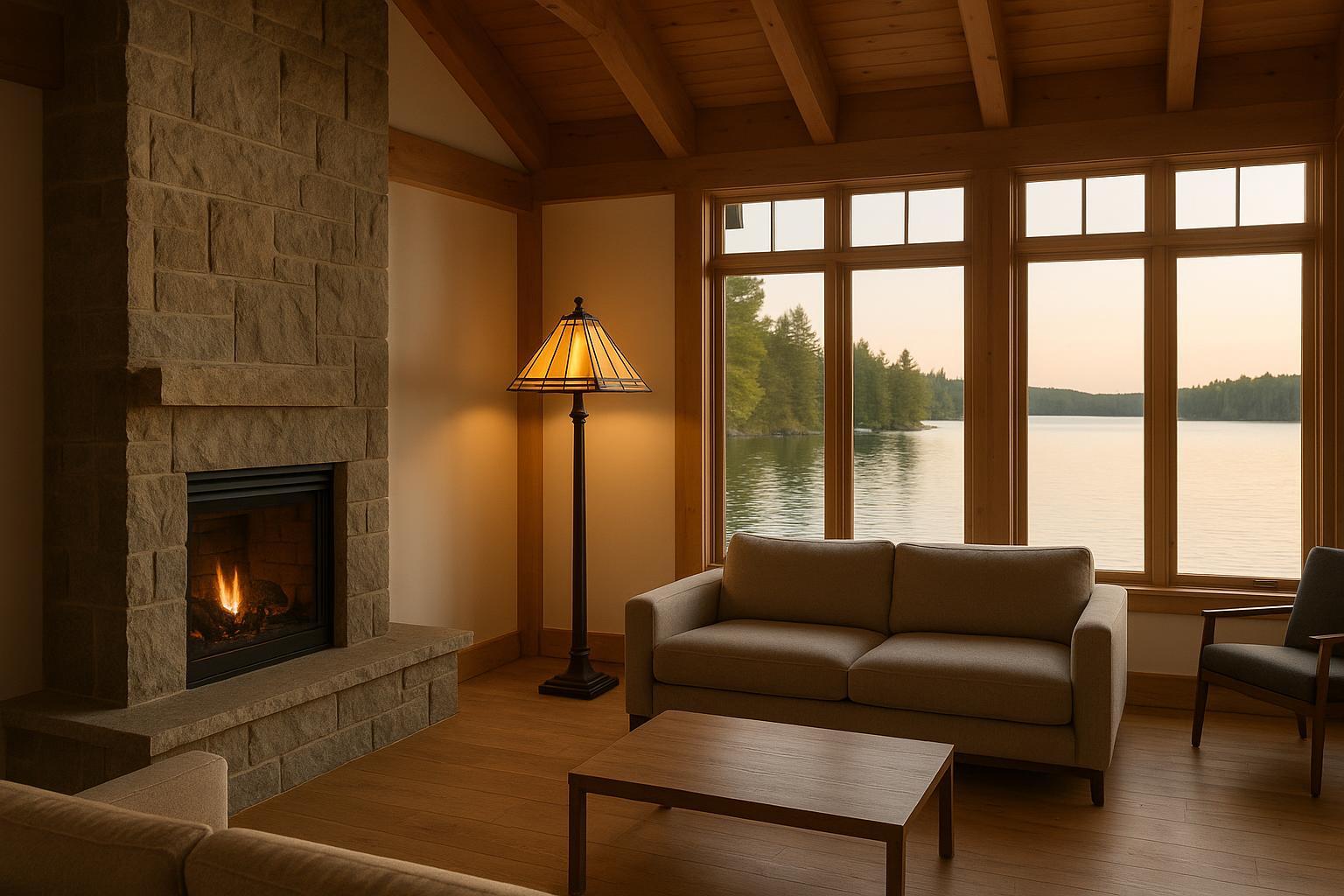
Vaulted cottage rooms can absorb a taller, broader fixture that would overwhelm a low-ceilinged den. Substantial windows, timber structure and a stone fireplace provide enough visual weight to hold their own. In a darker basement, total height, sightlines and surrounding light matter more than making the lamp as large as possible.
Make a full-size mock-up
Before buying, reproduce the listed shade width with kraft paper or cardboard and place it at the stated height. Mark the base footprint on the floor with removable painter's tape. View the mock-up from the sofa, doorway and adjoining room, then walk past it carrying something bulky, such as a laundry basket. This reveals conflicts that a tape measure alone can miss.

Also measure door openings, stair turns and elevator interiors at their narrowest points. Record the dimensions in one place and compare them with the complete fixture and package information provided for the model under consideration.
Once the location, purpose and delivery route have been checked, browse large Tiffany floor lamps with those measurements at hand. Compare total height, shade width and base proportions before focusing on motif or colour.
The aim is not to disguise the lamp's period-inspired character. A successful room lets the stained glass remain expressive while controlling what surrounds it. Clear space, substantial furniture, open sightlines and quieter supporting light allow the fixture to feel sculptural by day and warm after dark.